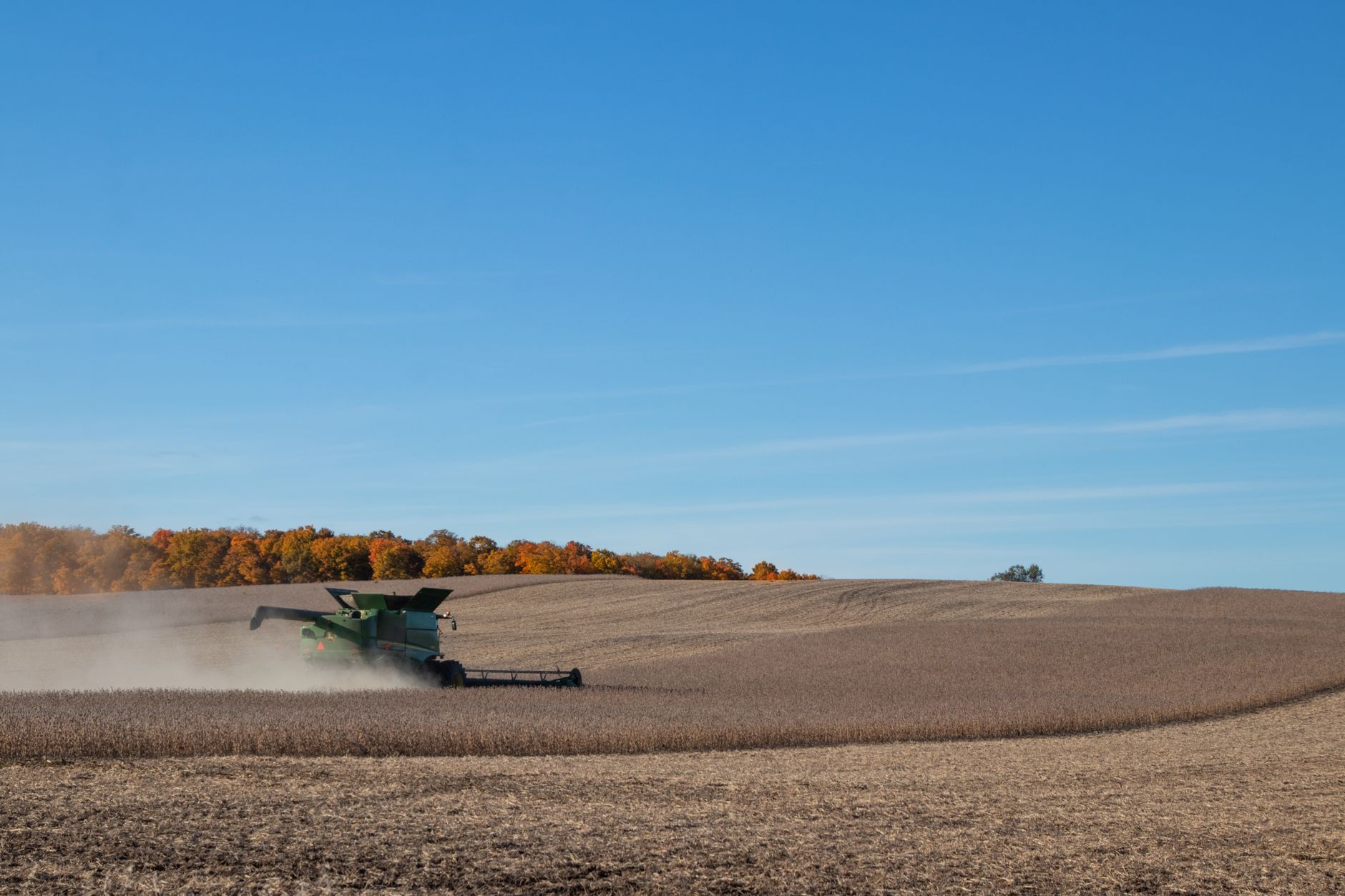
The Combine Keys at Harvest Supper
Here is the part you need to know. My dad, Dale Ehlers, farmed those 600 acres in O’Brien County for fifty years.
I came home at twenty-four, after four years running a parts counter in Sioux Falls, and farmed beside him for nineteen.
Two years ago this past August he went out to the machine shed after dinner to change the oil in the pickup, and Elaine found him on the floor beside the creeper.
Dad’s will was one page. He’d written it with Elaine at the lawyer’s office in Primghar the year they married. Everything to his wife, and if she went first, everything to me.
That is a common enough will in this part of Iowa, and I never thought twice about it while he was living.
The one time I brought it up, he waved his hand like he was shooing a fly.
“Elaine will do right by you,” he said. “She knows what you’ve put into this ground. Don’t make me think about dying while I’m trying to fix this auger.”
So after the funeral I kept farming. Elaine kept paying me what Dad paid me, $52,000 a year, the same check on the first of the month, and we never wrote a thing down.
It was a handshake, if you could call it that. Really it was just the way things had always been, and neither of us had the heart to talk about it.
I ran the planter. I ran the combine. I sprayed, I hauled, I fixed what broke. I paid the seed dealer with her checkbook and told her what to sign.
I made every call Dad used to make. In my head I was keeping Dad’s farm going until the day it came to me.
I never once said that out loud to Elaine. I suppose I thought I didn’t have to.
Now, sitting at that table, I understood it plain. Dad’s will was Dad’s will, and the land was legally hers to leave.
There was no paper with my name on it and no promise anybody but me had heard.
There was nothing to fight but her mind, and I could see from her face that her mind was set like concrete.
I could have argued. I could have said a lot of things about Brad and Kyle, about who was out in the yard at two in the morning when the dryer quit, about who was here and who wasn’t.
Every one of those things was true, and every one of them would have been said in front of the crew, in her dining room, at her table.
Instead I stood up. My work hat was on the back of my chair, and I picked it up and held it, I don’t know why.
Then I reached in the pocket of my coat and took out the combine keys on Dad’s old ring, the one with the brass tag from the implement dealer in Sheldon that went out of business in 1998.
I walked around to Elaine’s end of the table and set those keys down beside her plate, right next to her fork. I set them down gently.
I want that understood. I did not throw anything. It made a small sound on the tablecloth, and every person at that table heard it.
“Those are yours, Elaine,” I said. “So is the combine. So is the ground. I’ve been farming it like it was coming to me someday, and that was my mistake, not yours. I won’t keep building it up for somebody else.”