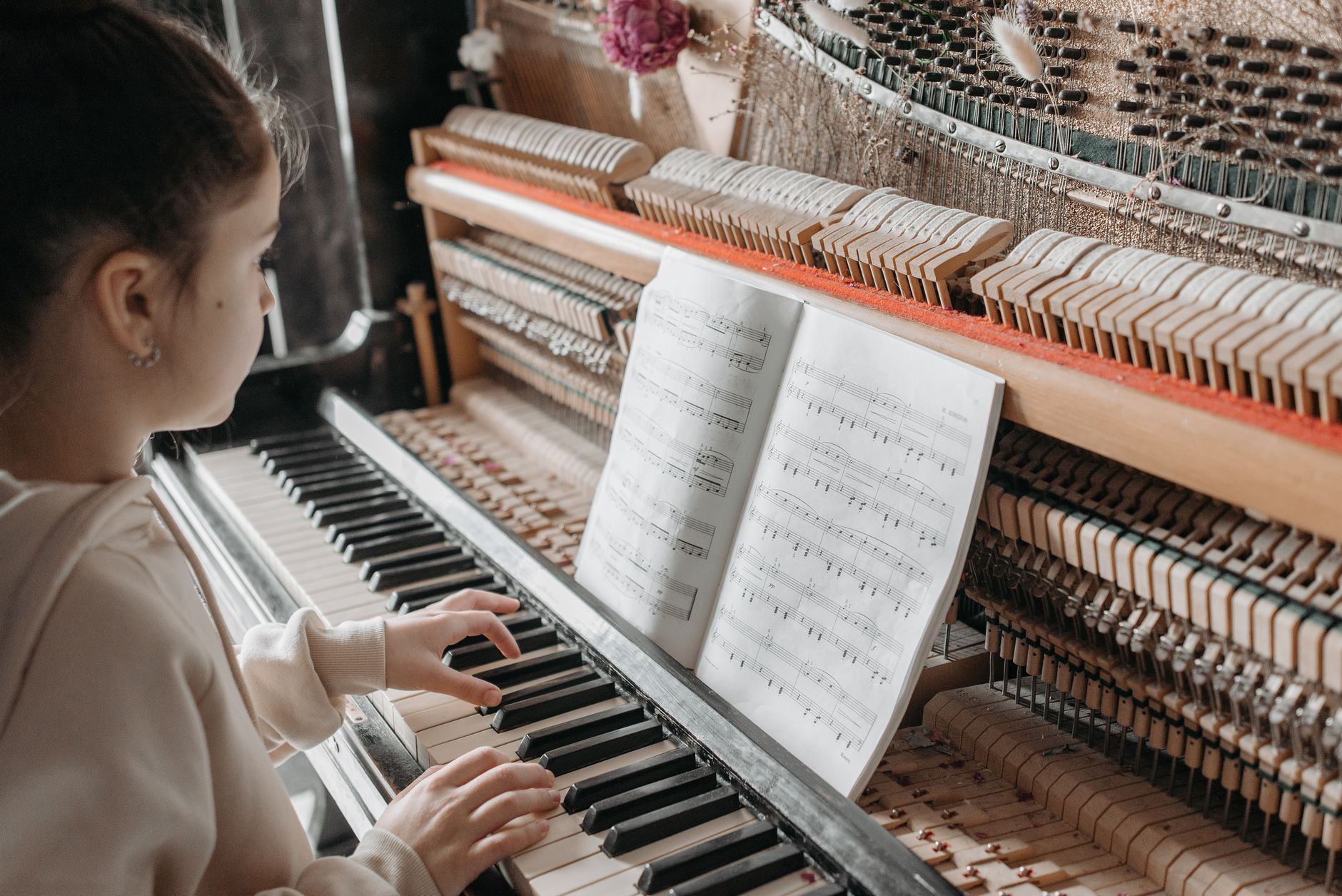
The Piano Teacher Who Would Not Quit
The library
I did not decide what to do in a thunderclap. I decided it the way you decide most true things, a little at a time, while doing the dishes.
I thought: the lessons do not live in the room. The lessons live in the children and in me. The room is just where we have been meeting.
And I thought: where do people in this town go when they need a warm place and have no money. And the answer was two blocks over, and it had a flag out front.
The Guthrie public library sits in an old Carnegie building with wide stone steps, and Miss Ann has run it for longer than I can say.
I went in on a Thursday and found her shelving returns, and I told her the whole thing, the notice and the six hundred dollars and Haskell and Dani, all of it, standing between the biographies and the large print.
She listened without interrupting, which is a gift most people do not have, and when I finished she set down the book in her hand.
“We have a meeting room,” she said. “It sits empty most afternoons. The quilting club has it Mondays and the Scouts have it some evenings. The rest is yours if you want it.”
“I can’t pay you either, Ann.”
“You will not pay me anything,” she said, “because it is a public room in a public building, and the public is who you’d be teaching. That is what the room is for. I have been trying to get this town to walk through that door for twenty years.”
Then she smiled, and she said the thing that undid me.
“And there’s a piano. Did you forget. It’s been against the back wall since the Bicentennial. Nobody’s touched it. It’s probably sour as a crabapple, but it’s a piano, and it’s yours.”
I had forgotten. An old upright, oak, donated some patriotic year and left to go quiet in a corner under a bulletin board.
I walked back and looked at it and pressed a key, and it was indeed sour as a crabapple, three notes dead and the rest wandered off from each other.
But it was a piano, in a warm room, in a building nobody could price me out of, with a flag on the front and my whole town’s name on the door.
The man who fixed the piano
I did not have money for a tuner, so I did what you do in a small town, which is I mentioned it at the diner and let it travel.
Within three days an old man named Earl Prentiss showed up at the library with a canvas roll of tools and a tuning fork, and he did not knock, he just started taking the front panel off the upright.
Earl had tuned pianos all over Logan County for fifty years before his hands got shaky, and he had tuned my Baldwin more times than I could count.
“Heard you had a sick one,” he said. “What do I owe you for all those years you let me sit and listen to the recitals from the hallway because I was too shy to come in.”
“You never owed me a thing, Earl.”
“Then neither do you,” he said, and he bent over the keys with his good ear turned to the strings, and he worked the whole afternoon.
He replaced the three dead notes with parts out of a cigar box, and he brought the wandered strings back home to each other one at a time, and he would not take a dollar.
“A piano nobody plays is just furniture,” he said when he was done, wiping his hands on a rag. “You’re making it a piano again. That’s my pay.”
When he struck the C-major chord at the end and it rang out true in that stone room, I had to turn and look out the window so he would not see my face.