The Piano Teacher Who Would Not Quit
Dani
Dani Morgan was ten, and she had never had a lesson in her life until that fall, and the way she came to me is the tender part, so let me tell it right.
Her mother, Renee, cleaned rooms at the motel out by the highway and waited tables at the diner on weekends, and there was no father in it that anyone mentioned, and I did not ask.
Dani used to stand at my window on her way home from school and watch the children on the bench, with her backpack sagging off one shoulder.
Every day for two weeks, that same small face at the glass, until one afternoon I opened the door and said, “You can come in out of the cold if you want to listen.”
She came in and sat on a folding chair with her hands tucked under her legs, and she listened to a boy stumble through “Fur Elise” like it was the most beautiful thing she had ever heard.
When he left she said, “How much does it cost.”
“Eight dollars,” I said. “But some weeks it’s free. This is going to be one of the free weeks.”
“My mom can’t pay eight dollars,” she said, matter of fact, the way children tell you the truth before they learn to be ashamed of it.
“Then it’s a free week,” I said, “and you’d be doing me a favor, because this piano likes to be played and I can only use the one set of hands.”
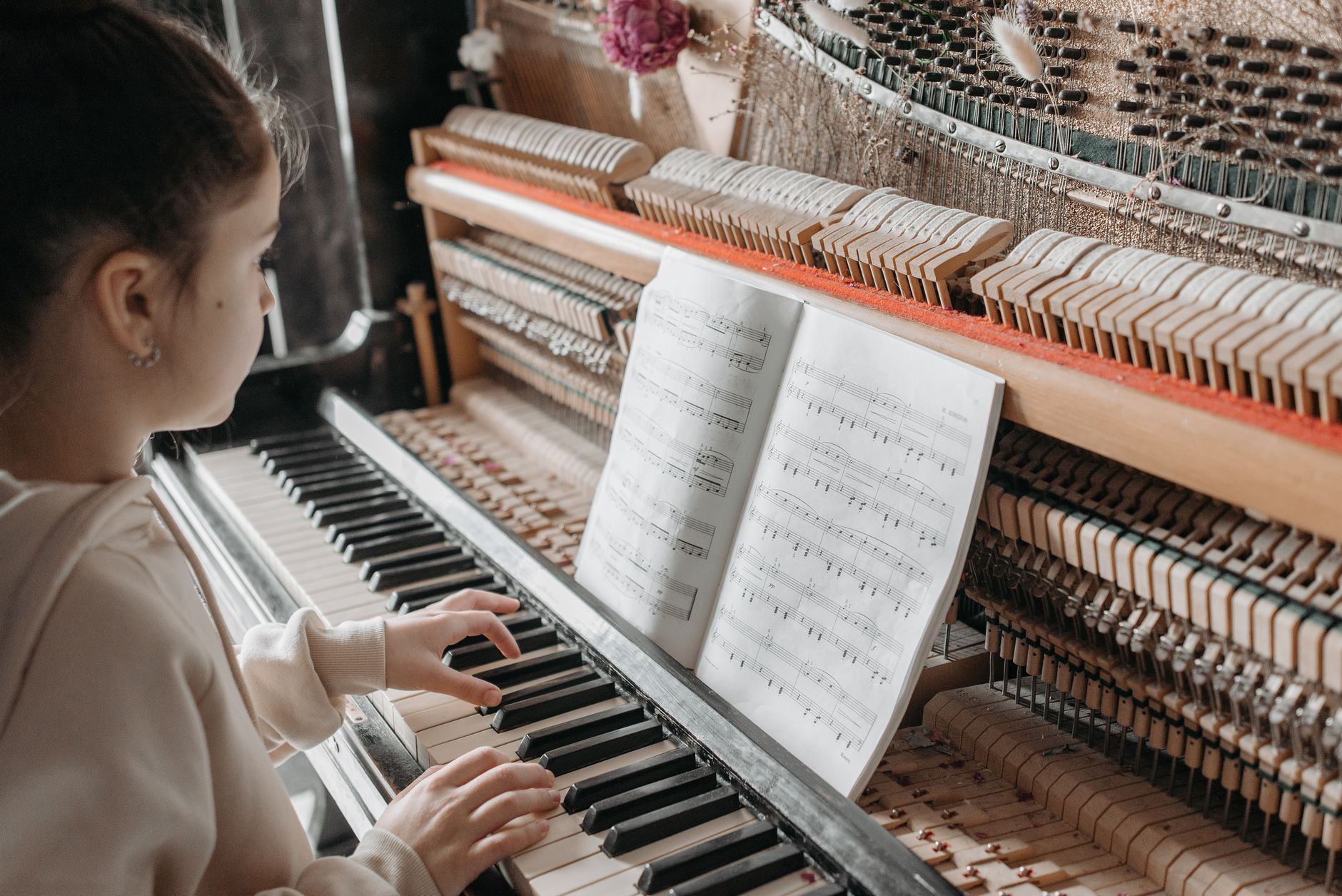
I sat her down and I put her right hand on middle C, and I will tell you, I have taught over four hundred children, and once in a great while one of them touches the keys and the keys seem to know her.
Dani was one of those. She had a quiet in her, and quiet is the whole secret of music, and you cannot teach it, you can only find it already there.
Renee came by at the end to walk her home, standing in the doorway in her motel uniform, embarrassed, saying she could maybe do five dollars when she got paid.
“You can do nothing,” I said, “and that is final, and I will not discuss it, because your girl is going to play at the church someday and I intend to be sitting in the third pew when she does.”
Renee looked at the floor and her chin went tight, and she said thank you in a voice that was mostly breath.
That was the week before Boyd’s notice. So you see, when I folded that paper into my coat, I was not just thinking about my own rent.
I was thinking about a ten-year-old who had finally found the one thing that was hers, and a man who would take the room out from under her to build a hotel for strangers.