The Piano Teacher Who Would Not Quit
What the room was
You have to understand what that room was, because it was not much, and that was the whole point of it.
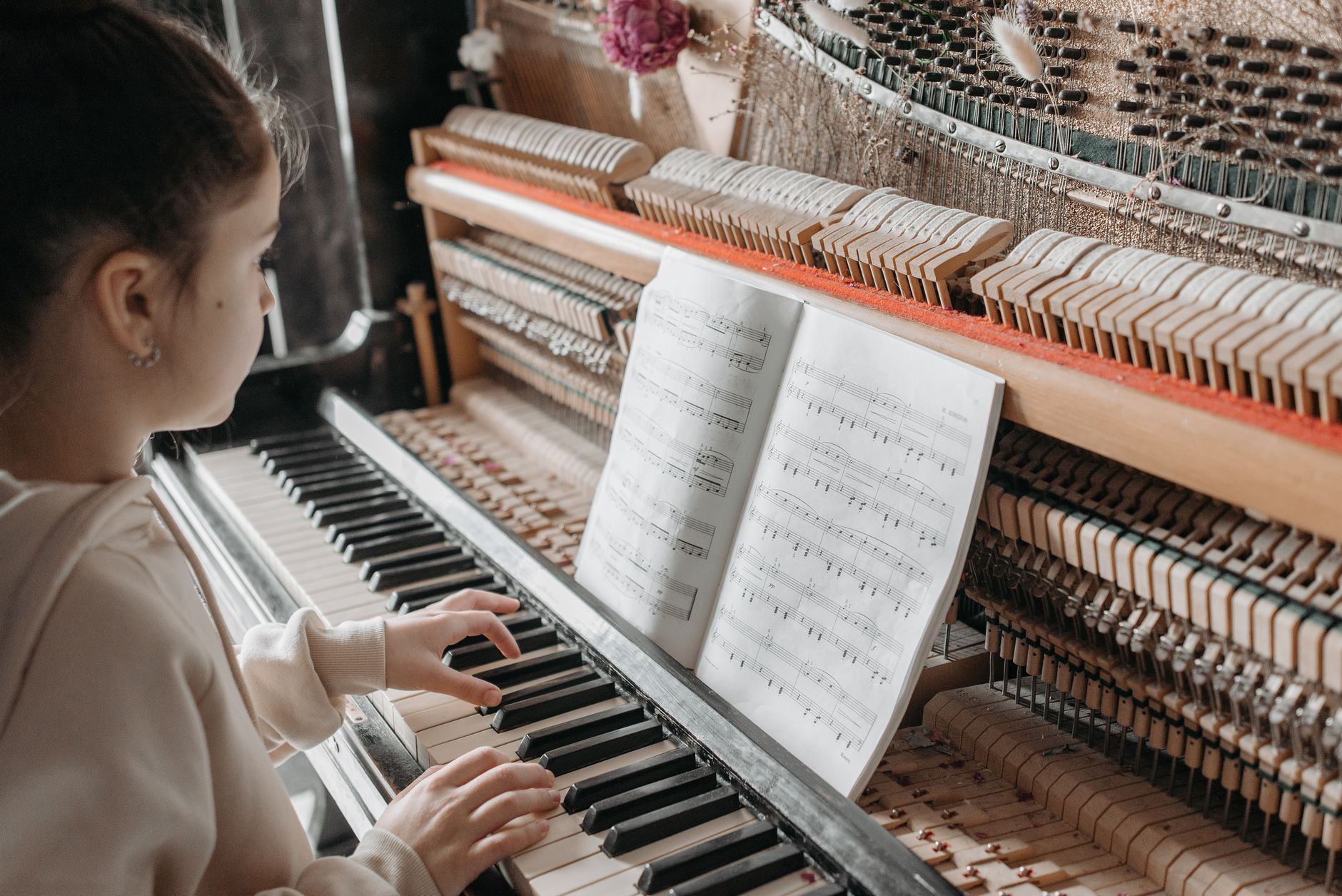
It was a front room in a row of brick storefronts, one window looking out on Second Street, radiator that knocked in the winter, a bathroom down the hall I shared with the insurance man.
It was not a conservatory. I never called myself a professor. I was a woman from Logan County who could read music and had the patience to teach a child who could not.
I had a piano, a metronome my mother left me, a shelf of hymnbooks and lesson books, and twelve folding chairs for the recitals we held every June.
In thirty-eight years I had taught, I believe, somewhere over four hundred children in that room.
I taught the banker’s daughter and I taught the boys from the trailers out on the Cimarron road, and I charged them all the same eight dollars, and I forgave it for about a third of them and never said so out loud.
I taught children who went on to play in Nashville and I taught children who never played another note after they left me, and I loved teaching both kinds.
I taught them to count out loud and to keep their wrists soft and to start again without crying when they stumbled, which is the only lesson any of it is really for.
I kept a jar of butterscotch on the windowsill, and a box of tissues, and a picture of Harold in his overalls, and that was the whole of my decoration.
Mothers sat in the folding chairs along the wall and did their church bulletins and their grocery lists, and some of them had sat in those same chairs as children of mine, twenty years before.
Guthrie is not a big place. It was the first capital of the state, and the downtown is all red brick and tall windows and the kind of buildings men were proud of a hundred years ago.
People had started calling it charming, which is a word that makes me nervous, because charming is what people call a place right before somebody buys it.
My room sat in the middle of the block, between Boyd’s hardware store and the old pharmacy that had closed, and above us were apartments nobody had lived in for years.
It was mine in every way except the paper. I had made it mine with thirty-eight Junes of recitals and thirty-eight Decembers of “Silent Night” taught one careful hand at a time.
The man with the clipboard
The week before the notice, a man in a pressed shirt had been walking the block with a clipboard and a tablet, taking pictures of the storefronts.
His name was Mr. Haskell, and he was from a development company out of Oklahoma City, and he wanted the whole block.
I know this because he came into my room and stood in the doorway and looked at my Baldwin like it was a chair somebody had left at the curb.
“Boutique hotel,” he said, when I asked. “Restaurant on the corner. Loft apartments up top. This whole street is going to be beautiful.”
“It is already beautiful,” I said.
He smiled the way you smile at an old woman you have decided not to argue with.
“You’d be surprised what people will pay to feel like they’re in a small town,” he said. “Authentic. That’s the word now. Authentic.”
I did not say that I was the authentic thing he was talking about, and that he meant to clear me out to make room for the feeling of me.
I just said it was nice to meet him, because my mother raised me to be civil to fools, and I went back to my scales.
But I understood, standing there, why Boyd’s handwriting had shown up on my door that week and not some other week.
Haskell was offering Boyd money for the building, real money, more than a lifetime of my envelopes under the door.
And a building with a tenant paying two hundred a month is worth less to a man like Haskell than a building he can promise is empty and ready.
So the rent was not really rent. It was a broom.