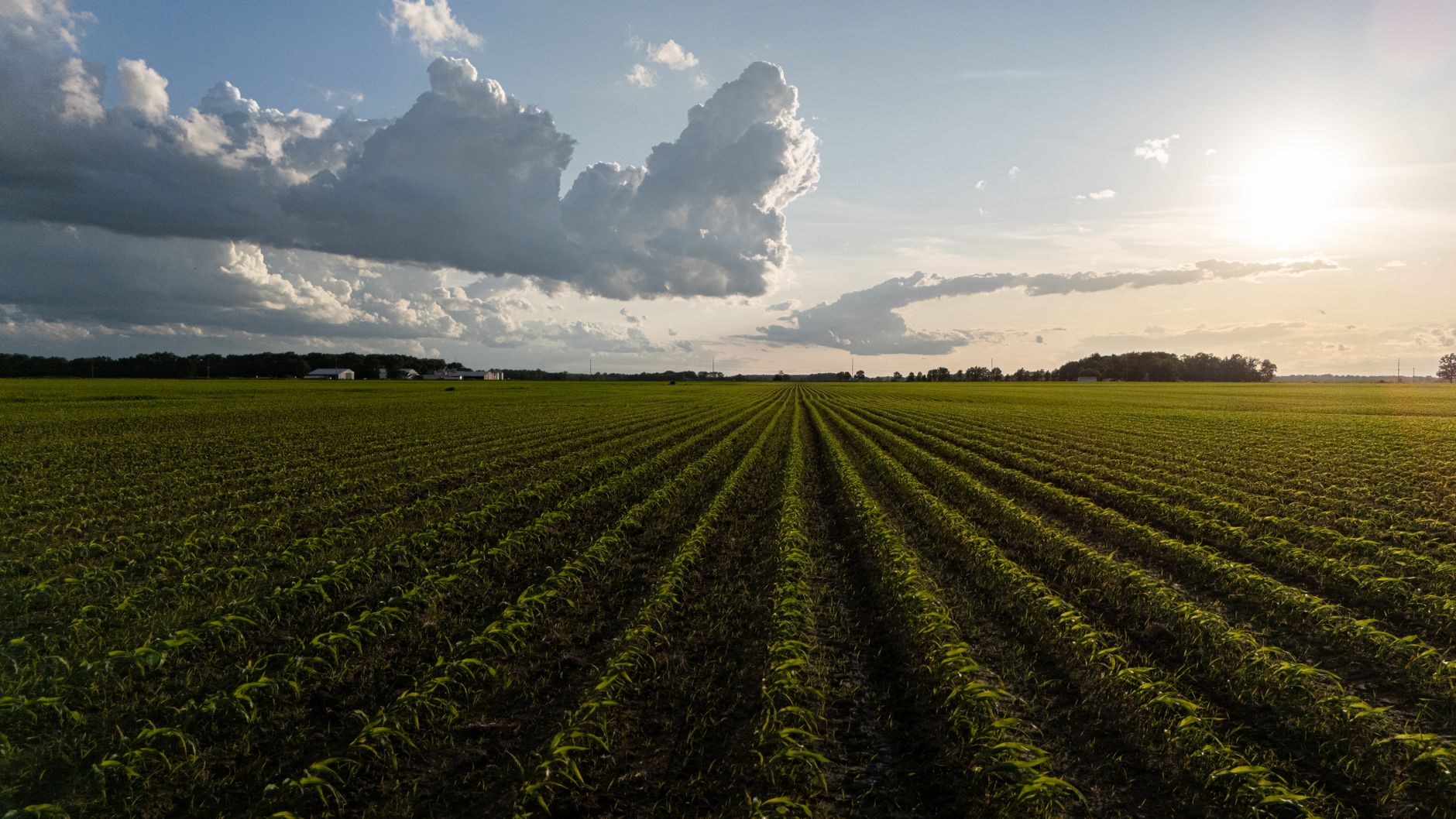
The Acre My Father Never Sold
Amber
I drove home a little after ten. Amber was still up, sitting on the couch with the lamp on and her feet tucked under her, the way she does when she is waiting.
I sat down beside her and handed her the notebook, open to the back cover.
She read the list. Then she paged through the years, slowly. I watched her find “Paid from my share” and then find it again, and again. I watched her find the line about Merle.
“He never said,” she said finally.
“No.”
“All those Thanksgivings. You’d go on and on, and he’d just pass the potatoes.”
“I know.”
She closed the notebook and held it in her lap with both hands. “Luke, I didn’t know. I thought it was the farm’s. I thought it was costing us.”
“So did I.”
“I wanted to rent it to Merle.” She said it like a confession.
“You wanted to pay for my father’s funeral,” I said. “That’s not a sin, Amber. You’ve got a four-year-old and a stack of bills and a husband who walks around like a ghost. You were doing what somebody had to do.”
She was quiet a long time. Then she said, “Who are they? The people.”
“I don’t know,” I said. “Gloria says it was his to tell.”
We went to bed. I lay awake and listened to the yard light hum and thought about Saturday.
The third truck
I had told Amber Saturday, and I am a man who does what he says. That is how my father raised me.
So on Saturday morning I went out to the shop in the dark and greased the shredder. I started the tractor and sat in the seat a long time without putting it in gear. I had a promise to my wife, fourteen thousand dollars of bills, and an acre of corn I did not understand.
I drove out the lane and turned north.
The trucks were there. More than I had seen all week. Nine, ten of them, lined up along the gravel in the mist, and the families already walking in with their buckets and their sacks.
I pulled onto the field approach and shut it down to idle, same as the first morning, and climbed down.
Gloria and Ana were at the front of the line. Ana lifted one hand at me, small, not quite a wave.
The third truck in the line was a brown Ford with a dented tailgate, and I knew it the second I saw it, because I had seen it parked at the co-op every week of my life.
It was Merle Vos.
Merle was seventy, a big man gone a little stooped. He had laughed about Dad’s corn at the co-op for years. “Dale’s sweet corn charity,” he called it, and I laughed right along with him.
He climbed down out of his truck with an empty grocery sack folded in his hand and walked straight up the road to me.
“Thought you’d have it mowed by now,” he said.
“So did I.”
He looked at the rows. He looked at Gloria, who had stopped at the end of her row and was watching us. Then he looked back at me, and his eyes were wet, and I had never in my life seen Merle Vos’s eyes wet.
“He never told you who it was for,” he said.
It was not a question.
“No.”
“Your dad made me promise,” Merle said. “Every year. ‘Don’t you tell my boy, Merle. He’ll figure it out or he won’t.'” He shook his head. “Well. He’s not here to hold me to it.”
He set his sack on the deck of the shredder and pointed at the first pickup in the line, Gloria’s.
“Start with her,” he said. “2009.”