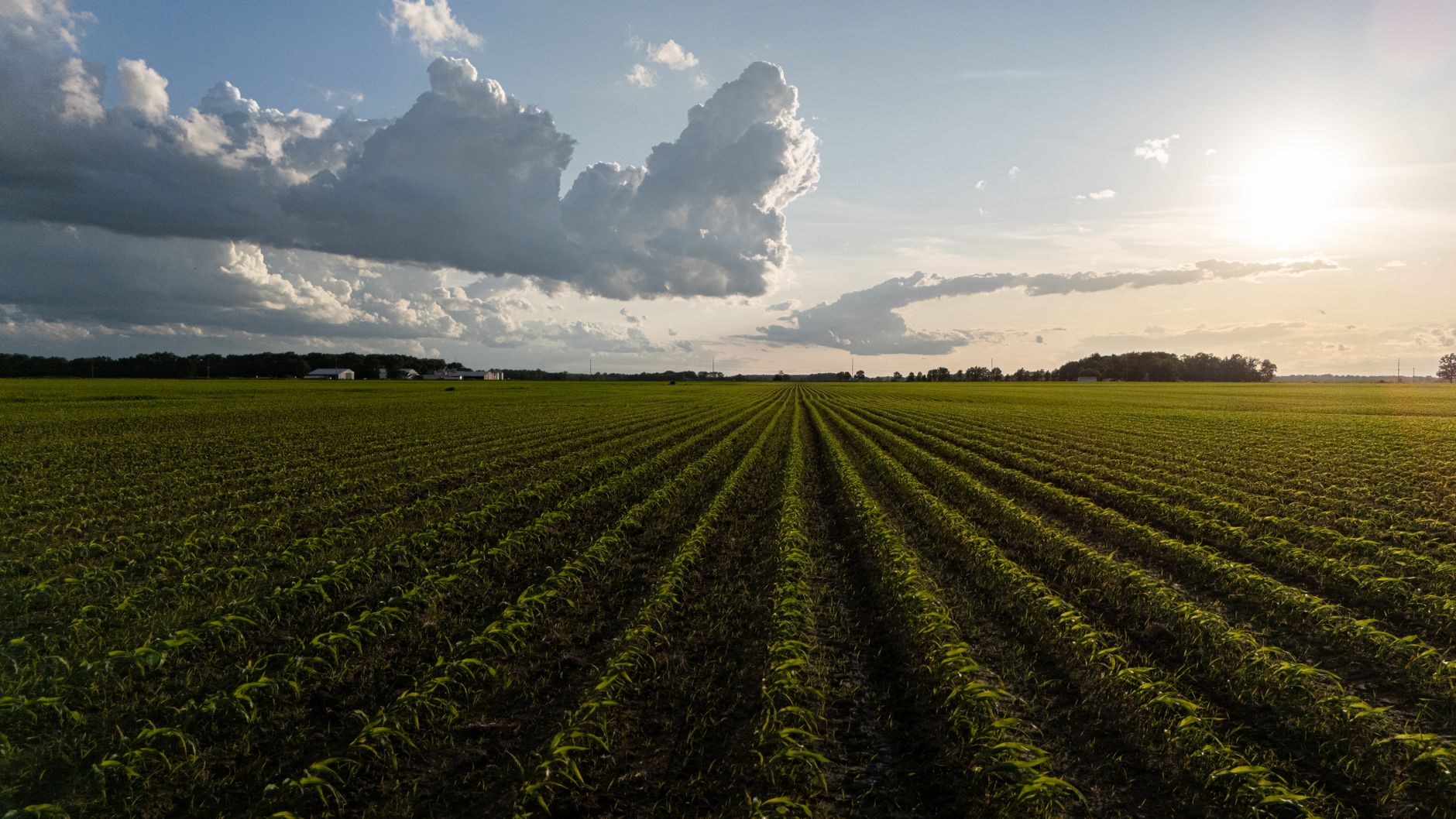
The Acre My Father Never Sold
The notebook
Thursday night I went into Dad’s house to look for the seed receipts. Amber wanted them for the estate paperwork, and I wanted, I think, to be in his house for a while without anybody watching me.
It still smelled like him, coffee and Lava soap. His barn boots were by the back door with the laces still tied. His reading glasses were on the table on top of the Grand Island paper, folded open to the markets.
I sat down at the steel desk in the corner of his kitchen, the one he bought at a school auction in 1988.
The receipts were in a cigar box. Under the cigar box was a spiral notebook, the cheap kind, green, with the cover worn soft at the corners.
I knew what it was before I opened it.
The first page said 2009 at the top, in his square handwriting. Under it were four dates in April, May and June, and a seed variety, and the price.
Every page after that was a year. Seventeen pages. Four planting dates on each one, the variety, the price of the seed. In the margins, little notes. “Coons bad.” “Hail June 12, replanted.” “Dry. Ran the hose out from the yard hydrant.”
And on the inside of the back cover, taped down with yellowed tape, was a list. He had written it in pencil and gone over it in pen, like he wanted it to last.
“Road rows first. Pull the coon ears.”
“Mrs. Lindgren can’t bend. Cut hers.”
“Let the kids have the big ones.”
“Leave the thin ears to fill. Come back Friday.”
“Don’t stand there. Nobody comes to be thanked.”
I read it three times. Then I put the notebook down on the desk and sat back in his chair.
I had pulled the coon ears off the road rows on Tuesday without anybody telling me. I had cut Mrs. Lindgren’s corn that same morning without knowing her name. I had been doing my father’s list all week, and I had not even known there was a list.
The money
The list was not what took the air out of me. It was the line at the bottom of every page.
I went back through the notebook, year by year. On every single page, under the seed price, he had written the same four words.
“Paid from my share.”
We farmed as a partnership, Dad and me, and every year we split it out. His share, my share. He was saying, plain as day, that the seed for that acre had never once come out of the operation.
The last entry, from this past spring, said: Seed, $212. Paid from my share.
And under the fall entries, every single year, one more line.
“Merle offered $300. Told him no.”
I sat there and did the arithmetic I had done out loud every Thanksgiving since I was eighteen. Three hundred dollars times seventeen. Five thousand one hundred dollars. The most expensive acre in the county. I had said it so many times I could hear my own voice saying it.
But it was never the operation’s money. The land was his. The seed was his. The rent he turned down was his to turn down. And he let me stand at his table and tell him he was costing me money.
He never corrected me. Not once. Not even to win the argument.
Halfway down the 2014 page, in smaller writing, he had written: “Luke says it again. He is not wrong about the money. He is wrong about the rest. Someday.”
I sat in my father’s kitchen with his glasses on the table and his boots by the door, and I cried for the first time since the hospital. Not at the funeral. Not at the graveside. At a steel desk, over a spiral notebook, at two words.
Someday.