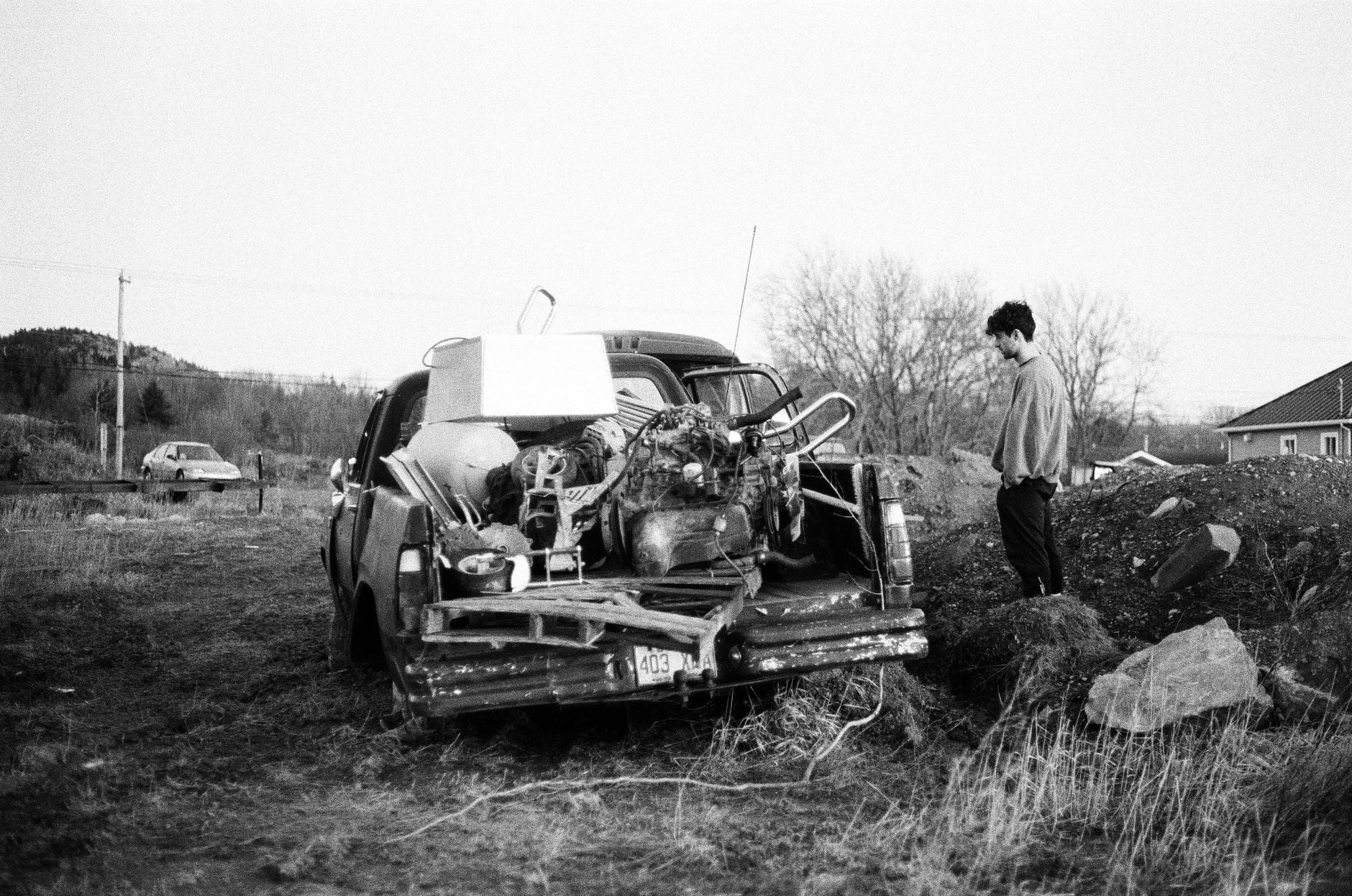
What the Scrap Pile Was Really For
What I said
They wanted me to say something. I stood up again, harder this time, with Joanne’s help, and looked down the room.
“I don’t know any of you,” I said. “I never wanted to.”
A few people laughed. It was a good laugh, the kind that lets some air in.
“My wife did this. She kept a card on every one of you, and she paid your application fees out of her purse and told me she didn’t. All I did was drive a truck. If you want to thank somebody, she’s out at the cemetery on Route 51, and she’ll hear you.”
I looked at the girl in the Eastern Illinois sweatshirt, who had her hand over her mouth.
“How’s Eastern?” I asked her.
“Cold in the mornings,” said Kendra Lutz. “I’ve never been so glad to be anywhere.”
That was all I could do. My knees were shaking, and I sat back down, and the meeting went on to the request about the lot by the feed mill, because that is what a city council does.
Afterward nobody left. Rich Hollis found me by the water fountain and said he would note the order complied if the lot was clear by the fifteenth of November, and that he would take no pictures. “I can’t haul it,” I said. He looked across the lobby at the eighteen people in their loose circle. “I don’t think you’ve got to.”
Tessa Marburger came over last, both hands wrapped around her badge.
“I was going to tell you,” she said. “In the emergency room, when I saw your name on the board. Opal said not till the pile was gone.”
“You were very kind to me.”
“You were also swearing at the refrigerator. You told it you’d bury it.” She tried to smile. “Twice.”
She took my free hand and held it in both of hers. She had a nurse’s hands, dry and strong. She didn’t say anything else, and I was grateful.
In the truck on the way home Joanne drove with both hands on the wheel and didn’t say a word for six miles. I looked out at the bean fields gone brown.
She pulled into my driveway and turned off the engine. We sat there in the dark, and I could hear it ticking.
“Dad,” she said. “I thought you were hoarding.”
“I know you did.”
“I was going to put you in a place in Effingham.” She laughed a small cracked laugh, the first I’d heard from her in a year. “I had a brochure.”
“It was a nice brochure,” I said. “I saw it on the counter.”
She put her forehead on the steering wheel and stayed there awhile. I let her. I figured she had earned it.
Saturday
I did not expect anyone on Saturday.
I was in the kitchen at seven in the morning eating oatmeal when I heard a diesel in my driveway. Then another. Then a third.
I went to the window and leaned on the sink. There were pickups lined down Old Brownstown Road as far as I could see.
Dustin Pohlman had brought his own flatbed. Caleb Strothmann had a stock trailer. The welding instructor from Kaskaskia brought two apprentices and a cutting torch, and he was already walking the pile with a piece of chalk, marking the big pieces the way a butcher marks a side of beef.
Behind them came people who were not on Opal’s list at all. Rich Hollis, in jeans. The pastor of the Methodist church. Kyle and Brooke Lindemann from the old Pettibone place, who’d moved in that summer and had never said anything to me but hello. They were in work gloves, and Brooke was holding a thermos.
Kyle asked in the driveway if they could help. He was a young man with a baby monitor clipped to his belt.
“There’s a bathtub in the back,” I said. “It’s a good one.”