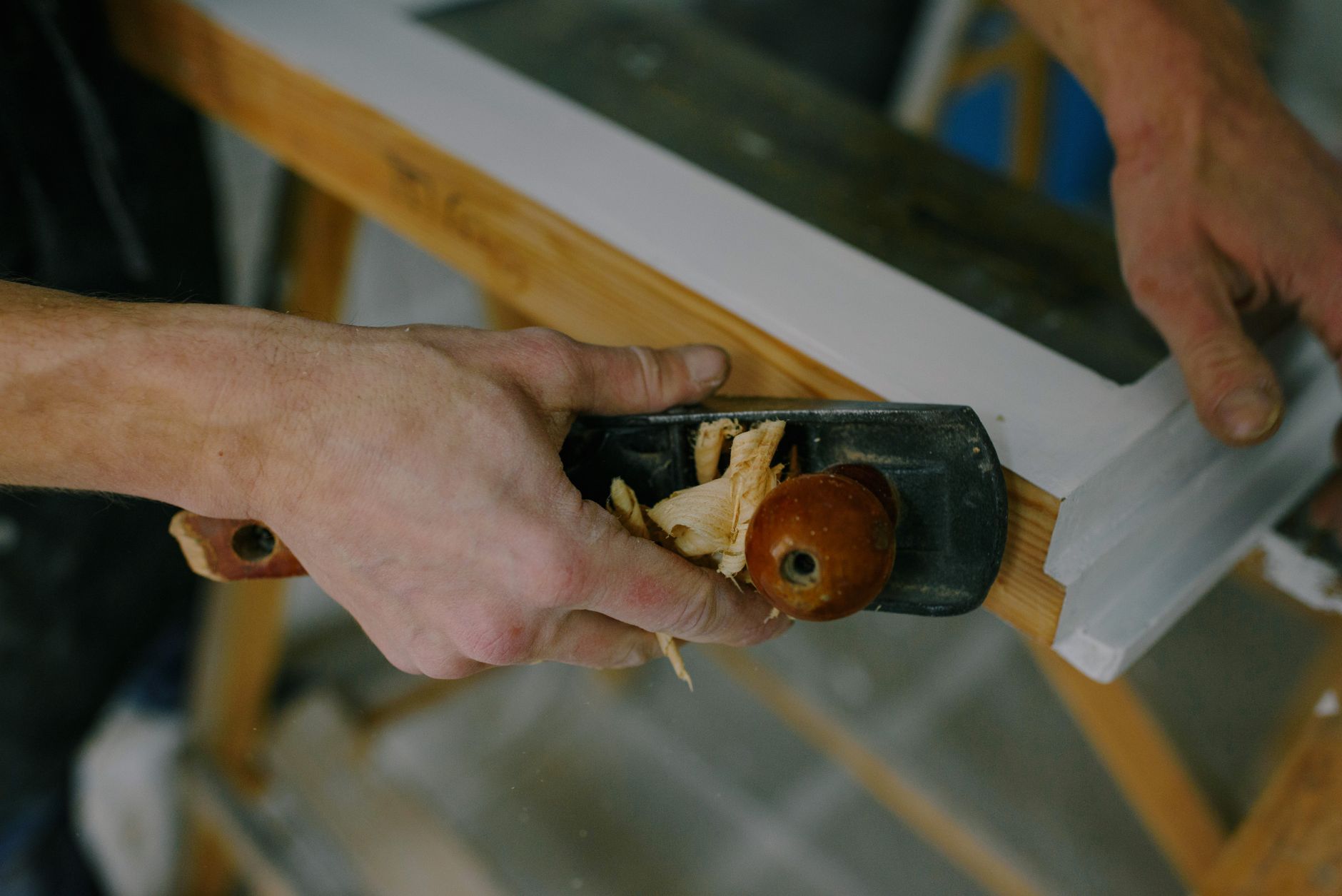
The Casket Ottis Built for Arlis
The first sound of it came through the bedroom wall at twenty minutes to five in the morning, a long dry rasp of a handsaw going through wood, and I lay there in the dark knowing exactly what it was and exactly what it was for.
Ottis had not slept. A man who has been married to you for forty-nine years cannot get out of bed without you feeling the whole mattress shift. He had eased out around two, and I had heard the back door, and then nothing. Now there was the saw.
I pulled Ottis’s old barn coat on over my robe and walked across the wet grass to the shop with a thermos of coffee. The big door stood open a foot, the way he leaves it when he wants air but not company.
He was on the second rung of the stepladder in his undershirt, reaching into the rafters, sliding a long board toward himself an inch at a time. I had lived beside that shop for thirty-one years and never once seen him take those boards down.
“Ottis,” I said.
“Mornin’, Vonnie.”
“It’s not morning yet.”
“Close enough,” he said, and handed the board down to me, and I took the weight of it in both arms.
It was heart pine, dark as strong tea, nearly fourteen inches across, with square nail holes still showing along one edge where a man had fastened it to a barn frame a hundred years before either of us was born.
That was the morning after the hospice nurse came, and the night after Arlis Tidwell asked my husband to build his casket.
My name is Lavonne Dunavant, though nobody has called me that since the second grade. I am Vonnie, I am seventy one, and I live outside Shelbyville, Tennessee, on four acres off a gravel road. For forty six years my husband was a finish carpenter.
Stair rails, built-in cabinets, the kind of trim work people walk past for decades without noticing, which is the highest compliment the trade knows how to pay. He retired six years ago because his knees told him to. His hands did not agree.
Arlis Tidwell, who ran a small engine and brake shop out toward Wartrace, had been his best friend for fifty two years.
They met in the summer of 1974 at Bedford Lumber and Supply, loading trucks for a dollar sixty an hour. Ottis was twenty one and shy as a deer. Arlis was twenty two and could talk a fence post into buying him lunch.
The foreman put them on the same end of a flatbed because nobody else would work next to either one, and by Friday they were eating their sandwiches on the same stack of two-by-fours.
A year later, at a church homecoming, a skinny boy with a grin like a broken piano walked me across the churchyard and presented me to Ottis like a prize heifer. We were married in October of 1977.
Arlis stood up beside him. He lost the ring twice that week, found it both times in the same coat pocket, and stood at the front of Cedar Grove Baptist with his hand in that pocket the whole ceremony, in case.
Arlis married Eula Garrett two years after us. She was small and quick and wore her hair pinned up with whatever was handy, a pencil, a clothespin, once a screwdriver.