What the Scrap Pile Was Really For
Her father’s hay rake
That June her brother called and said the old Becker place out toward Ramsey, where Marlene grew up, had sold, and the new owners wanted the machine shed cleared by the first of August. Her father had been dead eleven years. The shed was full of his iron.
A horse-drawn hay rake with steel wheels. A grain binder from the thirties. Plowshares, harrow sections, a corn sheller, enough chain to hold a river. Nobody in the family wanted it, and the new owners were going to call a man with a dump truck.
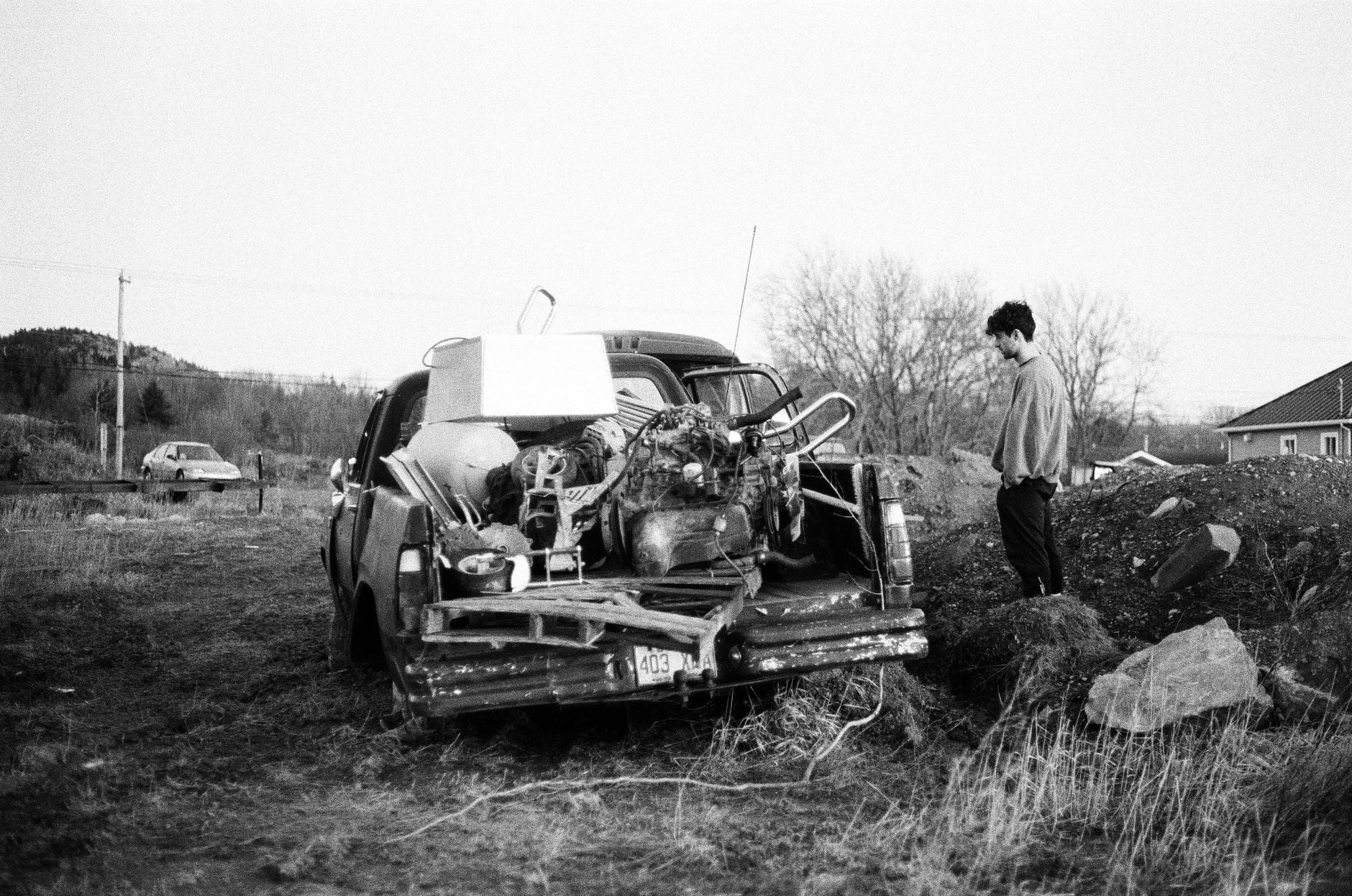
I had an old Ford flatbed from my county days. I borrowed my nephew for two weekends, and we made nine trips to Ritter Iron and Metal on the south side of town.
I had never been in a scrapyard in my life. Verl Ritter ran it. He was thirty-nine then, a huge soft-spoken man with a crew cut and a laminated price list taped inside the scale house window. He weighed me going in, and he weighed me going out empty, and he did the subtraction with a pencil on the back of a ticket.
“Eighteen tons, give or take,” he said. “Cast and mixed. That’s a good haul, Marvin. Old iron, nothing in it but iron.”
He wrote me a check for $4,860.
I held that check in the scale house. It had come from a place that had been in Marlene’s family for eighty years, and it was the first money through my door since the funeral that did not feel like somebody pitying me.
I thought about the green tin box on my kitchen counter. I did not think about it very long. The next morning I went to see Opal Ebner.
Opal
Opal Ebner was the guidance counselor at Vandalia Community High School for forty-one years. After she retired she kept coming in Tuesdays and Thursdays to help seniors with their financial aid forms, because she could not stand to see a kid guess. She was a tall thin woman with silver hair cut like a man’s and a voice that could stop a hallway.
She sat in her office that morning with the door closed, and I put the green tin box on her desk. I laid the check beside it so she could see.
“Marlene’s,” I said.
“Marvin, that’s near five thousand dollars,” she said, looking at the check.
“Forty-eight sixty.”
“Where does a man get forty-eight hundred dollars?”
“Her daddy’s hay rake.”
She looked at me a while.
“Here’s what I want,” I said. “One kid. Whoever you think needs it the most and will use it right. I don’t want a name. I want a college and a number and a student ID, and I’ll mail the check to the college myself, so no money changes hands in this building that anybody can talk about.”
“Why not let them thank you?”
“Because I don’t want to be a man somebody has to thank.”
Opal considered that. She was a woman who considered things.
“They’ll ask me where it came from. I won’t lie to them.”
“Tell them it’s from a friend of the school who asks for nothing. And if somebody finds out, Opal, I’m done. I mean that. This only works if it stays a scrap pile. As far as this town is concerned it’s junk. When the pile’s gone, you can tell them anything you like.”
She kept her hand flat on top of the tin box a moment, and then she slid it into her bottom drawer, where I’m told it stayed the next nineteen years.
“Until the pile’s gone,” she said. “That’s what you’re asking.”
“That’s about the size of it.”
“Then I’ll hold you to this. You keep doing it. One a year. You do not get to quit on a bad winter.”
I said I would not, and I did not. Not for nineteen years.