What the Scrap Pile Was Really For
March
I fell on the fourteenth of March.
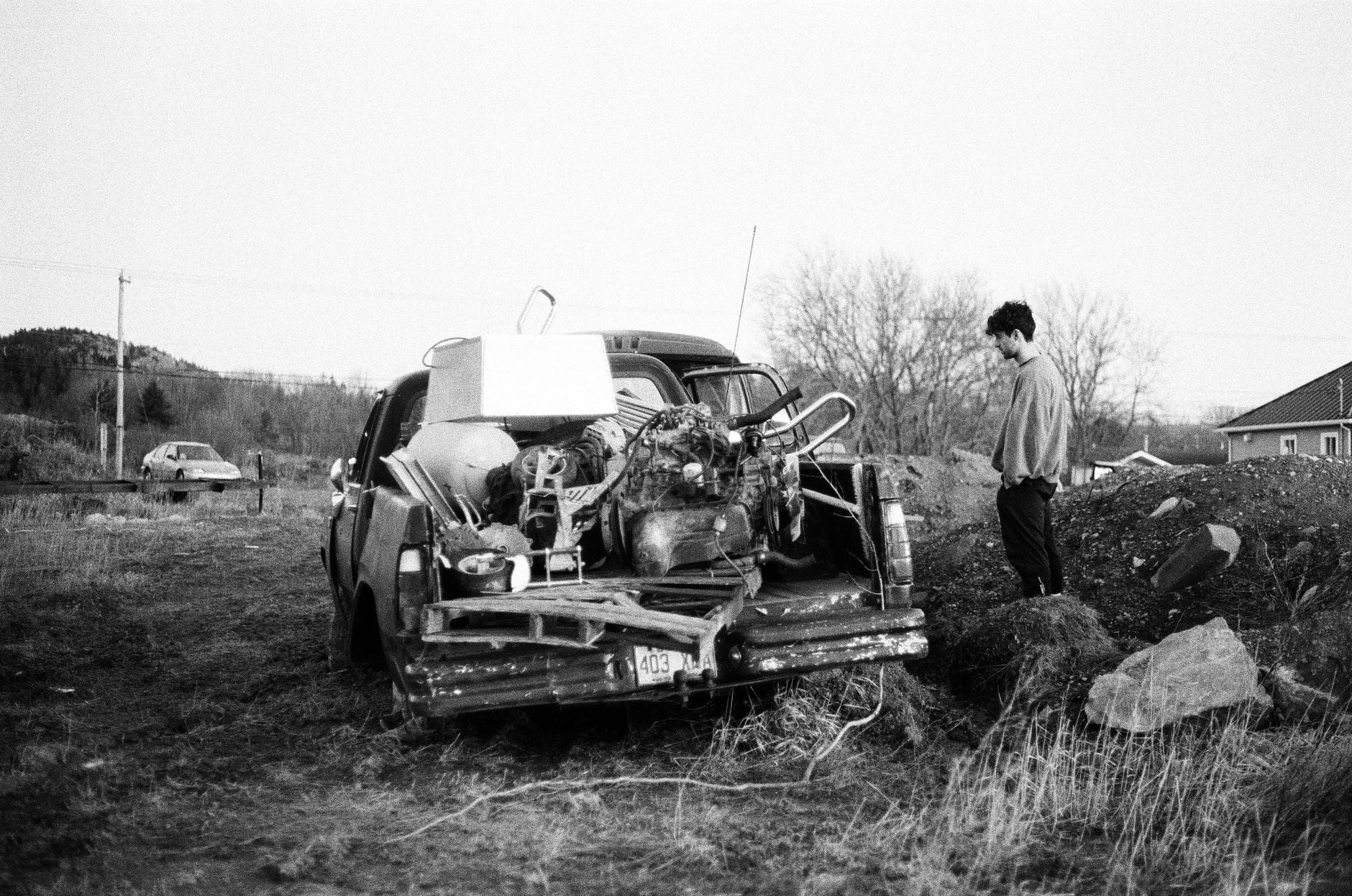
I was loading a refrigerator onto the flatbed behind a house on Hickory Street, something I had done a thousand times. The ground was frozen on top and wet underneath, and when I stepped back my boot went one way and the rest of me went another.
I lay on my back in a stranger’s yard and looked at a clean pale sky, and I thought, quite clearly, Well, that’s a hip.
They took me to Fayette County Hospital in Vandalia, then to Effingham for the surgery, then to a rehab place where I learned to stand up using a bar. The surgeon told me the break was clean and I’d walk again. He also told me, gently, that I was not going to be loading appliances.
I thought about my coffee can, which was a little over a quarter full.
Joanne moved into my spare room for six weeks. She took time off from the dental office where she works and drove me to therapy twice a week. She also, I found out later, walked out to the back lot one afternoon in April, stood there a long time, and then called a man about a dumpster. She was scared. She had watched her father go down in a yard and she wanted to take away everything that might have put him there.
I got off the walker in June and onto a cane in July and back onto the walker in August after I overdid it picking tomatoes.
In the first week of August, Opal called.
I waited for the sentence. It did not come right away.
“Marvin,” she said. “How are you feeling?”
“Like a man who fell in a yard.”
“I heard.” Her voice was careful. “I have a girl for you. She’s a senior, she has the grades, her father drives a feed truck and her mother is out of work, and she wants to teach. Eastern Illinois. Seven thousand six hundred and forty dollars.”
I looked at the wall.
“Opal, I can’t,” I said.
I had never said that to her in nineteen years.
“I’ve got about nine hundred dollars in the can. I haven’t hauled since March. The pile’s sitting back there and I can’t move it. I’m sorry.”
She didn’t say anything for a long time.
“I told you that you don’t get to quit on a bad winter,” she said.
“It wasn’t a winter. It was a hip.”
“I know it was.” Then, after a moment, “I’ll think of something.”
“There’s nothing to think of. I’m out.”
“Marvin Krumm,” she said, “I have buried more good ideas than you’ve had hot dinners, and I have never once buried one because a man said he was out.” She hung up on me. I sat there holding a dead phone, feeling like I’d been sent to the principal.