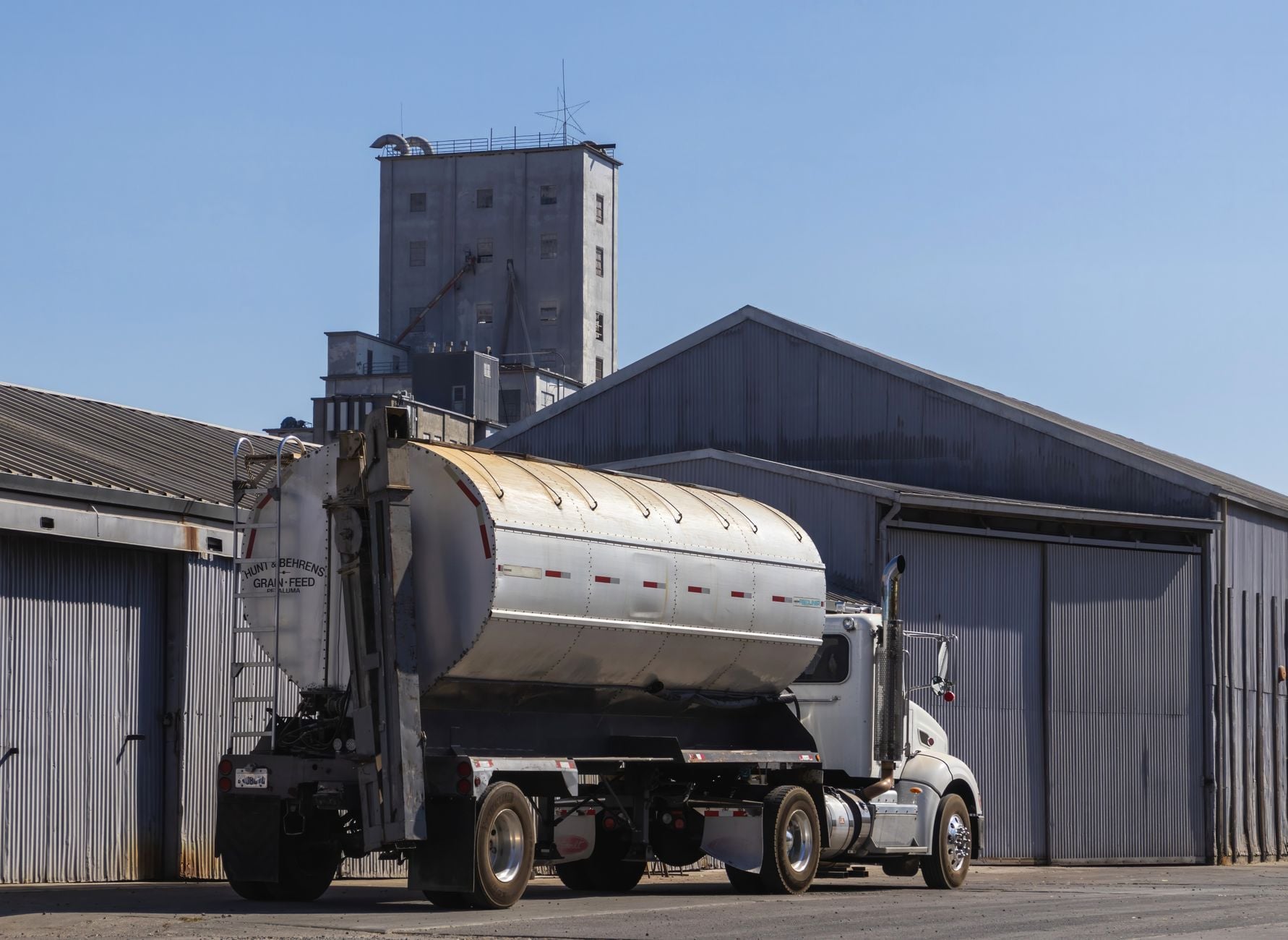
The Last Load Out of Delmore
I told my wife to stay home on the morning of my last run, and she said “All right” a little too fast.
I have been married to Luanne for 45 years, so I know what her voice does when she has something folded up behind her back. I knew it that morning, standing in our kitchen at twenty to five with my coat half on.
It was the third week of October, the middle of milo harvest. My lunch was sacked on the counter, the way it has been every working morning since 1981. Ham sandwich. Two oatmeal cookies. The green thermos with the dent in the lid.
“Don’t make a fuss, Lu,” I said at the door. “It’s a load of milo. Same as yesterday.”
“I know what it is, Ansel.”
She said that without any edge at all, and she fixed my collar, which did not need fixing. Then she followed me out to the truck in her robe and slippers, which she has not done since my first long haul to Nebraska in the summer we were engaged, and she laid her hand flat on the fender of the Peterbilt. She kept it there the way you would touch a horse you had already sold.
I let it go. I want to say I let it go because I was being gracious, but the truth is that I did not want to know. I wanted the day to be small. I had spent forty-six years making myself one kind of man, the kind who shows up and hauls the load and goes home, and I thought I could finish the way I had worked.
At ten past five I did my last walk-around in the dark of our yard, with her watching from beside the truck. I thumped all eighteen tires with the old hickory club from the loop by the door, one after another, eighteen good flat sounds like knocking on a door that has never once been locked. I always save the same one for last, the outside dual on the left rear. I stood with my hand on it a second longer than I needed to, and I did not say why.
The truck is a 2004 Peterbilt 379, long nose, and it was red once. Now it is the color of a barn that nobody has painted since Reagan. I bought it used in 2006 with a loan I thought would kill me, and it has had two engines and three sets of seats. The odometer quit being trustworthy somewhere past two million, but my logbooks, kept in pencil, add up to three point two million miles.
Wheat in June, when the combines come up out of Oklahoma and the whole county runs on sandwiches and diesel. Milo and soybeans in the fall. Corn when there was corn. Calves and yearlings in a cattle pot in January and February, hauled to feedlots through whatever the sky decided to do that week. Twelve counties, my whole life, and the farthest I ever went on purpose was Amarillo.
I was never fast. I was never rich. I was on time, and in my business that is the whole reputation. A farmer with ninety acres of beans ready and a rain coming does not want a fast trucker. He wants the one who said Thursday and showed up Thursday.