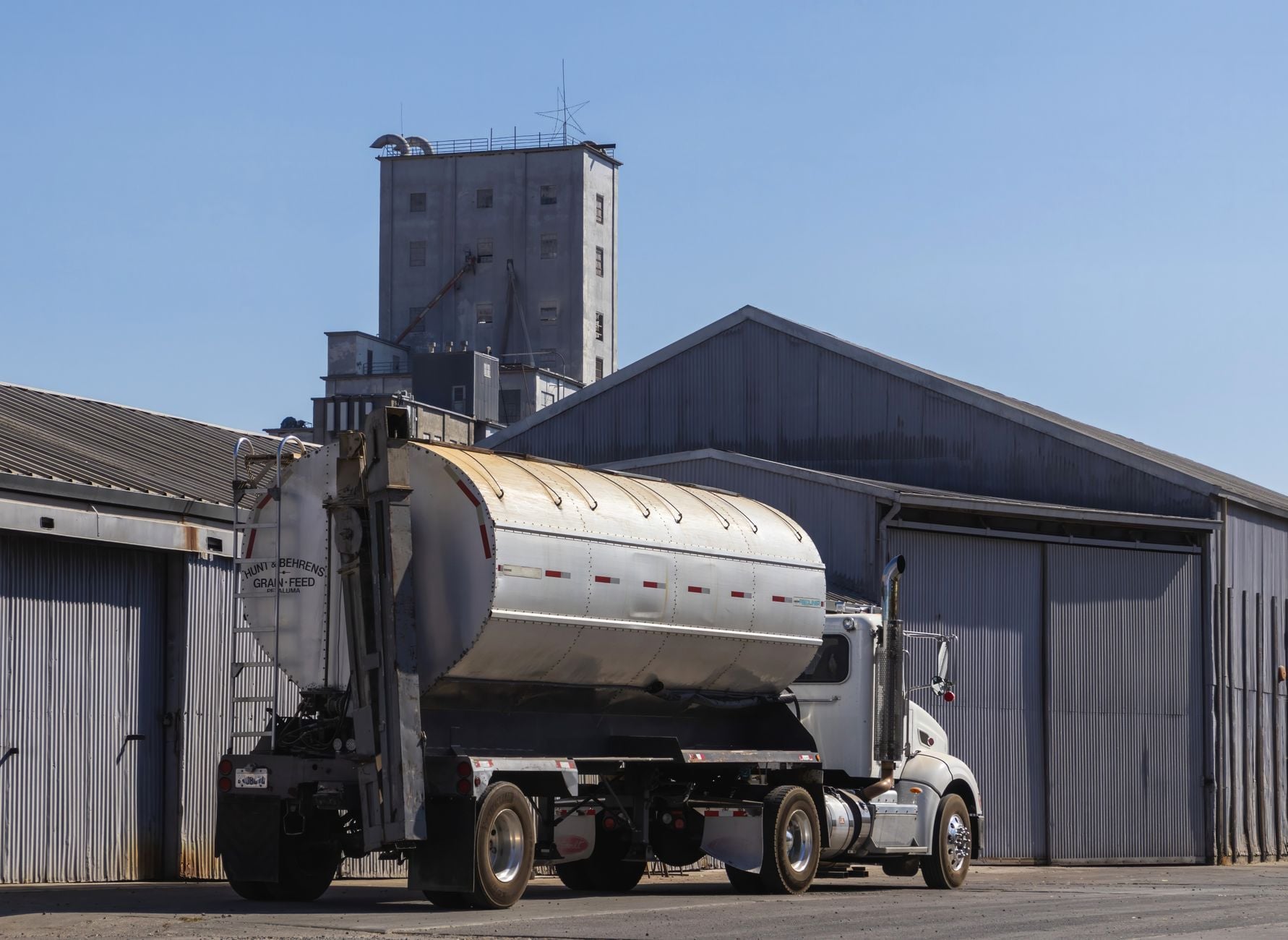
The Last Load Out of Delmore
When I was twenty-two, I did not know any of that. I was a farm kid from outside Assaria with a commercial license and no sense, and I got on with a hog hauler out of Lindsborg named Fritz Dreiling, who was sixty-one and moved like a man carrying a sack of feed in each hand. The first week, we stopped at a truck stop in Hays at two in the morning. I climbed down from the cab and headed straight for the coffee.
Fritz said, “Where do you think you’re going?”
“Inside.”
“You haven’t done your tires.”
He reached behind the seat and came out with a hickory club about the length of my forearm, worn dark and smooth where his hand had gripped it for forty years. He put it in my palm. It was heavier than it looked.
“Hit the tire. Hard. Every one. Listen.”
I hit the front left. It made a flat, hard sound, like knocking on the side of a good oak barrel.
“That’s a good tire,” Fritz said. “That’s how a good tire sounds. When one sounds soft, or wrong, or you’re not sure, you stop and you find out why. You do that every tire, every stop, for the rest of your life, and nobody ever died from a tire that sounded good.”
I thumped all eighteen that night while he watched from the cab with his coffee. It took about four minutes. He taught me the rest over the next six months, but that was the lesson, and I have used it forty-six years. At every fuel stop, every scale, every gravel turnaround. Eighteen tires. Eighteen flat, true sounds.
Fritz passed in 1999 of a heart that had been telling him for years. His wife gave me his thumper at the funeral lunch, in a grocery sack, and said he had wanted me to have it. I still use it. It lives in a canvas loop by the driver’s door.
I have a lathe in the barn that I bought at a farm sale in 1986 for sixty dollars. In the winter of 1988 I turned a tire thumper out of a hickory limb that had come down in an ice storm. It was for a nineteen-year-old named Dewey Pohlman, who had just got his license and who did not have a father around to tell him how a tire should sound. I gave it to him in the co-op parking lot, said what Fritz said, and drove off before he could thank me.
But then there was a second kid, and a third. There was always somebody. They showed up in the cab beside me or at the end of a loading chute or in a gas station parking lot at night, and I could see it on them. They had a license and a truck and a loan, and nobody had ever sat down and shown them how to do it right. So I did what I could, and in the winter I turned them a thumper and burned their name into the handle with a pen-tip iron, and I gave it to them without a speech.
I never kept count. Luanne did. Forty-one, she says, as of that October.
The first I want to tell about is Corbin Reimer, since he is the one I think of when somebody asks me why.
It was January of 2011, the week the interstate closed from Salina to Hays. I was sitting at the truck stop at exit 252 waiting out the blizzard. Around ten that night, a young fellow came in the door shaking so hard the snow fell off him in pieces. Maybe nineteen, in a thin canvas coat. He asked the woman at the counter if there was any way to get water for animals, and she looked at me.