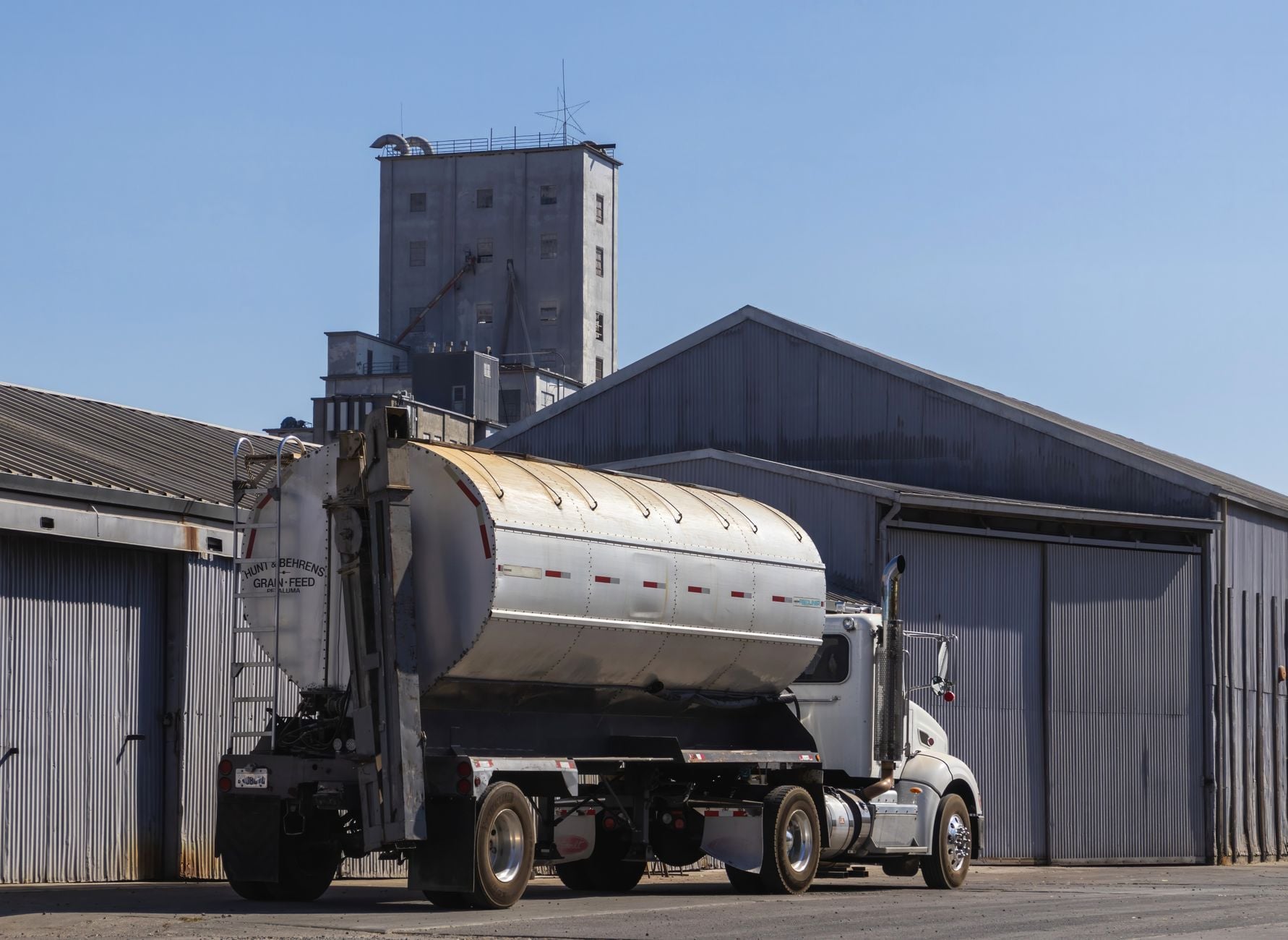
The Last Load Out of Delmore
“Weigh-in,” he said. His voice cracked on the second syllable. “That’s all this is, Ansel. I’m just weighing you in.”
“Wouldn’t dream of it,” I said, and he laughed once and turned his face away.
They gave me forty-seven thousand, six hundred pounds, which is 850 bushels of milo on the nose. I pulled over the pit and opened the gates. The grate took the load with that long rushing sound I have heard at the end of every run of my life, red grain pouring down like a soft heavy rain.
I did not look in the mirror while it emptied. I could not.
When the trailer was empty, I pulled forward to the open place in the middle of the two rows of trucks, and I set the brake, and I shut the engine off.
The yard went quiet. Truly quiet. Sixty-some trucks and not one engine running, not one door slamming. Behind the windows of the school bus I could see a kid in a baseball cap, a grandmother, and some farmers in their church coats.
I sat in the cab for a moment with both hands on the wheel. I am embarrassed to say how long.
Then the passenger door opened, and Luanne climbed up and sat down on the seat next to me, in her good blue dress, with her hair done.
She was crying. She had been crying for some time, from the look of her face. She is not a woman who cries in front of people, and she was crying in front of a hundred, in a gravel yard, with no thought for it whatever.
“I couldn’t stay home, Ansel,” she said.
“I see that.”
“You told me to stay home.”
“I did.”
“I thought about it. I really did. For about a minute and a half.”
I laughed. It came out of me in a kind of cough. She reached across the cab and took my hand and held it in both of hers, the hand with the callus across the palm from the shift knob, and neither of us said anything.
After a while she said, “They’re waiting for you to get down.”
I climbed down.
I have been in a lot of rooms in my life, and none of them was as quiet as that gravel yard.
They had made a place for me in the center of the aisle. There were no speeches, which I want to put on record, because I had asked for none. Corbin came out of the line toward me, thirty-five years old now, broad in the shoulders. He stopped about six feet away. He had a thumper in his hand, the one I turned him in March of 2011, with his name on it, worn nearly black.
“You never let anybody say thank you,” he said. “So we’re not going to say it.”
“Good.”
“But I need you to do something for us, and you can’t argue.”
“I might argue.”
“Ansel.”
“All right,” I said.
He nodded at my truck. “Walk-around,” he said. “Last one. It’s the rule. You haven’t done your tires.”
I understood what it was then. I understood all of it, and I could not have said a word if you had put a gun to me. I reached up into the canvas loop beside the driver’s door and took down Fritz Dreiling’s thumper. It weighed what it has always weighed.
But Corbin held up one hand. “Not you,” he said gently. “You’ve done eighteen thousand of these. Let us.”