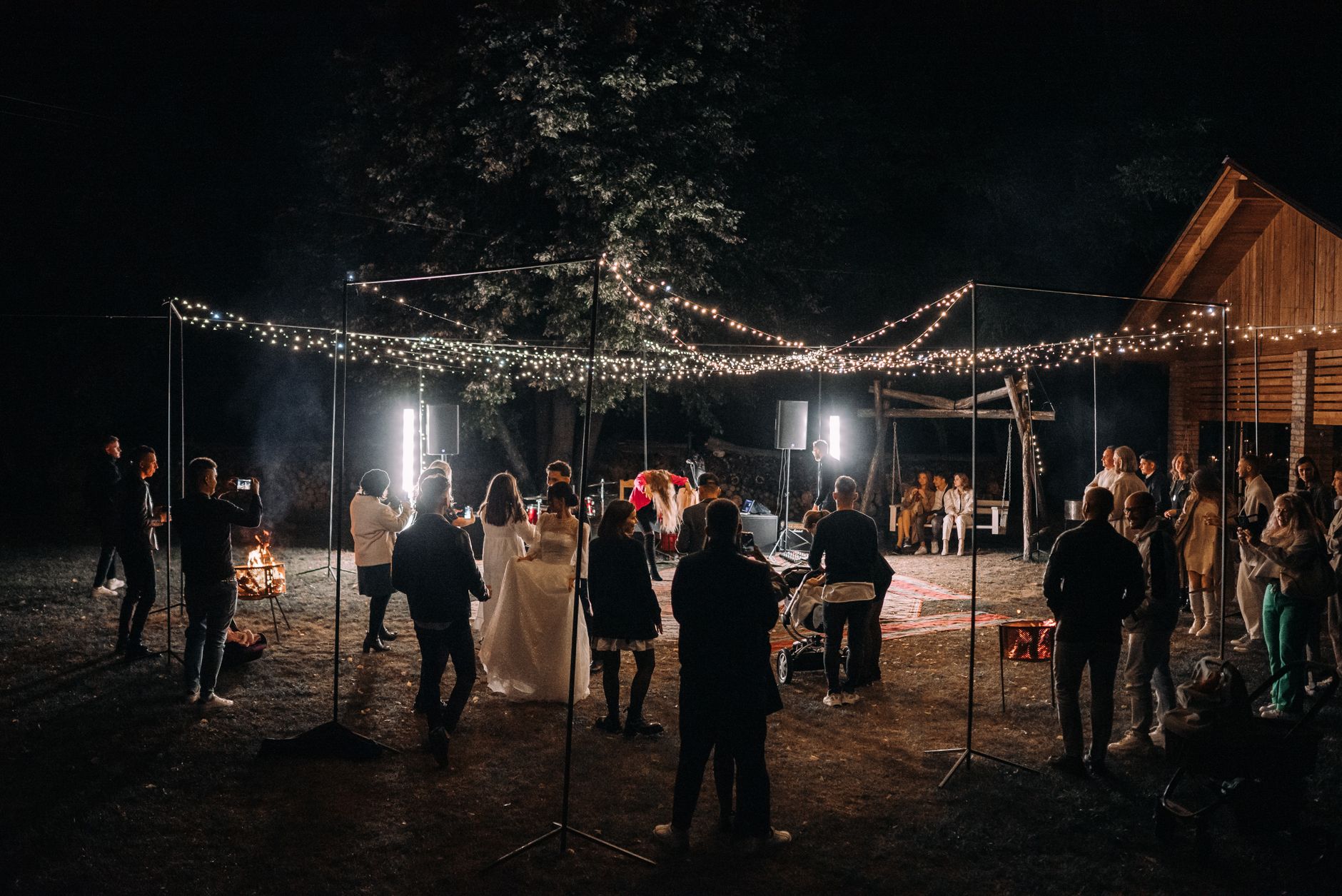
The Wedding Supper in the Machine Shed
The brooch
Saturday morning I drove to the home place early, before Dad was up. Doris had moved her things out to the farm that week, and she was at the kitchen table in her robe with a cup of coffee, looking out the window at Mom’s garden, which had gone brown for the fall.
I sat down across from her. I had a small velvet box in my coat pocket, the color of a church cushion, worn at the corners.
I had been carrying it around for three days trying to decide.
Inside was my mother’s garnet brooch. It was shaped like a little cluster of grapes, dark red stones set in gold, and it had been her mother’s before that, brought over from Sweden in a trunk.
Mom wore it every Christmas Eve and every Easter morning of my life, pinned to her left collar.
I opened the box and set it on the table between us.
Doris looked at it and put her hand over her mouth. She knew it. Of course she knew it. She had sat behind it in church for forty years.
“Karen, no,” she said. “I can’t. That’s your mother’s. That should go to your girls.”
“It will go to my girls,” I said. “Someday. But right now I’d like it to go to the supper. On you.”
“Your brothers,” she said. “If they see it, they’ll think…”
“They’ll think what they think. Mom would want it there. She’d want it on somebody who’s taking care of Dad.” My voice went funny then, and I had to stop. “Somebody who makes him laugh in church.”
Doris started to cry. She cried the way church women cry, quietly, into a paper napkin from the holder, without making any noise at all. She said, “Are you sure, honey?”
I was sure. I came around the table and pinned it on her robe, right on the left side where Mom wore it, and we both looked down at it, and then we both laughed, because it looked ridiculous on a bathrobe.
“I’ll wear it on my dress tonight,” she said. “Right here. Where Arlene wore it.”
Then she held my face in both her hands, like you would hold a child’s, and said, “I will never try to be your mother. I’ll only try to be good to your father. That’s all I came for.”
The supper
By five o’clock Saturday night the yard was full of pickups and Buicks parked in rows on the stubble, and the shed was full of people.
Ninety-one, by Marlys’s count, which she kept on the back of a church bulletin.
Twelve tables in two long rows, white paper tablecloths taped down at the corners, a Mason jar of yellow mums on each one.
The string lights glowing over everything. The old green 4440 at the back wall with a bow Amy’s kids had tied on the steering wheel.
Pastor Dale said the table prayer. He thanked God for second chances and long marriages, and for Arlene and for Clarence, who were not here, and for the women of the church, who were always here. Half the shed said amen with wet eyes.
Dad and Doris sat at the head table with Becky and Steve and me. I watched Dad eat.
He ate two plates. He hadn’t eaten two plates of anything since Mom died. The garnet brooch caught the string lights every time Doris leaned over to talk to somebody.
After the cake, Steve’s cousin plugged in the Legion speaker and put on the old country station out of Watertown.
The first song was a slow one, a Jim Reeves song my mother used to sing at the stove.
Dad stood up. He buttoned his charcoal suit coat, and he held out his hand to his wife.
They danced in the middle of the shed, on the concrete where our combine sits all winter, right on the seam in the floor.
Slow. Dad never could dance fast. They were both smiling in that small way old people smile when they’ve stopped worrying how they look.
I stood off to the side with my hands pressed together under my chin. I didn’t know I was doing it until Amy showed me the picture on her phone later.
That’s when Steve came up beside me and touched my arm. “Karen,” he said quietly. “Look at the lane.”