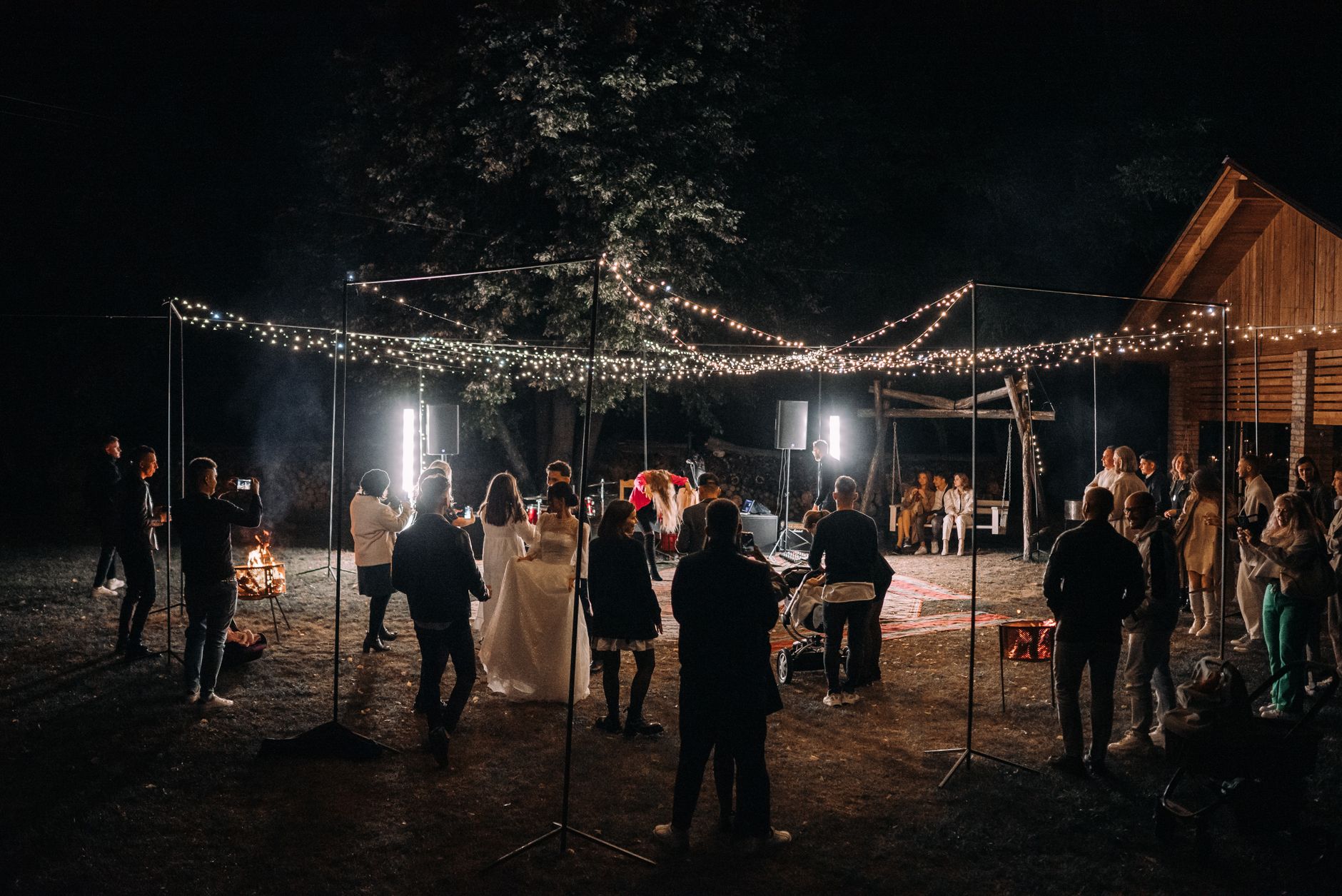
The Wedding Supper in the Machine Shed
“She’s after the farm, Dad,” my brother Gary said, and he said it to the salt shaker instead of to our father, the way he has always said hard things.
We were sitting at Dad’s kitchen table on a Sunday afternoon in late August, the four of us, with the window open and the smell of the neighbor’s cut hay drifting in over the sink.
My younger brother Jim sat beside Gary with both hands wrapped around a coffee cup he had stopped drinking from ten minutes earlier.
He nodded once, slowly, at the cup. That nod was his whole vote.
I sat at the end where Mom used to sit. I had not planned to sit there. It was just the empty chair, and I was the last one through the door, and nobody had moved in four years.
Dad did not raise his voice. In fifty-two years I have heard my father raise his voice exactly twice, and once was at a cow.
He folded his big hands on the oilcloth and looked at both of his sons.
“Doris and I are getting married,” he said. “Friday the ninth of October. At the courthouse in De Smet, in front of the magistrate. Then we’ll have a cake at the café or something. Nothing fancy. We’re too old for fancy.”
“Dad,” Gary said. “You’ve known her a year and a half.”
“I’ve known her forty years. I’ve been courting her a year and a half.”
“That’s not the same thing and you know it.”
Jim finally spoke. “Gary’s not saying she’s a bad person, Dad. He’s saying you’ve got four hundred and eighty acres and she’s got a house in town and a daughter in Minnesota. People talk.”
“People always talk,” Dad said. “Let them.”
“It’s Mom’s farm too,” Gary said, and then his voice did something I had not heard it do since the funeral.
It cracked down the middle. He cleared his throat to cover it, and it did not cover anything.
The kitchen went quiet. The clock over the stove, the one with the rooster on it that Mom bought at a church auction in 1988, ticked so loud I could hear it over the box fan.
“I know whose farm it is,” Dad said softly. “I was there when we bought every acre of it.”
Gary stood up. He pushed his chair in, which is how you know a Peterson is truly angry, because we push our chairs in.
He took his seed cap off the hook by the door and held it in both hands.
“Then we won’t be there,” he said. “Jim and me. We won’t be at the courthouse and we won’t be at the café. I’m not going to stand there and smile while somebody takes Mom’s place.”
“Nobody’s taking anybody’s place,” Dad said.
But Gary was already out the screen door, and it slapped behind him, and a minute later we heard his truck start in the yard.
Jim sat a little longer. He looked at me, and I think he wanted me to say something that would let him off the hook in either direction.
I didn’t say anything. I didn’t know what I was allowed to say yet.
Jim got up, rinsed his cup in the sink like Mom taught all three of us, set it upside down on the dish towel, and said, “Sorry, Dad.” Then he went out too, and his truck followed Gary’s down the lane to the gravel road.
Dad and I sat at the table and listened to the two trucks go. When the sound was gone he reached over and turned the salt shaker a quarter turn, the way you would straighten a picture on a wall.
“Well,” he said. “That went about how I figured.”