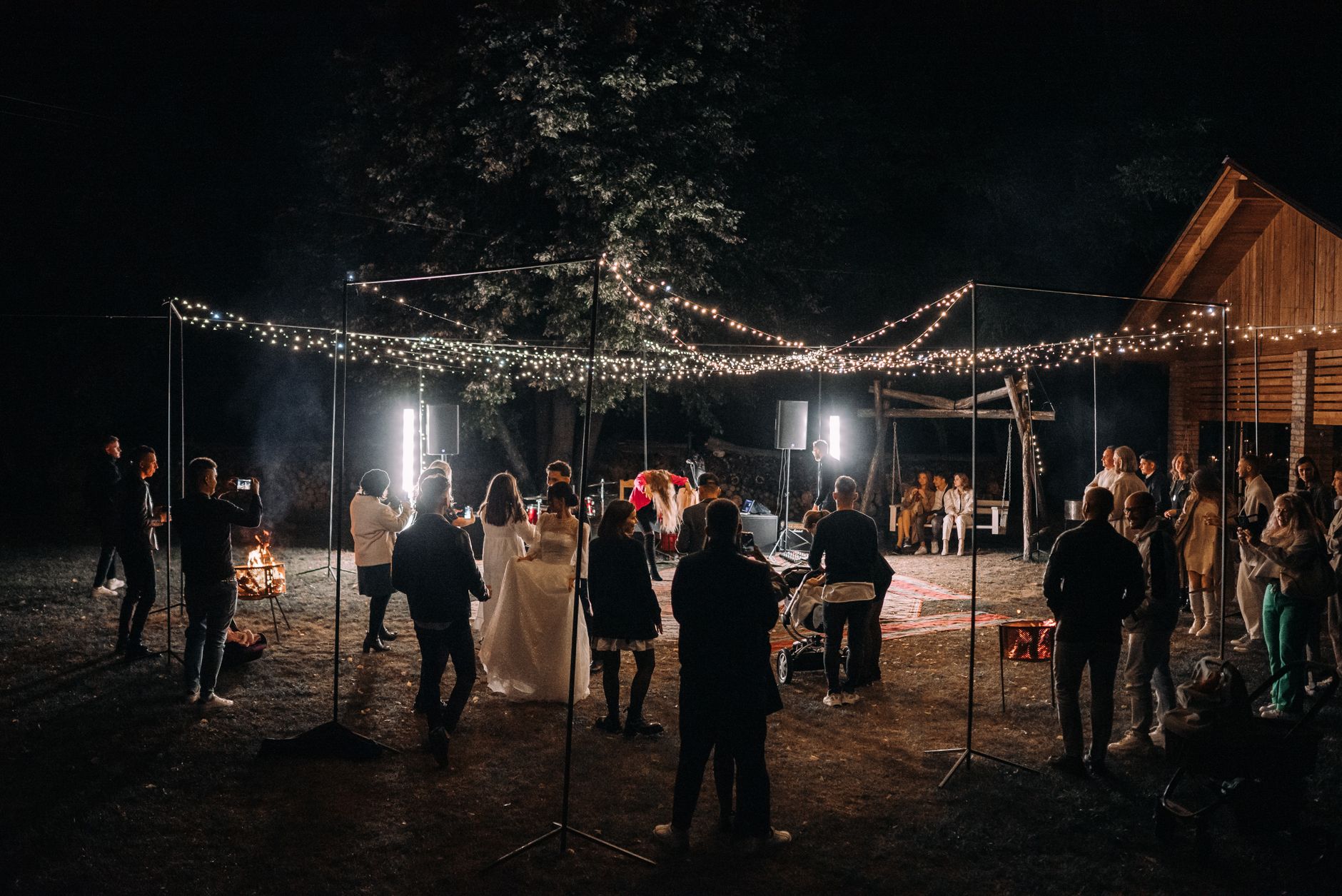
The Wedding Supper in the Machine Shed
I did not want to fight my brothers. I want to be clear about that. I could have called Gary that night and told him what I thought of him.
I could have driven to Sioux Falls and stood in Jim’s kitchen. I have a temper, though I mostly keep it in a drawer.
But a fight would have been about us. I wanted something that was about Dad and Doris. I didn’t want the fight. I wanted the supper.
That night after chores I told Steve I wanted the machine shed.
He was sitting at the table in his socks with the market report on the radio. He turned it down.
He looked at me for a long time, the way he looks at a field before he decides whether it’s dry enough to go in.
“For what?” he said.
“For a wedding supper. October tenth. The day after the courthouse. I want to have it here, in the shed, with tables and lights and everybody.”
“In the middle of corn harvest.”
“In the middle of corn harvest.”
“How many people?”
“Everybody who will come.”
Steve is not a talker. He is a big, quiet Swede who can rebuild a hydraulic pump on the kitchen floor and has cried exactly twice in thirty years, both times at our two girls’ weddings.
He scratched his jaw. Then he got up and took his chore coat off the hook.
“Where are you going?” I said.
“Out to look at the shed,” he said. “If we’re doing this, I need to figure out where the grain cart goes.”
Clearing out the shed
Our machine shed is a pole building Steve’s dad put up in 1979, sixty feet by a hundred, with steel siding and a concrete floor poured in two halves, so there’s a seam down the middle you can feel through your shoes. In winter it holds everything we own that has wheels.
In early October most of it was out in the field. The combine was running corn on the north quarter and the semi was hauling to the elevator.
But the planter was in there, folded up, and the grain cart, the old John Deere 4440 Steve keeps for the auger, the lawn mowers and forty years of things too good to throw away.
We started that next Saturday. Steve pulled the planter out with the tractor and parked it along the windbreak.
He pulled the grain cart out next to it. The 4440 we pushed to the back wall and left there, because it had a slow leak in the left rear tire and Steve said it looked like it belonged.
Then we swept that concrete three times. Ten years of chaff and mouse nests came out of that shed.
Steve borrowed his cousin’s power washer and washed the floor, and we left the big doors open three days to dry.
Our daughter Amy drove up from Mitchell on a Sunday with her two kids and helped me scrub the oil spot by the workbench with kitty litter and dish soap.
It never came all the way out. I put a table over it.
I went to Runnings in Brookings and bought six strings of the big outdoor lights, the warm white kind with the bulbs like old-fashioned Christmas bulbs.
They were $15.99 a string, plus tax, which came to about $94. The girl at the register asked if I was having a party.
I said, “My dad’s getting married.” She said, “Aw,” and I almost cried right there by the bird seed.
Steve hung them on a Thursday night after he came in from the field. He stood on the top of the orange stepladder I am always telling him not to stand on, and ran them rafter to rafter across the whole shed in long swags, and plugged them into the outlet by the workbench with two heavy extension cords.
When he flipped the switch I was standing in the doorway. The whole inside of that old pole shed went gold.
It looked like a barn dance in a movie. Steve climbed down and stood beside me with his hands in his back pockets and looked up at it.
“Well,” he said. “That’s not bad.”
From a Swede, that is a sonnet.