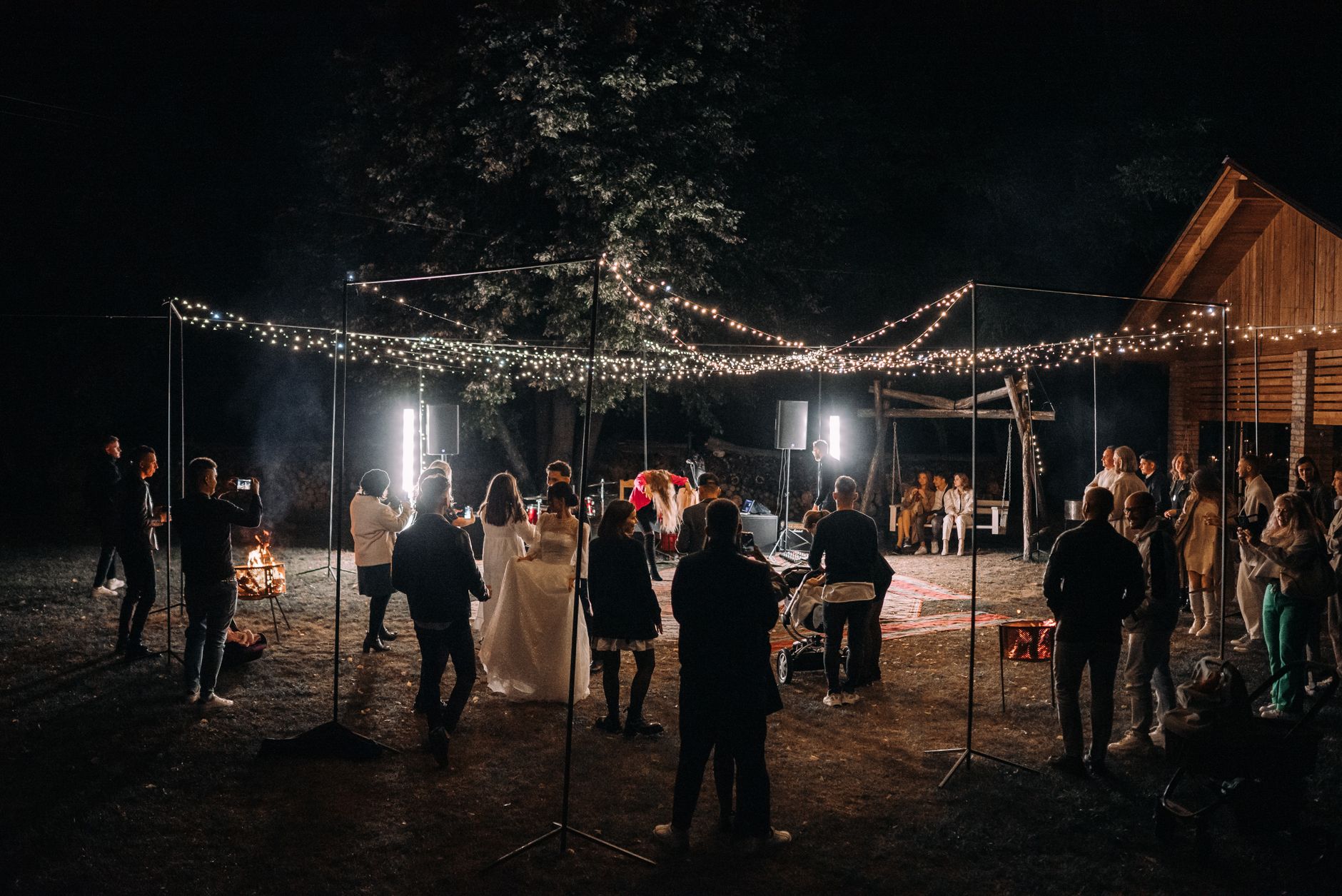
The Wedding Supper in the Machine Shed
Telling Dad
I told Dad on a Wednesday. I drove over with a pan of bars and told him at the kitchen table, the same table, the same oilcloth.
I told him about the shed and the lights and Marlys and the ninety people.
He did not say anything for a long time. He picked up one of the bars and turned it over in his fingers like he was checking it for a crack.
“Karen,” he said. “That’s an awful lot of work in the middle of harvest.”
“Steve says the corn will wait one Saturday.”
“Steve said that?”
“Steve hung the lights himself. On the stepladder he’s not supposed to stand on.”
Dad laughed. Then he put the bar down and put his hand over his eyes, and his shoulders went up and down a couple of times, and I sat there and let him.
When he took his hand away he said, “Your mother would have done this.”
“I know. I learned it from her.”
“Does Doris know?”
“I wanted you to tell her.”
He went to the phone on the wall, the one with the long cord Mom used to stretch all the way to the stove, and called Doris, and told her.
I could hear her voice through the receiver, high and surprised. Then I could hear her crying. Dad stood there holding the phone, saying, “I know. I know. She did.”
Before I left, I said, “I’m going to call the boys and invite them.”
“They won’t come.”
“Then they’ll have been invited.”
I called Gary that night. He picked up on the fourth ring. I told him the time and the place, plain, like reading the minutes at a church council meeting.
When I was done there was a long silence and then he said, “You’re making a mistake, Karen.”
“Maybe,” I said. “Supper’s at five. Dad would like you there.”
“I’m not coming.”
“I know. I’m inviting you anyway.” And I hung up, gently, before either of us could say something worse.
Jim I texted, because Jim does not answer his phone. He wrote back two days later. All it said was, “I’m sorry, Kare.” He hasn’t called me Kare since high school.
The courthouse
They were married on Friday, the ninth of October, at two in the afternoon, by the magistrate judge in a little room on the second floor of the Kingsbury County courthouse in De Smet.
They had picked up the license from the register of deeds the week before. In South Dakota there’s no waiting period, which Dad said was the first thing the state ever did for him fast.
Steve and I were the witnesses. Doris’s daughter Becky drove over from Marshall with her husband. That was the whole wedding party, six people and a magistrate in a cardigan sweater, in a room with a flag in the corner and a window that looked out over the parking lot.
Dad wore his good charcoal suit, the one he wore to Mom’s funeral, and I wondered about that, and then I decided Mom would have told him to wear it, because it was his only good suit and money doesn’t grow on trees.
Doris wore a pale blue dress she had bought at the Dakota Mall in Brookings, with a little white cardigan over her shoulders and her white hair set that morning at the beauty shop.
She carried a small bunch of yellow mums from her own garden, tied with a ribbon.
When the magistrate asked who gives this woman, Becky stood up and said, “I do. Gladly.” Everybody laughed, and that broke the stiffness out of the room.
They said their vows in plain voices. Dad’s hands shook putting the ring on. Doris steadied them with hers.
There were two empty chairs in that little room. Nobody had set them out for anybody. They were just chairs along the wall.
But I looked at them through the whole thing, and I know Dad did too.