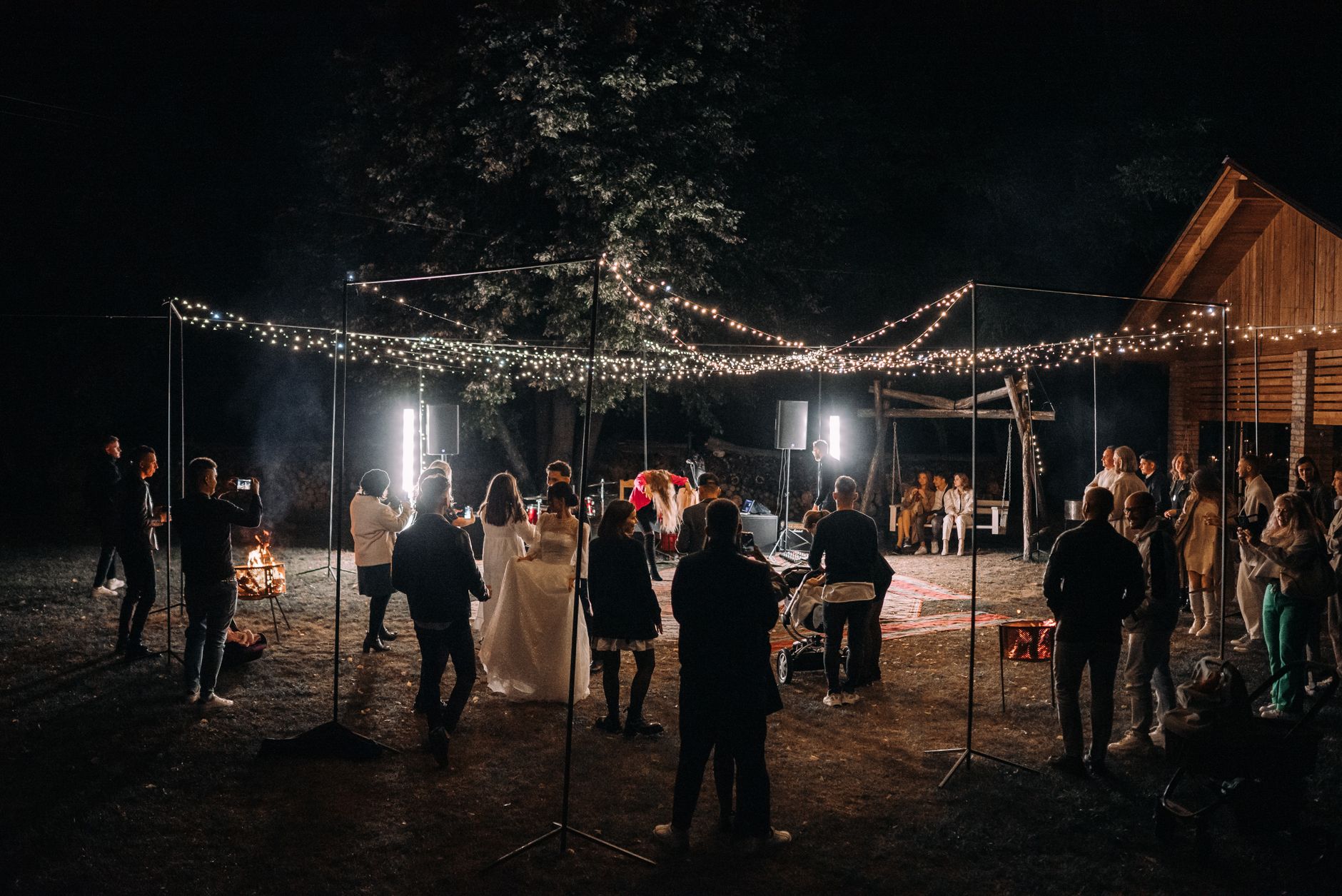
The Wedding Supper in the Machine Shed
What I knew
I keep my father’s books. That is how I knew what my brothers didn’t.
In early August, Dad came to my kitchen with a manila envelope and set it down on the table next to my adding machine.
He looked embarrassed, which is not a look my father wears well. He pushed it toward me with one finger like it might bite.
“Doris made me do this,” he said. “Well. She did it. I just signed where they told me.”
It was a prenuptial agreement, from a lawyer in Brookings, signed by both of them and witnessed and stamped.
I read it twice. It was short and plain, and it said exactly what you would hope it would say if you were one of Walt Peterson’s three children.
The farm, all four hundred and eighty acres, the cattle, the machinery and the home place stayed with Dad’s estate and went to his children when he passed.
Doris’s house in town and her savings went to her daughter Becky. If Dad went first, Doris could stay in the farmhouse a year, and then she would go back to town.
“Whose idea was this?” I asked him.
“Hers. She went down there herself the end of July and had it drawn up and paid for it out of her own checkbook. Two hundred and fifty dollars. I told her it was foolishness. She said, Walt, I have known your boys since they were in diapers, and I am not going to be the reason they fight over this place.”
I sat with that a minute. Then I said, “Dad, you have to show this to Gary and Jim.”
“No,” he said.
“Dad.”
“No, Karen.” He put his hand flat on the envelope. “I want you to keep this with the rest of my papers, and I want you to promise me you won’t tell the boys about it.”
“Why on earth not?”
He thought about it for a long time. He looked out my kitchen window at Steve’s bin site, where the bins sat empty and waiting on harvest, and he rubbed his thumb along the edge of the envelope.
“Because they shouldn’t need a paper to be happy for me,” he said. “If they come, I want them to come because they love their old dad. Not because some lawyer in Brookings told them their land was safe. I want to know which it is. Is that so wrong?”
I didn’t think it was wrong. I thought it was a terrible risk, and I thought it might break his heart, and I thought it was the most Walt Peterson thing I had ever heard.
I put the envelope in his file in my cabinet, and I promised.
So that is why I didn’t just pick up the phone and tell my brothers. People have asked me since.
It would have been one phone call. But it was not my phone call to make. My father asked me for one thing, and I gave it to him.
The cake at the café
After my brothers drove off that Sunday, Dad and I did the dishes together, though there were only four coffee cups.
He washed. I dried. Neither of us said anything for a while.
“Doris says a cake at the café is plenty,” he said finally, handing me the last cup. “She says at our age you don’t make a fuss. You just do it and go home and take your pills.”
“Is that what you want?”
He pulled the plug and watched the water go down. “I don’t know what I want. I want my boys there. Since that’s not happening, I guess a cake is fine.”
I drove home the long way, past the Lutheran church and the cemetery where Mom is buried, on the hill east of town with the cedar windbreak.
I stopped. I don’t usually stop. I sat in the pickup and looked at the gray stone with both their names on it, his with the second date still blank.
And I thought, nobody in this family is going to throw my father a supper. Not because they don’t love him.
Because they are scared, and grieving, and stubborn, and Peterson men would rather sit in a truck for a week than say they were wrong.
So it is going to be a cake at the café, and him eating it with his sons’ empty chairs in his head.
That was not going to happen. Not if I could do anything about it.