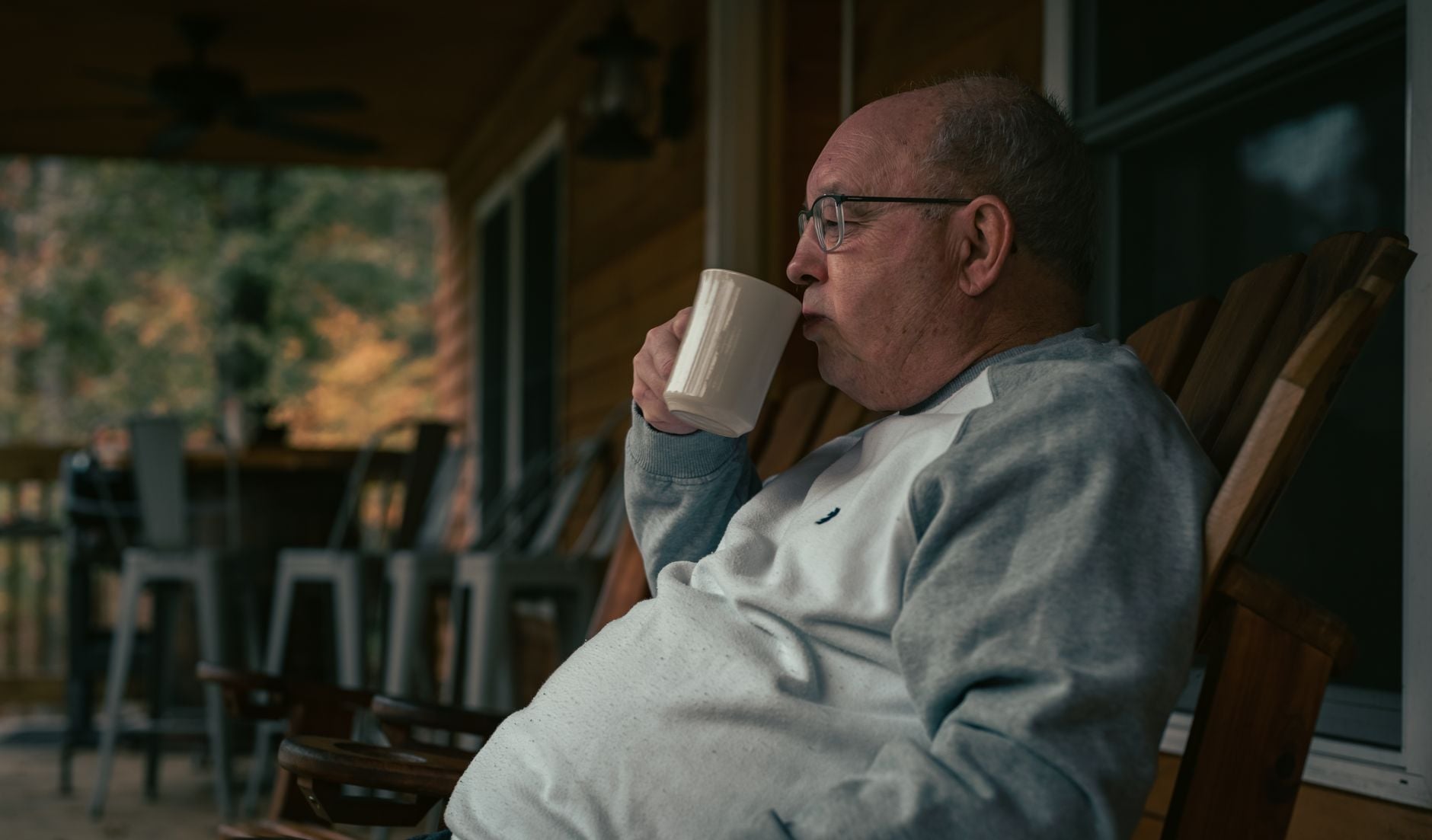
The Coffee Table That Came to My Porch
The winter
They came the next morning in the same five vehicles, the same order, lights on low. I was on the porch in my coat at ten to six, and I told myself I was only checking on the weather.
It got cold in November and colder after. Gene’s wife, Doris, sent over lap blankets, because the porch was cold at that hour and nobody wanted to say so. Lyle brought a little propane heater and set it by the post, and I told him it was a fire hazard, and he said everything was.
Wendell kept Lorraine’s chair. I never asked him to. He sat in it the second morning, and the third, and by Friday nobody mentioned it.
The first week, I tried to make up for it. I set out cinnamon rolls from the freezer, the last of a batch Lorraine had made, and they were gone in ten minutes, and Gene asked what was in them, and I said butter, and he said that was the right answer. Lorraine would have liked that. After that I tried a loaf of bread from the Lucas bakery on Wednesdays, and a sack of apples from the neighbor’s tree on Fridays. Nobody said a word about it. They only ate it, and the following Monday Alton would bring a coffee cake from his daughter in Russell, and we were square, or near enough.
Pete took to the arrangement faster than I did. He had spent nineteen months watching me leave in the dark and come back in the dark. Now he lay across the top step each morning with his chin on his paws, and when the first set of headlights swung into the lane he lifted his head and thumped his tail on the board, once, like a man tapping a pipe.
When the mercury sat under ten, we moved back to the co-op, to the oak table with the burn ring, and Dwight picked me up at twenty to six. The night before, each time, he called to ask, and each time I said yes. I rode with my hands on my knees and watched the dark go by without a thing to do about it, and I found that I minded it less than I had expected.
I had a job on the porch, too, from about the second week. For forty years I have kept the rain gauge on my place, a plain glass tube on a fence post by the machine shed, and I read it every morning and write the number on a calendar in the kitchen. I could still see the numbers on the tube if I held my head a certain way. So at five minutes to seven, as the others finished their coffee, I walked out to the post with Dwight beside me and read the glass, and Dwight wrote it down.
When someone said, “What did wheat do the winter of ‘seventy-nine,” they all turned and looked at me.
“Three eighteen at harvest, up to three sixty by February,” I would say. “And Marvin sold in November.”
“I did,” Marvin would say. “And I’d do it again.”
On the first Sunday after the mailbox I told Karen myself.
I waited until she had finished telling me about her week, and then I said it all in one breath, the specialist and the pamphlet and the number and the fog, and then I said, “Your mother’s keys are still on the nail, and I am not going to be able to leave them there much longer.”
She was quiet for a time. Then she asked me, in a small voice, how long I had known.
“Since April.”
“Dad.”
“I know it.”
“I would have driven out.”
“I know that, too. That is why.”