The Coffee Table That Came to My Porch
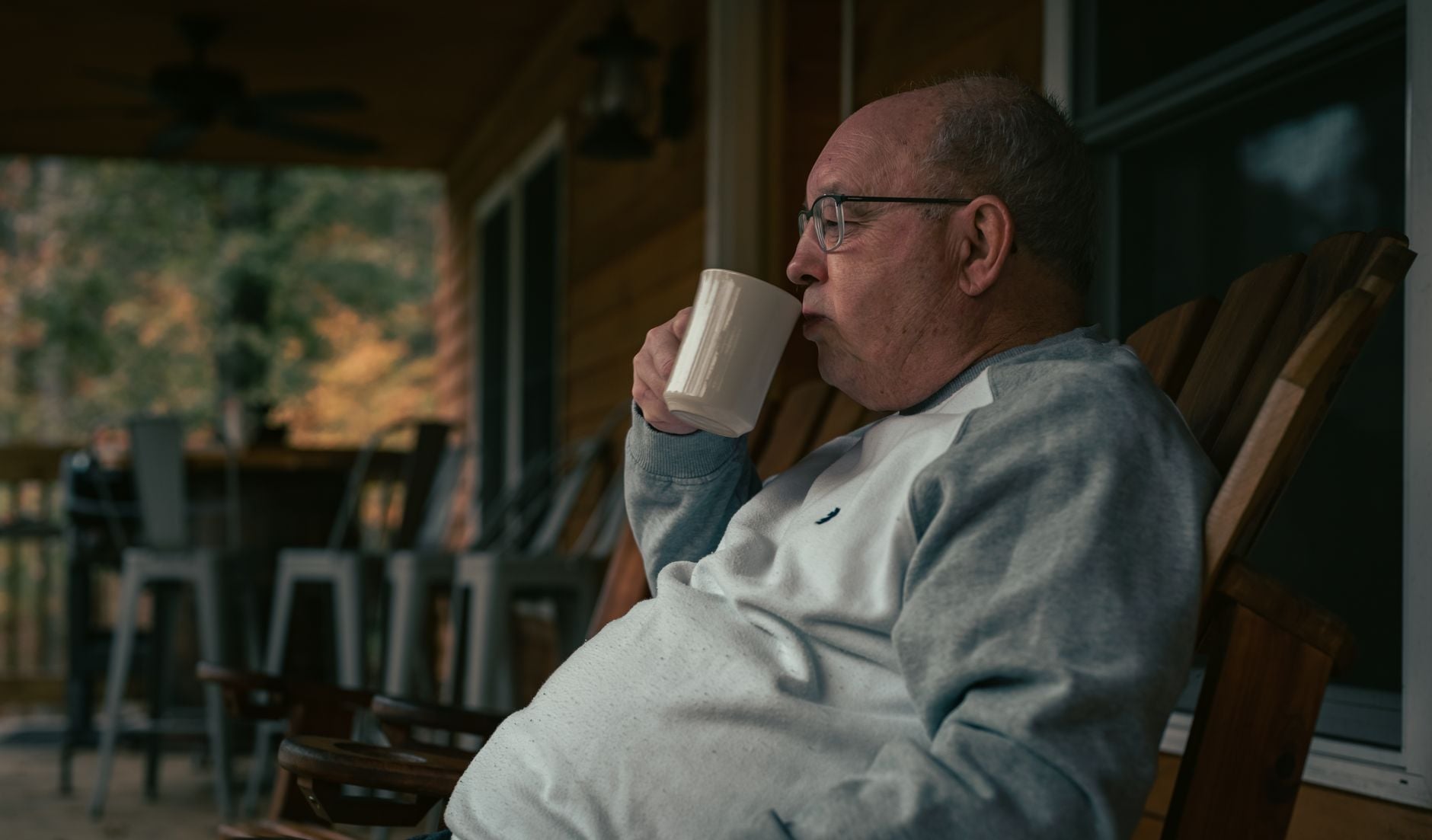
A thick white restaurant mug, chipped at the handle, with E.M. on the side in black marker that had faded to gray. It had hung on a cup hook in the back room of the co-op since 1998. Everybody at the table had a mug on that hook, and I had washed mine on Saturdays for twenty-eight years.
“It was on the hook,” Alton said. “It did not seem right, leaving it on the hook.”
I held it. The towel was still warm from his pocket. I did not say anything, and he did not make me.
Then Marvin poured coffee into it from his thermos, and that was that.
“How long have you known?” I said, finally. “About my eyes.”
Alton did not answer right away. He is eighty-one years old and has the kind of face that does not do much, a face that spent three decades on a scale, and for the first time since I had known him I could see him choosing his words.
“Marvin saw it first,” he said. “Back in July. You were parking out past the scale. You never park out past the scale.”
Marvin nodded into his coffee.
“Then you quit looking at people when they talked. Started looking at their shoulder.” Alton folded his hands. “Dwight noticed you stopped reading the sign on the highway. Gene said you drove up on the shoulder past the Garden of Eden, in broad daylight, and the tour van had to go around you.”
“I never,” I said.
“You did,” Gene said, too loud.
I felt my face going hot. “So you all just talked about me.”
“Once,” said Alton. “In the lot, after you left. Then we agreed to shut up about it until you said something. It was yours to say, not ours.”
“You never said a word.”
“I asked you, in August,” Alton said. “I said, you all right to be driving, Ervin? And you said, fit as a fiddle.”
I remembered that. We had been standing by his truck. I had said it so easily.
“I took you at your word,” Alton said. “A man gets to be the one who says it. I was not going to call your daughter or the sheriff or the doctor in Hays behind your back. Not unless you gave me a reason that was bigger than your pride, and a mailbox is not that big.”
“It was a good-sized mailbox,” Lyle said.
“Lyle,” said Alton.
“I’m only saying.”
“I didn’t want you to see me like this,” I said.
“Like what?” said Lyle.
“Like a man who can’t drive.”
“You can’t drive,” Lyle said, reasonably. “You hit your mailbox.”
“Well, he did,” Delmar said.
And Wendell, in Lorraine’s chair, who is a man of maybe forty words a day and had said almost none of them yet, said nothing at all, but he reached over and moved my cup an inch toward the middle of the rail where it would not get knocked.