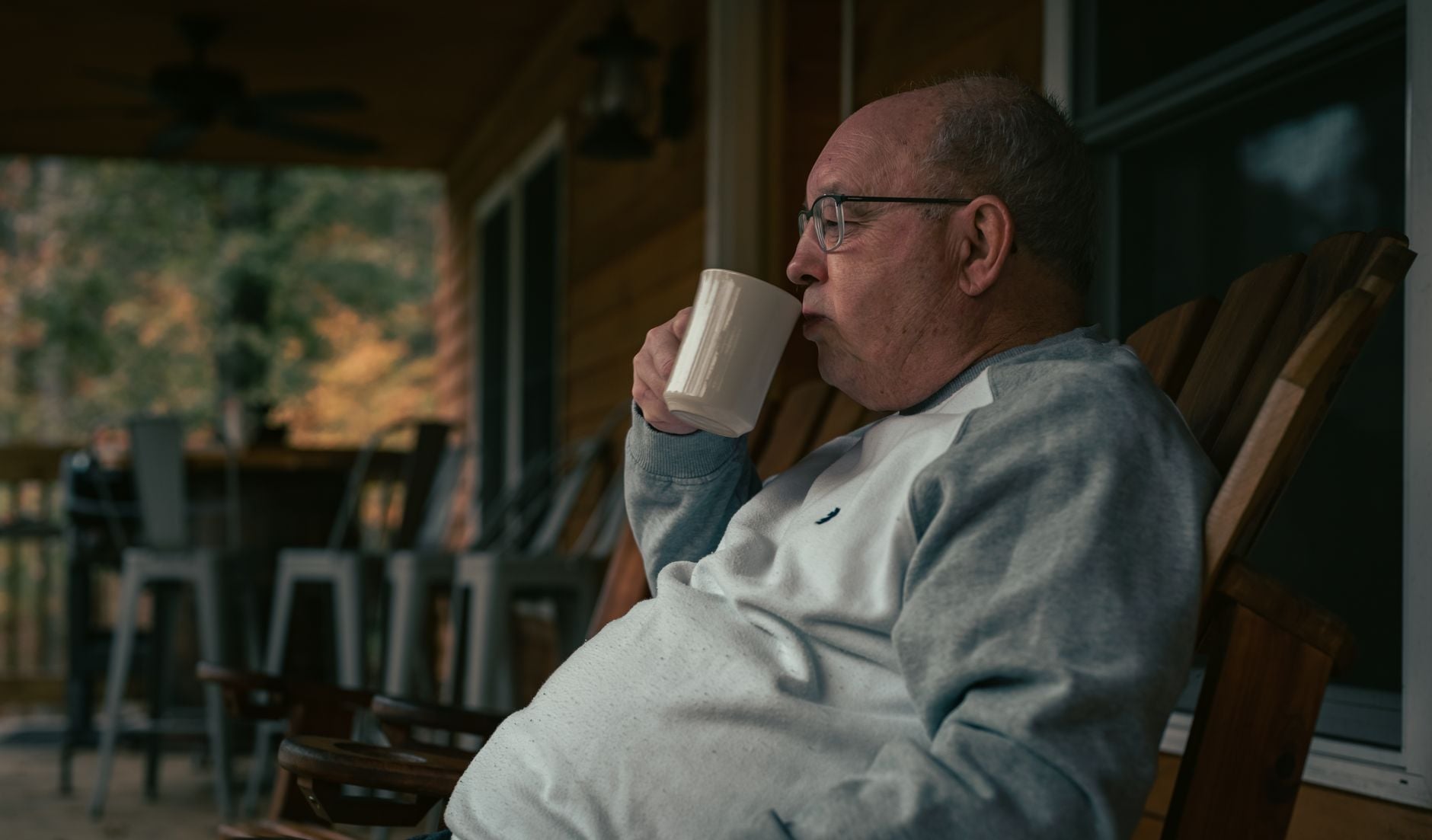
The Coffee Table That Came to My Porch
The table
It started in 1998, the year Alton Reimer retired as head scale man at the co-op after thirty-one years of weighing other men’s wheat. He did not know what to do with himself after six in the morning, so he kept coming in at a quarter to, and he made a pot of coffee in the back room, and a few of the fellows who were already up came in to drink it.
By the end of that winter there were eleven of us.
The table itself is oak, four feet across, with a ring burned into the middle where somebody’s wife set down a hot pan of cinnamon rolls in 2004 and nobody has ever sanded it out. Somebody tried once. The rest of us made him stop.
You sat where you sat. A quarter went in the coffee can if you came in after six, and a dollar went in if you said anything about politics before the weather had been settled. The can paid for the funeral cards and the flowers. In a county where the youngest man at the table was seventy-four, the can stayed busy.
We talked about the weather first, always. Then the markets, which meant wheat, then milo, then whatever the cattle were doing, and Marvin Dreher’s opinion of all three, which was reliably wrong and delivered with total confidence.
Marvin buys at the top and sells at the bottom and blames the rain. He has done this for fifty years, and he is the happiest man I know.
Then, around twenty minutes past six, Dwight Keller would unfold the paper to the obituaries and read them aloud.
Dwight is the kid of the table, seventy-four, and he reads an obituary the way a preacher reads scripture, with all the pauses in the right places. “Born in 1941 near Luray. Enjoyed fishing at Wilson Lake and never once admitted to a bad day on the water.” Then he’d look up over his glasses. “Which is a lie, because I fished with him.”
Somebody always knew the man. That was the whole point of the obituaries. By the time Dwight finished, we had decided who would drive to the funeral, who would carry a hotdish to the family, and who would stand in the back row in a clean shirt and say nothing.
Eleven of us started that table. There were eight of us by the fall I am telling you about. Nobody talked about the arithmetic. Dwight just read slower on the mornings it came up.
Lorraine
I have not told you about Lorraine, and I should, because she is the reason I needed that table so badly.
Lorraine died on the ninth of March, nineteen months before the morning of the mailbox.
She taught third grade in Lucas for thirty-three years. There is hardly a grown person in this end of the county who did not learn their times tables from her, and when she died, the funeral home ran out of folding chairs.
Eleven weeks from the day the doctor in Hays said the word to the day we buried her. That is all the time we got.
She made my coffee for fifty-three years. She was up before me every morning of them, and I woke to the smell of it, and I never once thanked her for it in so many words, because it seemed like thanking the sun for coming up.
The Monday after the funeral, with the casseroles still stacked in my refrigerator and the house so quiet I could hear the clock in the hall tick off each second separately, the phone rang at ten minutes to five.
“Coffee’s at six,” Alton said. That was all. He hung up before I could say anything, which I have since learned was entirely on purpose.
I went. I did not say a word for a week. Nobody asked me to.
Dwight read the obituaries. Marvin lost an imaginary argument with the price of milo. Somebody put a cup in front of me, and somebody else slid the cream across the table without a word.
For nineteen months, I did not miss a morning. Not for ice, not for the flu, not for the day the county graded the road and left a windrow of gravel across the bottom of my lane that I cleared with a shovel in the dark rather than call anyone in.
It was a place where my chair was still my chair. Where I was still a man who knew the price of wheat in 1974 and could settle an argument about it. Where I was Ervin, and not the widower at the end of the pew.
That was the whole of what I had left, and I was not about to lose it to a mailbox.