The Coffee Table That Came to My Porch
Wendell looked at the chair. He looked at me. He did not move.
I saw then what Alton had done. Alton, who never miscounted a bushel in thirty-one years at the scale. He had brought six chairs for seven men.
He had left the choice to me.
I stood there with the cold coming up through my slippers, and nobody said a thing. A rooster that had no business crowing in that fog tried it once and quit.
“That chair has a good back,” I said. “Sit in it, Wendell.”
Wendell sat. He set his thermos on his knee and poured a lid of coffee, and he said, “Obliged,” and nobody looked at me, which was its own kind of kindness.
Then Alton took the first thermos, and unscrewed the cap, and poured a cup, and handed it up to me.
“Black,” he said. “Marvin made it, so you’ll want to chew it.”
“I heard that,” Marvin said.
“You were meant to.”
Marvin has made the coffee for the table since his Bev passed, six years ago in the spring. It has been the strongest coffee in the county every morning since. Nobody has ever had the heart to tell him, and I think he knows.
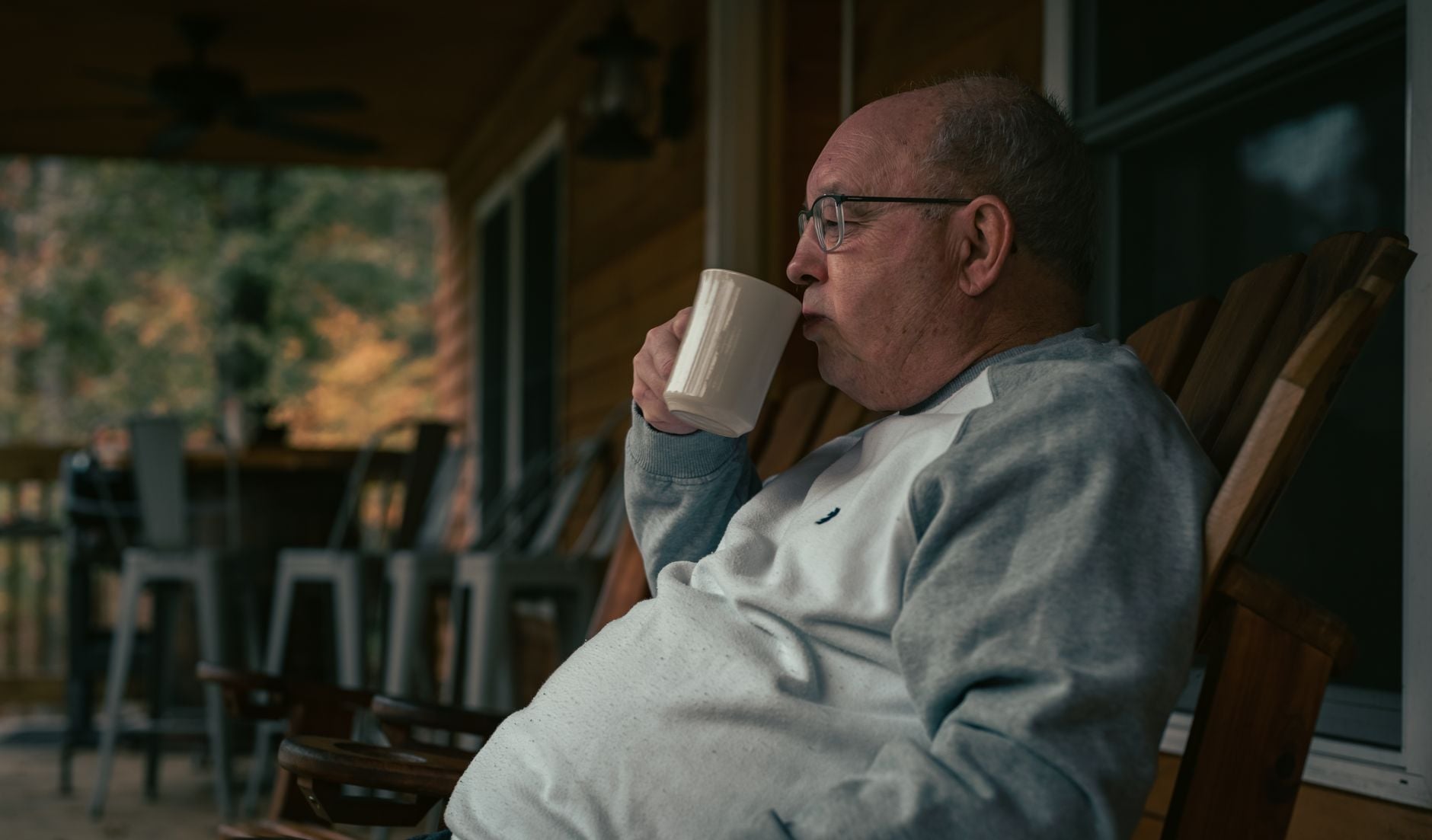
I took the cup. It was hot enough to hurt my hands, and I held it anyway.
Dwight unfolded the paper, which he had brought in his coat, and read the first obituary. A woman from Bunker Hill, ninety-one, who had kept bees and “outlived three doctors and one opinion of her cooking.” Gene said he had known her. Gene said it too loud, the way he says everything, and nobody minded.
That is how the coffee table came to my porch, the morning I could no longer drive to it.
What I wanted to know, once I could talk, was how in the world they had gotten there so fast.
What Alton had in his pocket
“How did you get here so fast?” I said.
It was a quarter to seven by then. The fog had burned off, and the sky over the Hammond place had gone gray and then pink along the bottom, and the frost on the grass had started to smoke where the first light touched it.
“I hung up,” Alton said, “and I said, get your thermoses. There were three of us in the back room already. Dwight called Lyle.” He shrugged. “I have a key to the church. I have had a key to the church since the funeral lunch for Hal Bergmann in ‘ninety-nine. Nobody ever asked for it back.”
“Nine miles in the fog.”
“We were not going to win any races.”
Then he reached into the pocket of his canvas coat and took out something wrapped in a dish towel, folded over twice. He held it a moment, and handed it across.
It was my coffee mug.