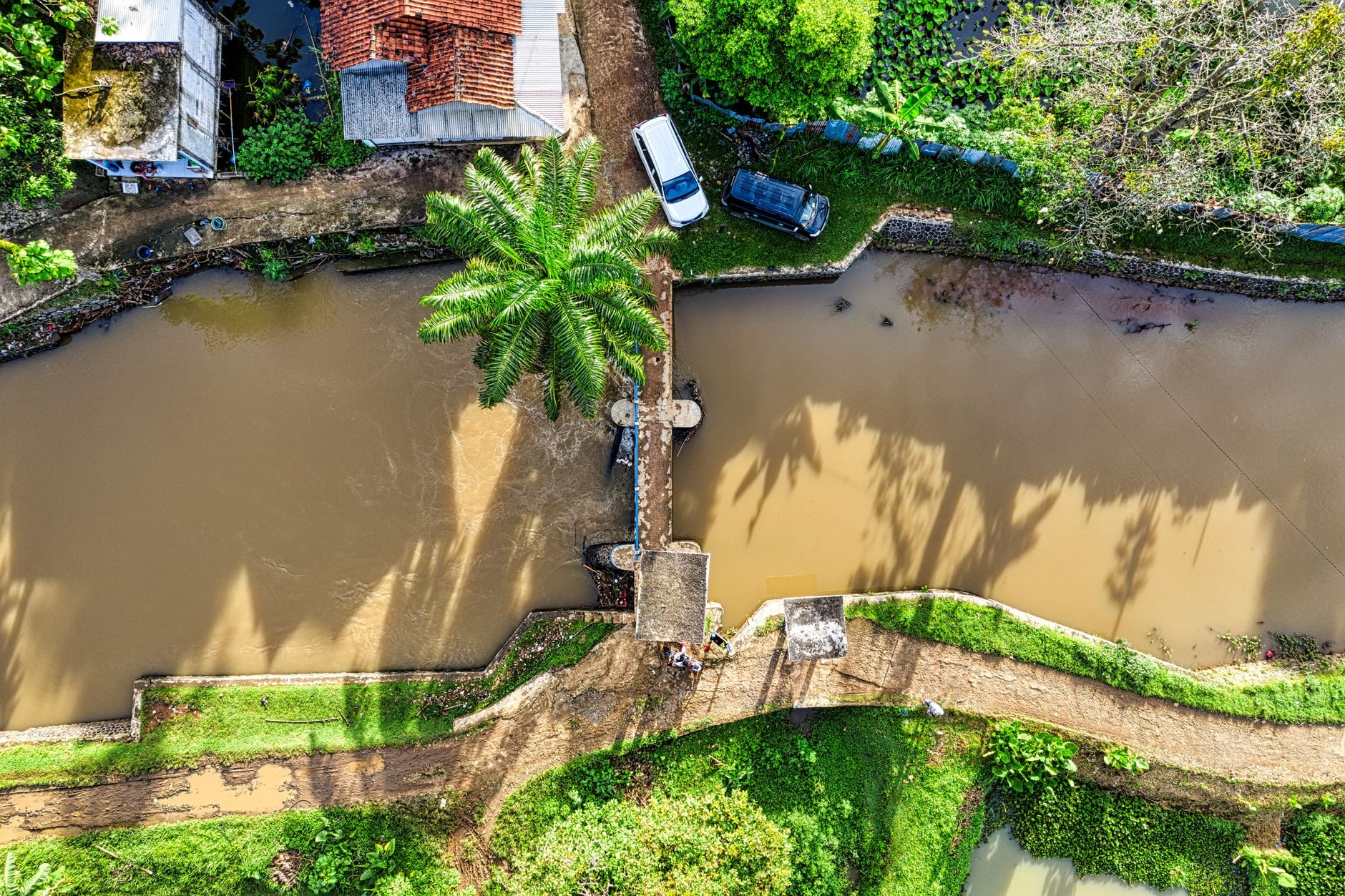
The Spring My Brother Closed Our Bridge
“And the rock in the yard?” Faye said.
“Forty tons. I ordered it in November, after I walked the east bank and saw it was undercut. It’s been sitting there since January.”
Faye took off her glasses and set them on the table.
“Alan,” she said. “Who did you call?”
My brother did not answer for what felt like a full minute. He looked at the book, and at the long oak table, and at the faces in the folding chairs, and finally at me.
“Nobody,” he said. “Not in March.”
The clerk, who keeps the minutes, stopped typing.
I kept my hands on my hat. The one thing I had promised myself on the drive in was that I would not gloat, and I would not help. This was Alan’s to carry. It was not mine to take off him or put on him.
That was when the wheelchair squeaked in the aisle, and the room went still the way a church goes still before the benediction.
Colton Vogt was pushing Verna Hollister to the microphone.
He was eight years old and it was a heavy chair. His face was red, and his tongue was between his teeth, and he did not let anyone help. When they got there he lowered the microphone stand as far as it would go, because she was sitting down, and he patted it the way you pat a horse.
Verna tapped the microphone twice.
“Alan Ostrander,” she said.
My brother’s head came up. I saw him go the color of paper.
“Mrs. Hollister,” he said.
“You can call me Verna. You did when you were four.” She folded her hands. Her voice was small and clear, the voice that had told thirty years of children to push in their chairs. “I’m not here to make a speech. I fell on April 9 and I lay on my kitchen floor for forty-one minutes, looking at the buttons I’d spilled, and I thought, well, that’s what the road did to me.”
The room was so quiet you could hear the radiator tick.
“I used to keep you in my kitchen, Alan. Your mother had the flu the winter of 1966. I changed your diapers on the same table where I’ve set my husband’s coffee can for fifty years. I watched your father and Henry pour the footings for the first bridge with my own two eyes, and I thought, those boys will always get across. Both of them. Whatever they said to each other.”
She stopped. Her chin trembled.
“I’m not angry,” she said. “I want you to hear that. I’m just very tired. And I’d like to know if this is what we do now. If we leave an old woman lying on her floor for want of a few days of gravel.”
My brother stood up then. He took off the county cap and held it in both hands in front of him, and he did not look at the board. He looked at Verna.
“Verna,” he said. “I should have moved that bridge in March. There was no engineer coming. I’m sorry.”