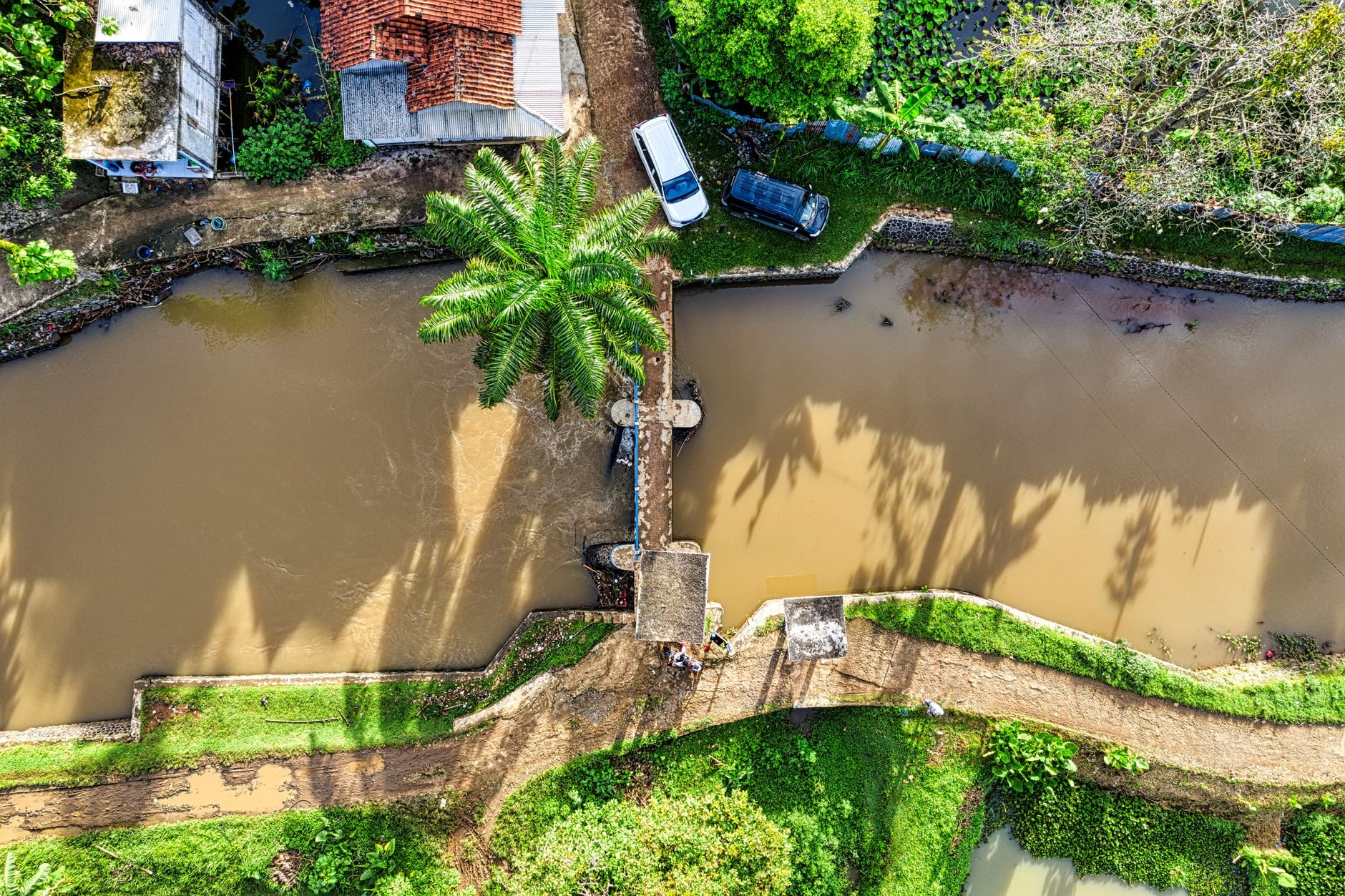
The Spring My Brother Closed Our Bridge
“I said it’s on the list, Frank. We’ve got roads washed out all over. You know how it is. You did the job.”
“I did,” I said. “That’s why I’m telling you it’s two days’ work.”
“Well,” he said. “I’ll make a note.”
By the third week I drove past the county yard on my way to the feed store, and there sat the rock. A long gray pile of it along the fence, forty tons of riprap that Wade Tindall had stockpiled over the winter. Not a shovelful gone.
I called him every Monday. I kept my voice level. “It’s on the list,” he said each time, and by the fifth call he did not even let me finish the question.
At the Farm and Fleet the first week of April, I saw Wade Tindall in the paint aisle. Wade ran the county grader for me for twelve years. When I said his name he looked at a can of barn red like it held the answers to the exam.
“Frank,” he said. “I’m sorry. I can’t.”
“Can’t what?”
“Can’t talk about it.” And he took the paint and left.
That told me more than any phone call.
The Vogts live the middle farm, a half mile up from me. Josh Vogt is 38 and drives a truck at the grain elevator in town; Ashley is 36 and keeps the books for a vet’s office. Their boy Colton is eight. When the bridge went out, the school district looked at the Dutch Hollow road, three miles of dirt with a washboard that rattles your fillings, and decided the bus would not run it until it was dry.
So every morning Ashley loaded Colton in the Silverado, drove the back way to town, dropped him at school, drove back, and did it all again at three o’clock. Forty-four extra miles a day. She started keeping the receipts in a shoebox.
On March 19 one of my best heifers started calving at dusk and could not do it alone. Doc Sawyer came the long way, and it took him fifty minutes. We lost the calf and nearly lost the heifer. A calf like that is worth maybe $1,400, and I have never put it in a ledger, and I am not going to start now.
Verna Hollister was the one who bothered me most. She is a church woman, a retired lunch lady, a widow who lives alone on the last place on the road. Her son is in Tulsa. Her church friends stopped coming to take her to Wednesday service because it was a thirty-two-mile round trip. I took to stopping by on my way home, every evening, just to see her porch light on.
Then came April 9.
I did not sleep that night. I sat at the kitchen table with a mug of decaf and Marianne across from me in her robe, and I told her what I was thinking, because I tell her everything.
“I could call Faye Ketchum,” I said. “She chairs the board. She would listen.”
“You could,” Marianne said.
“They’ll say the Ostrander brothers are at it again,” she said. “And it’s the one thing he wants, Frank. You standing up at that microphone, loud, so he can be the underdog. You and Alan, round two, with a bridge for a prize. And Verna and the Vogts get to be the audience.”