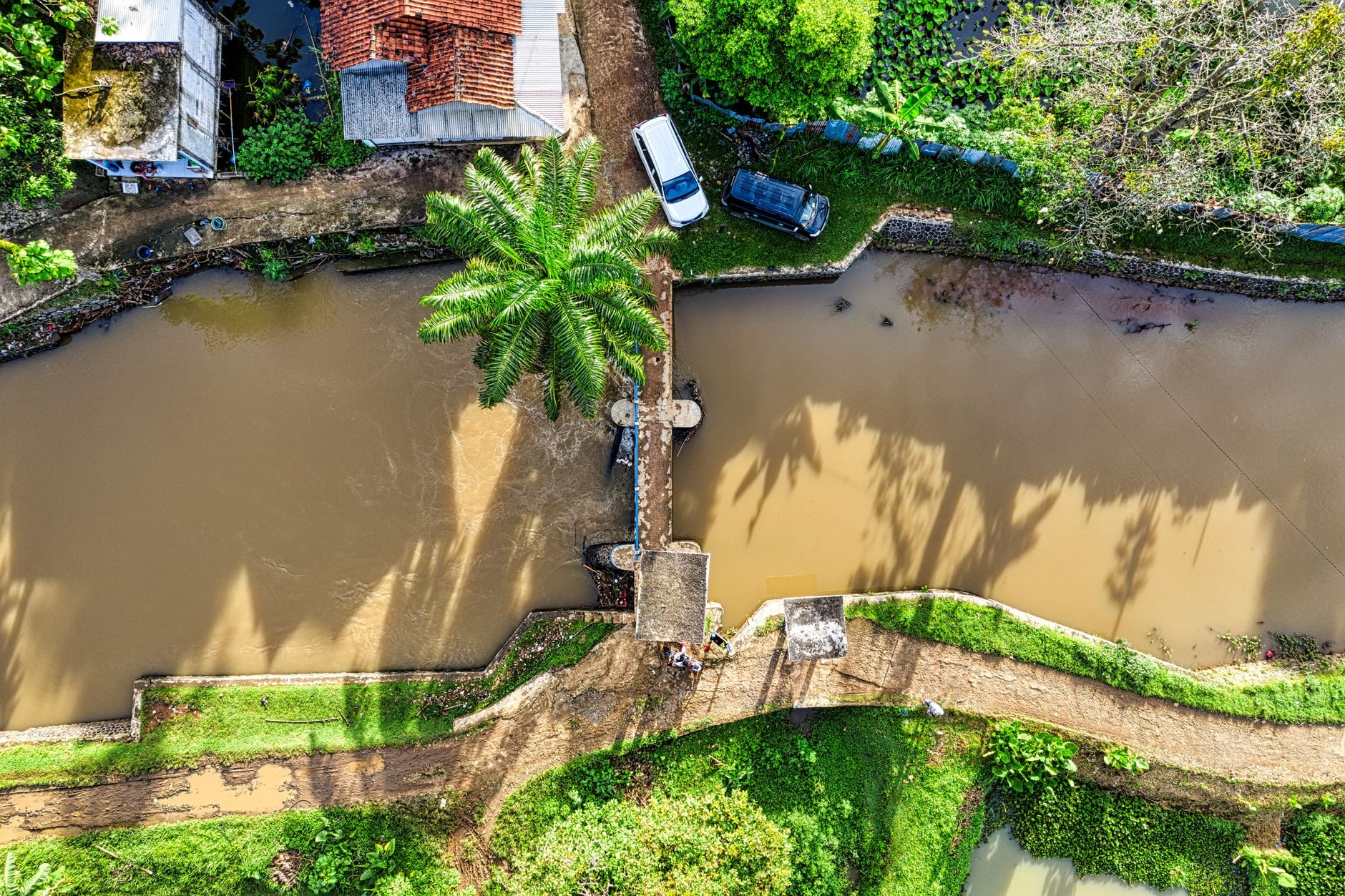
The Spring My Brother Closed Our Bridge
He did not look at me when I came in. He looked at the folder like it might have an answer in it.
At 7:48 Faye said, “We’ll open the floor for public comment. Three minutes each. State your name.”
I stood up. I will tell you I had written out what I would say, and I tore it up in the van.
“Frank Ostrander, Creek Road,” I said. “I’m not here to argue with anyone. The Creek Road bridge washed out on March 14. It is May 26. Three families live past it. I brought the people who live past the bridge, so you can hear it from them.”
That was six sentences. I sat down.
There was a rustle behind me. Somebody whispered, “That’s all he’s going to say?”
“That’s all,” I said, without turning around.
Josh Vogt got up. His hands shook so hard the notebook rattled. He read from it in the flat voice of a man giving a grain weight.
“Josh Vogt. Creek Road. Since March 16, we have driven 2,160 extra miles, the school run and Ashley’s work and groceries. At last year’s federal rate that’s $1,512. I have the receipts. I put a tire in the ditch on Dutch Hollow. Our boy’s been late to school eleven times.” He swallowed. “I’m not asking for the money. I just wanted somebody to know the number.”
Ashley Vogt stood next to him. She said only, “He’s eight,” and sat down again.
Faye’s pen stopped moving.
“Alan,” she said, in a different voice. “When is that bridge scheduled?”
My brother cleared his throat. He did not stand.
“We’re waiting on engineering,” he said.
Nobody in that room moved.
Wade Tindall stood against the back wall in his Carhartt jacket, with his cap crushed in one fist. He had not looked me in the eye since March. In the other hand he held a yellow book, the county work order book, the pages thick with thumbprints.
“Madam Chair,” he said. His voice was cracking. “I wrote that line in the book myself. Waiting on engineering. I’ve written it for ten weeks, and I never once saw an engineer.”
Faye put down her thermos.
“Mr. Tindall,” she said evenly. “Bring it up.”
He walked the whole length of the room with every head turning. It’s maybe thirty feet. It took a lifetime. When he reached the table he laid the book in front of her and stepped back with his hat held over his belt buckle.
“There’s a page marked,” he said. “March 17th.”
Faye opened to the yellow sticky note and read down the page with her finger. It was the ordinary business of a county. Ostrander Cr. Br., east approach. Hold, waiting on engineering. Under it, the initials A.O., in my brother’s small hard capitals, the writing of a man who learned on service tickets.
“That’s what the crew was told,” Wade said. “March 17, in the shop. Don’t touch the rock, don’t touch the loader, waiting on engineering. I asked him who the engineer was and when. He said it was handled.” Wade rubbed his eyes with the heel of his hand. “I’ll tell you the truth. I doubted it that morning. A week later I called the engineer’s office on my lunch hour, on my own, and the girl there said she had no request from this county. Not for Creek Road. I should have put that in front of somebody then. I got three kids. I was scared of my job, and I let an old lady lay on that floor. I’ll answer for it.”