The Spring My Brother Closed Our Bridge
I won by 148 votes. Mama was still alive. She set a big Thanksgiving table that fall, and halfway through the pie, Alan put down his fork and said, to nobody and everybody, “You get everything handed to you, Frank.”
Mama started to cry. Dad cleared his throat and asked who wanted coffee.
I never answered him. I did not know how. I thought that if I let it lie, it would lie.
I served three terms. The best thing I did was the Creek Road bridge. The old one, built by my father and Henry Hollister in 1968 from creosote pilings and railroad ties, was rotting out. In 2009 I got a state grant for $186,000, the county matched it, and we poured a new deck on steel beams, 24 feet long, one lane, with rock riprap along both banks so the spring floods would not eat it.
Then I did something I have been sorry for since. I let the crew bolt a brass plate to the rail that said Ostrander Creek Bridge, Built 2009, F. Ostrander, County Road Commissioner.
Marianne told me not to. “Frank, it’s a bridge, not a monument,” she said. I told her it was for the county record. It was vanity, and she knew it, and so did my brother.
My father crossed that bridge for ten years before he died, and every Sunday my brother crossed it too, to eat pot roast at Dad’s table. He read my name on the rail each time. I never once thought about it. That is the kind of blind a man can be.
Last fall Gil Wagner, who took over the office after me, retired with two years left on his term. The county set a special election for November to fill it, and Alan ran and won by 118 votes against a retired schoolteacher. The seat comes up again in 2028. I told him at the church supper that I hoped he would love the job.
“It’s about time,” was what he said. He shook my hand with his grease-ringed hand and did not smile.
He took the oath on the first of January.
The flood came on Saturday, March 14.
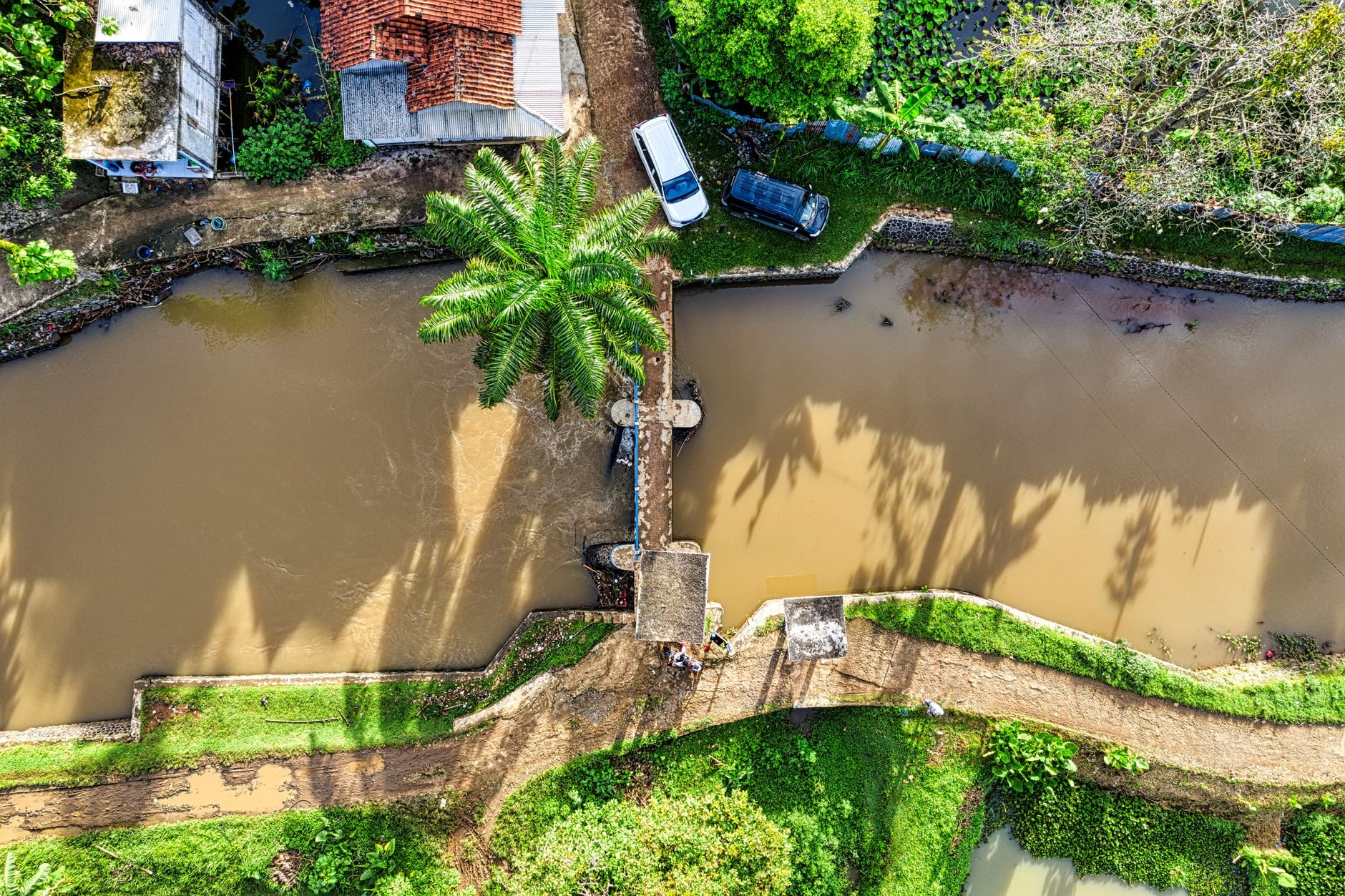
It rained four inches in two days, and on Saturday night I stood on the bridge with a flashlight and watched the creek turn the color of chocolate milk and chew at the east bank. The riprap held for an hour. By dawn the east approach had slumped away, and the steel deck leaned off its seat at one end, a five-foot drop to nothing. The deck and beams were fine. What was gone was the dirt and rock that held up one end of it.
It was a short job. I knew that standing there. Forty tons of rock for the bank, a dozen loads of gravel fill, a grader, a loader, a crew of three. Two days, two and a half if the weather turned. Not the kind of thing a county waits ten weeks on.
I called Alan at 7:30, before church.
“It’s on the list,” he said.
“Alan, the bank’s gone on the east side. There are three farms back here.”