Forty Plates on the Tailgate
The Van
Eric got the van out a little after seven. He backed the tractor up slow, took the slack out of the chain, and eased it up out of the ditch like a man lifting a newborn calf.
The crew gave him a cheer from the end rows.
The two young women from the catering company were shaking when they walked up to the pickup.
They were maybe twenty-five, in black aprons and white sneakers caked with mud to the ankles. The older of the two kept saying how sorry she was.
“Nobody told us about the road,” she said. “We’ve done barn weddings. We’ve never done a field.”
“Nobody should have expected you to,” I said. And I meant it. A two wheel drive van full of hot pans has no business on a field road a week after a big rain. That was not their fault, and it was not something they could have known.
I had saved four plates in the bottom of the second cooler, the way I always do in case somebody shows up late.
I gave one to each of them. They ate on the tailgate beside Kristin, in their muddy sneakers, and the older one asked me for the bar recipe.
Their food had stayed hot in the insulated carriers the whole time.
When they finally got the back doors open on the gravel, there were pans of brisket and smoked chicken, macaroni and cheese, and a cheese board that had slid into a pile of crackers.
Kristin had already paid the twelve hundred dollars. The caterer’s owner called her while we were standing there and offered to take the food back to Des Moines. Kristin looked at me.
“What would you do with it?” she asked.
I knew right away. “Pastor Mike,” I called over. “How’s the funeral lunch freezer looking?”
Pastor Mike laughed. “Emptier than I’d like, Julie. Going into winter.”
So that was settled.
The Next Afternoon
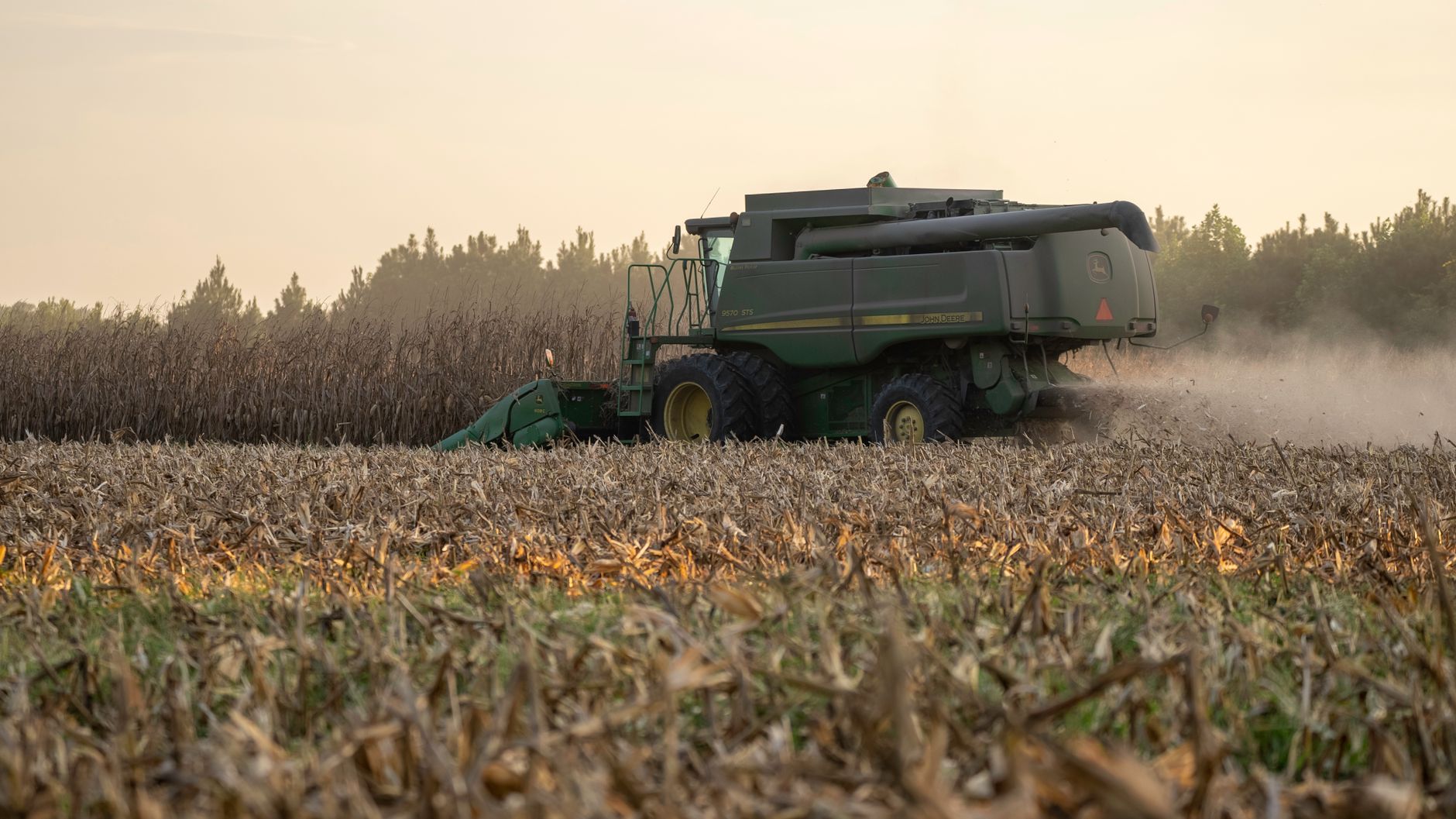
The last day of harvest is never really the last day on our place. Every year, when our own acres are done, the crew takes both combines over to Bev’s farm a mile east and runs her beans.
Her husband farmed them until he died in March, and the crew has finished her fields every fall since he got sick.
Nobody pays anybody for it. Bev feeds the crew coffee and cookies in the morning, and I feed them supper at night, and by dark her beans are in the elevator and the check goes to her.
That Saturday I was in my kitchen at four in the afternoon, with the roaster going and twenty pounds of potatoes in the sink, when somebody knocked on the back door.
It was Kristin. She was wearing a flannel shirt that I recognized as one of Eric’s, and a pair of old jeans, and her hair was pulled back in a plain ponytail.
She was holding a paring knife she had brought from her own kitchen.
“I didn’t know what time you start,” she said. “I hope I’m not too late.”
I just looked at her for a second. Then I opened the door wider.
“You’re right on time,” I said.
I found her an apron in the drawer. It was one of Joan’s, a faded blue gingham one with a pocket for a pencil.
I almost did not give it to her. Then I thought about Joan, and what she would have done, and I tied it on Kristin myself.
We stood side by side at the sink and peeled. Kristin was slow at first, taking off too much peel, but she got faster.
I showed her how to turn the potato against the blade instead of moving the knife. She showed me a trick for mashing with a hand mixer that left no lumps at all.
We talked the whole time. She told me about her father, and the insurance office, and a first marriage that she did not want to talk about much.
I told her about the year the hail took the beans, and how Joan sat up with me in this same kitchen and taught me to make bars at midnight because I could not sleep.
At five thirty, we plated fourteen suppers together and loaded the coolers into my pickup. She rode with me to Bev’s field.
When we pulled up, she climbed up the combine ladder herself and handed Eric his plate through the cab door.
I watched Eric’s face when he saw it was her. I will not forget it as long as I live.