Forty Plates on the Tailgate
Elmer
Before I could answer, Elmer got up from his bucket. It took him a minute. His knees are not what they were.
He came over to the tailgate with his empty plate and stood in front of the two of us with his cap in his hand.
“Julie,” he said. “That was a good supper.”
“Thank you, Elmer.”
He turned the cap around in his fingers. He is not a man who makes speeches. In twenty-six years I have heard him say maybe a hundred words that were not about grain.
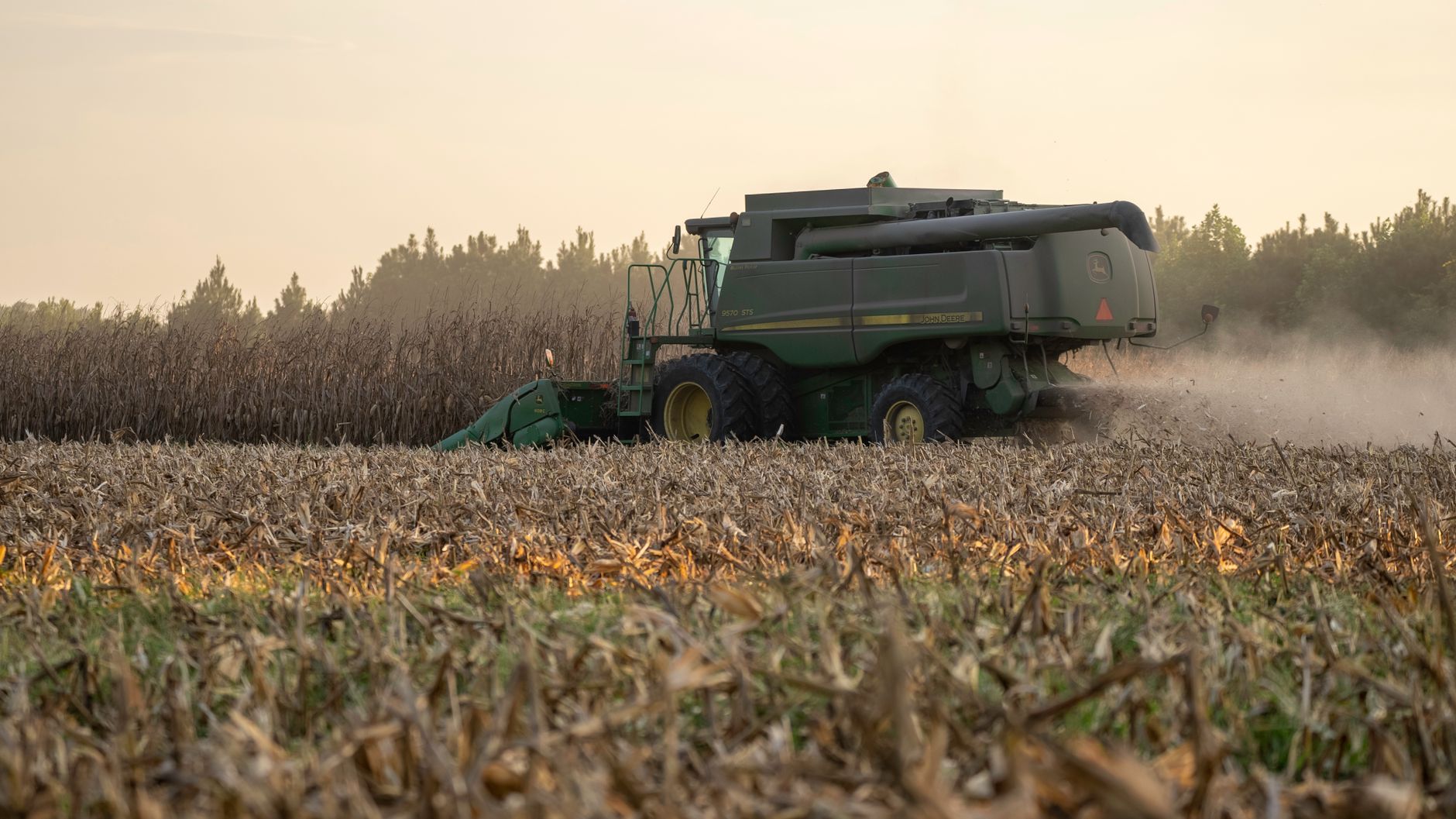
“Joan used to bring that same roast,” he said. “Out to the Hagen quarter. In the blue speckled pan with the chip on the lid. Nineteen and seventy-something, when Dan’s dad and I ran the old 4400 with the four row head.”
I could not say anything. My throat had closed right up.
“She’d park right about where you are,” Elmer said, “and drop the tailgate, and we’d all come running. And she’d look at every one of us, the way you do. I always figured nobody else would ever do it after she quit.” He nodded once. “I was wrong about that. I’m glad I was.”
Then he put his cap back on, set his plate in the trash bag I had hung on the side mirror, and walked back to the grain cart without another word.
I sat there on the tailgate with my hands in my lap and cried like a child. I had not cried in front of the crew in 26 years.
Not when we lost the bean crop to hail in 2008, and not when Joan died. But I cried that night, in the orange light, with forty empty plates.
Kristin put her arm around me. It was awkward, and her vest made a crinkling sound, and I did not mind one bit.