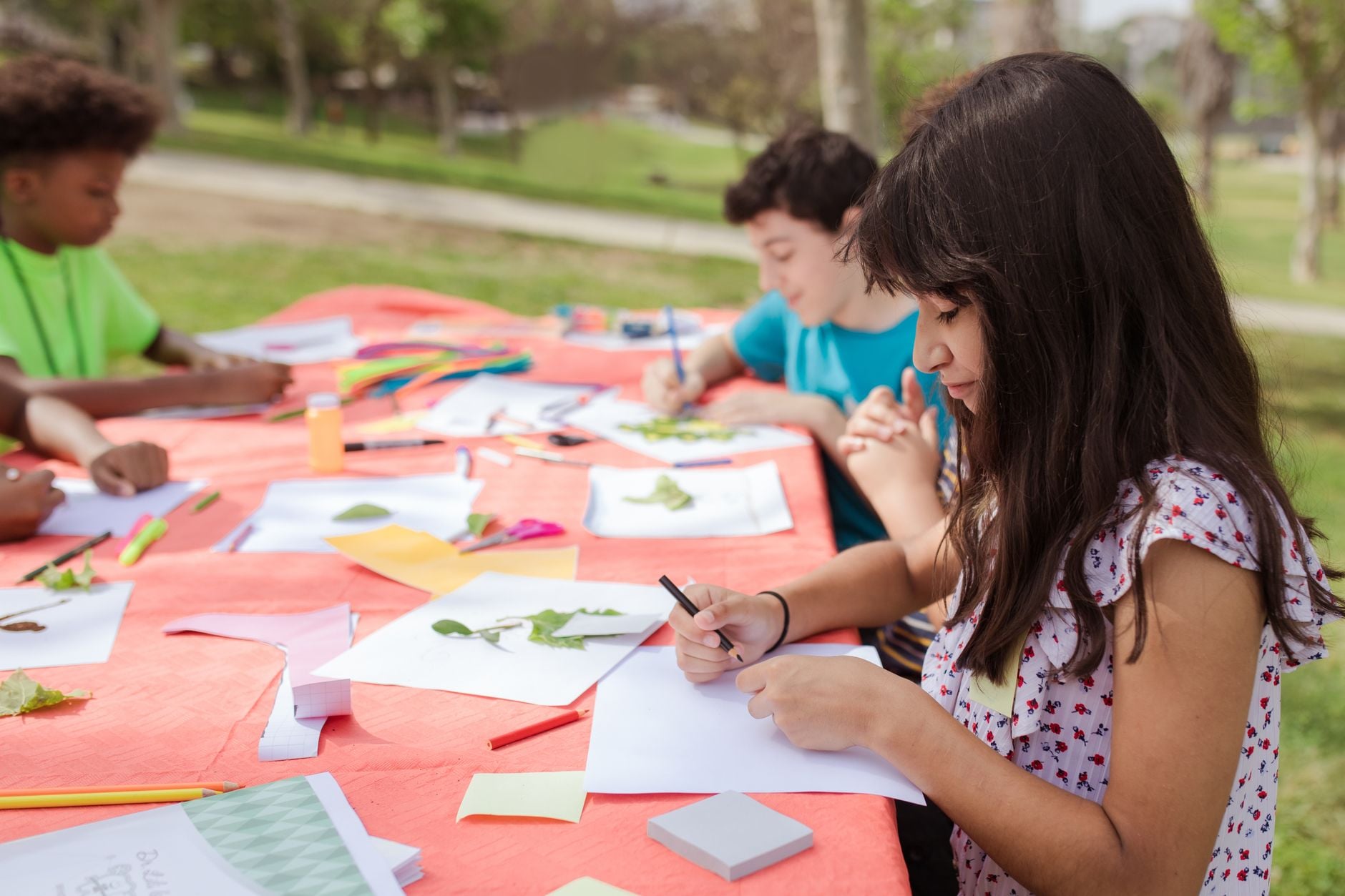
The Bible School Under the Cottonwood
“It’s outdated, Robin. Honestly.” Tammy Wolff said it beside her Buick in the church parking lot, with her keys already in her hand and the engine already running.
I had known her for twenty years. I had held her hand in the hospital in Fargo when her husband had his bypass.
She had brought me a pan of bars every time one of my kids was born.
And she said it the way you tell somebody they have spinach in their teeth. Quick, a little sorry, and mostly wanting to get in the car before it got awkward.
“The council voted Thursday,” she said. “Five to two. We’re bringing in a team from Fargo this year. It’s a whole packaged program. Music, videos, a stage set, the works.”
I stood there holding the Jell-O pan from the funeral lunch. The Jell-O pan was mine. The funeral was for Arlen Pederson, who had taught half the men in our town to drive a tractor.
“I didn’t know it was on the agenda,” I said.
“It was under new business.” Tammy looked at her keys. “Robin, you’ve done a wonderful job. Twelve summers. Nobody’s saying you haven’t. But the kids today expect more. It looks tired. It looks like a church that’s closing.”
Then she got in the Buick and backed out, careful of the light pole the way she always was, and I stood in the gravel with an empty Jell-O pan and a feeling in my chest like I had swallowed a stone.
I want to tell this honestly, so I will say right here that I cried in the pickup.
Not loud. Just the kind of crying where you keep your sunglasses on and wait for it to quit.
Then I drove home, eleven miles of gravel, and started supper, because the men were coming in from the field at six and a pot roast does not care about your feelings.
Twelve Summers in the Basement
Our church is a white Lutheran church with a square steeple on the edge of a town of 1,100 people in the southeast corner of North Dakota.
There is a grain elevator, a Cenex, a bar, a school, and us.
On a good Sunday we have sixty people. When I was a girl it was a hundred and forty, and they had to set up folding chairs in the back for Christmas Eve. Now we have room to spread out our coats.
I took over Vacation Bible School the summer my daughter Emma turned five. The woman who had run it for thirty years, a retired teacher named Marlene, handed me a shoebox of felt figures and a binder and said, “Don’t let them glitter the hymnals.”
The budget was $300. It had been $300 for as long as anyone could remember. Nobody had ever raised it and I had never asked, because $300 goes a long way if you know where the Kool-Aid is on sale.
We ran it in the church basement, nine to eleven thirty, Monday through Friday, the second week of June.
Around forty kids came every year. Town kids, farm kids, kids whose families had not set foot in church since their baptism.
We made macaroni crosses. We made Noah’s arks out of paper plates and cotton balls. We sang the same songs every summer, the ones with the motions, and by Wednesday the big kids were doing them faster than me just to show off.
On Friday we did a little program for the parents, and Steve, my husband, would come in from the field with dust on his cap and stand in the back of the basement with the other dads, pretending he wasn’t wiping his eyes.
Was it fancy? No. Was it outdated? I suppose it was, if outdated means the same songs I learned at that church in 1984.
I had never thought of that as a bad thing. I had thought of it as handing something down.