The Monday the Quilts Came Out
The cedar chest
My mother was Edith Mae Lange before she married, and Edith Ward after. She died in 2019, at eighty-five, in the same farmhouse south of town where she raised me and my two brothers.
She pieced quilts her whole life, first on her mother’s treadle machine and later on a Singer that weighed as much as a calf. Every winter of my childhood there was a quilting frame in the front room, and we walked around it from November to March.
When she passed, my brothers’ wives each took the quilts Mother had made for their own families. The rest came to me, because I was the one with a cedar chest and the one who knew which was which.
There were twenty-two of them.
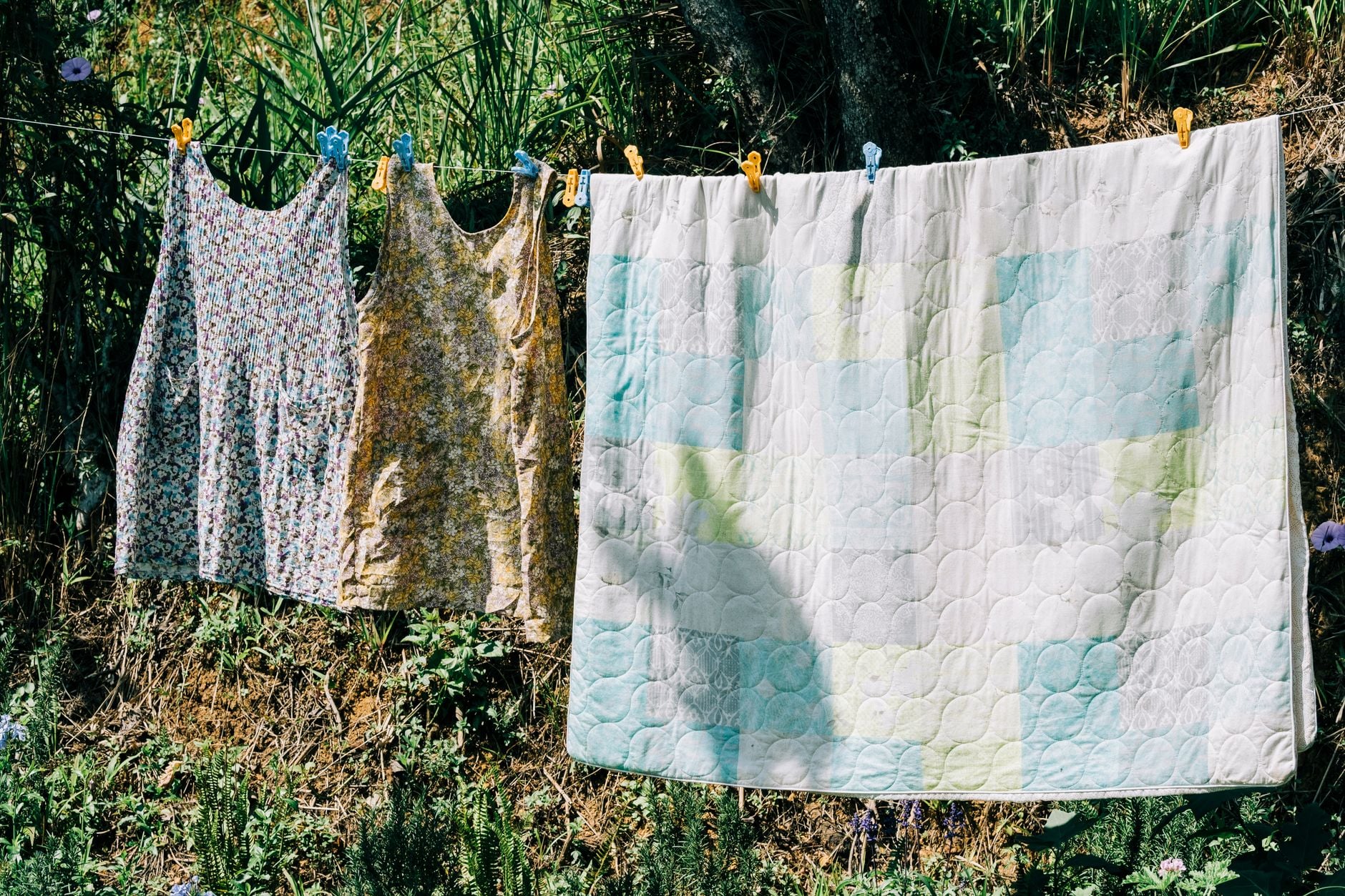
They live in the chest at the foot of our bed and on the shelf of the spare room closet, folded with old pillowcases between them so the colors don’t rub. And every April, the way Mother did, I take them out to the line and let them air.
You don’t wash an old quilt more than you have to. You air it. You pick a dry day with a good breeze, hang it over the line with the back to the sun so the front stays bright, and let the wind go through it.
“A quilt has to breathe,” Mother used to say, “same as you do.”
She always aired hers the first warm Monday after the lilacs budded. Wash first, then quilts. You didn’t waste a wash day.
This year I hadn’t done it yet. If I am honest, I had been putting it off because every time I went out to the line, I could feel that deck looking at me.
I drove home from village hall and stood at the foot of our bed and looked at the cedar chest for a while.
Then I opened it.
Saturday
Roger found me that evening sitting on the bedroom floor with quilts stacked on the bed, on the dresser, and over the back of the rocking chair.
He stood in the doorway a minute.
“Airing day?” he said.
“Monday,” I said. “All of them.”
He looked at the stacks. He is not a man who counts out loud, but I watched him count.
“That’s a lot of weight on that wire.”
“I know.”
“Eight at a time, maybe. Two lines, four to a line, folded over.” He rubbed his jaw. “Then rotate them. You’d get them all out by suppertime.”
“That’s what I figured.”
He didn’t ask me why all of them, and why this Monday. He just nodded and went back downstairs. A few minutes later I heard the back door and saw the yard light come on.
Sunday after church he was out at the line with a rag and a bucket, wiping down both wires. A little rust will leave a brown stripe across a quilt that never comes out.
Then he went to the shed and came back with two long two-by-twos, and he cut a notch in the top of each one with his jigsaw. Clothesline props, the kind his grandmother used. He set one under the middle of each wire so the weight wouldn’t drag the quilts down into the grass.
Then he got the fence stretcher out and took up the slack on both lines, the same way he had in 1991.
“There,” he said, standing back with his hands on his hips. I don’t think he even knew he was saying it the same way.
I took his face in both my hands and kissed him right there in the yard, and I didn’t care who saw it from what deck.