The Monday the Quilts Came Out
The kitchen
I sat her at my kitchen table, which is the same table Roger slid the citation across four days before. I poured her a cup of coffee in my good blue mug and put the cream and sugar in front of her.
She held the mug in both hands and didn’t drink it.
“My mom died last June,” she said.
I sat down across from her. I didn’t say anything. Twenty-eight years on a mail route teaches you when to let a person get to it on their own.
“It was fast. Her heart. She was sixty-four.” She turned the mug. “We had a plan. When she retired, we were going to buy a little house out in the country together. She grew up in a town like this, down by Effingham. Coffee on a back porch and the sun coming up over a cornfield. That was her whole idea of heaven.”
“That’s a good idea of heaven,” I said.
“She didn’t get to.” Courtney’s voice cracked. “So after the funeral I thought, I’ll do it for her. I do insurance billing for a hospital, so I can work from home. I found this house online and bought it.”
She looked out my kitchen window, toward her own house.
“And nothing looked the way I pictured it. The house smells like somebody else’s life. I don’t know anybody. And I built that deck so I could watch the sun come up over the fields for her.”
She stopped.
“And the first thing between me and the sun was my line,” I said.
“Your line,” she said. “Every single morning. Sheets and towels and,” she winced, “your husband’s long underwear.”
I laughed. I couldn’t help it. After a second she laughed too, wet and miserable.
“It’s not your line,” she said. “I knew that standing up at the meeting. But I couldn’t fix anything else. Not the house, not being alone, not my mom. I thought I could fix that one thing.”
She set the mug down.
“And the worst part is my mom would have loved your clothesline,” she said. “She’d have been over here the first week asking how you get your sheets so white.”
I reached across the table and put my hand over hers. She let me.
“Bluing,” I said. “A capful in the rinse. That’s how you get them white. Tell her that, next time you talk to her.”
Courtney put her other hand over her eyes and cried. Not loud. Just steady, like rain that has been waiting all day.
I let her. I got up and refilled her coffee, and I got the box of tissues off the top of the refrigerator, and I sat back down.
The nine-patch
When she could talk again, she said, “I’m sorry. About the fine. About all of it. I’ll go down to the village and tell them to give it back.”
“You don’t have to do that today,” I said. “Drink your coffee.”
Then I got up and went out the back door.
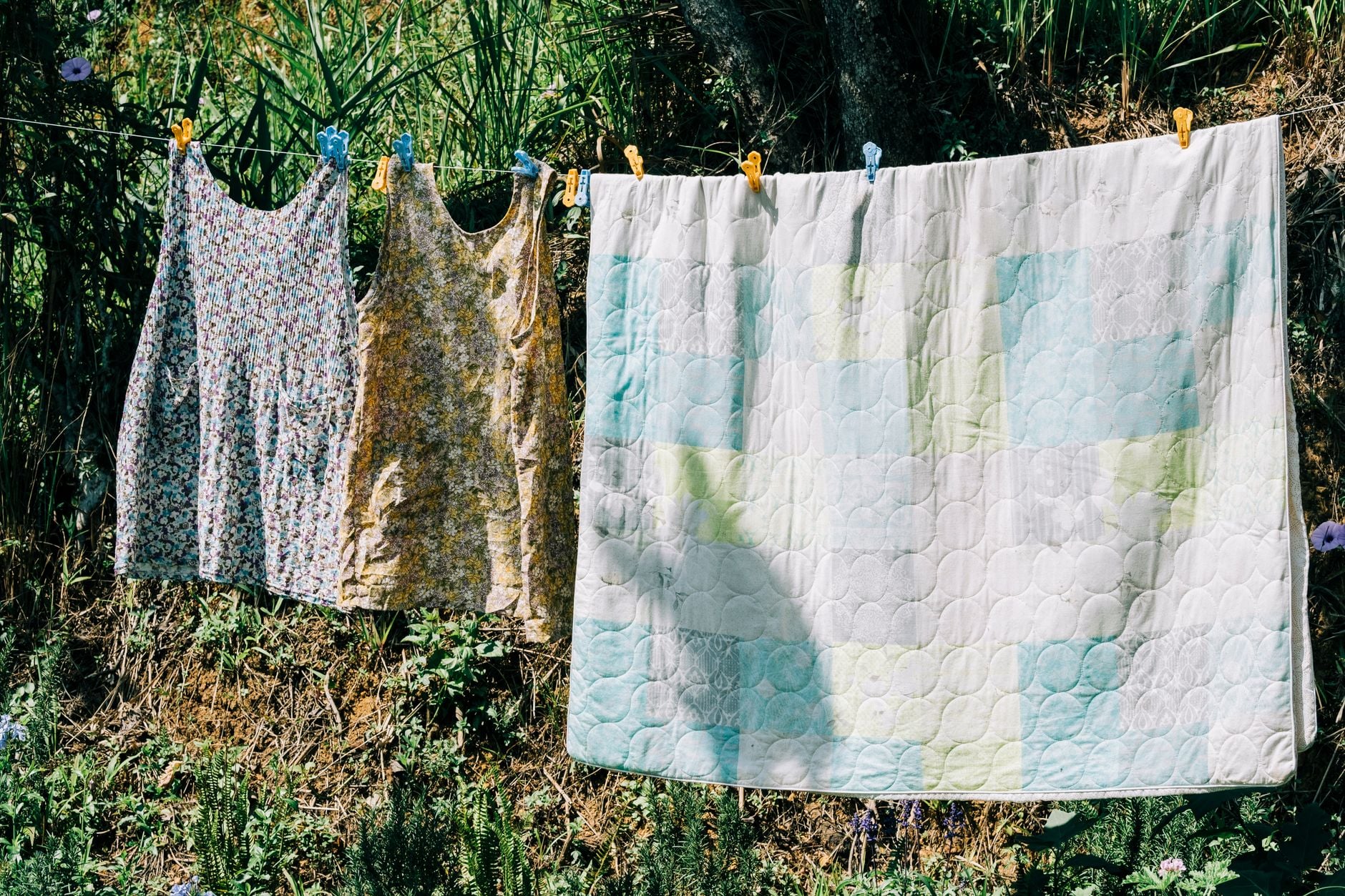
The old women watched me cross the yard. I went to the far end of the second line and unpinned the nine-patch and folded it over my arm, and I carried it back into the kitchen.
I laid it on the table in front of her.
It is the plainest quilt Mother ever made. Blue and white, nine squares to a block, the kind every farm girl learned on. The blue was a chambray shirt once. The white was flour sacks.
“Turn up that corner,” I said.
She did. On the back, there is a muslin label, hand stitched, and on it in my mother’s careful old writing in laundry pen, it says:
For whoever needs it. E.W. 1998.
Courtney read it twice. I watched her lips move the second time.
“She made it to keep in the car,” I said. “She said there’d always be somebody who needed a quilt and didn’t have one. She carried it twenty-one years and never found the right person.”
“When she passed it came to me. I’ve been wondering seven years who it was for.”
Courtney’s hand was flat on the quilt. She didn’t move it.
“I can’t take this,” she said. “Not after what I did to you. I can’t take your mother’s quilt.”
“It isn’t mine to keep,” I said. “She was real clear about who it was for. It’s written right on it.”
She looked at me a long time.
“Mother would have liked you,” I said. “She’d have told you to quit apologizing and eat a cookie.”
Courtney Hale put her face down into my mother’s nine-patch and held onto it with both arms, and I sat there with my coffee and let her, and outside the kitchen window the wind kept on moving through the quilts on the line.