The Widow Who Learned Three On The Tree
The Kesslers live across the road. Their boy Tyler is seventeen, a junior, and he works afternoons and Saturdays at the co-op loading feed.
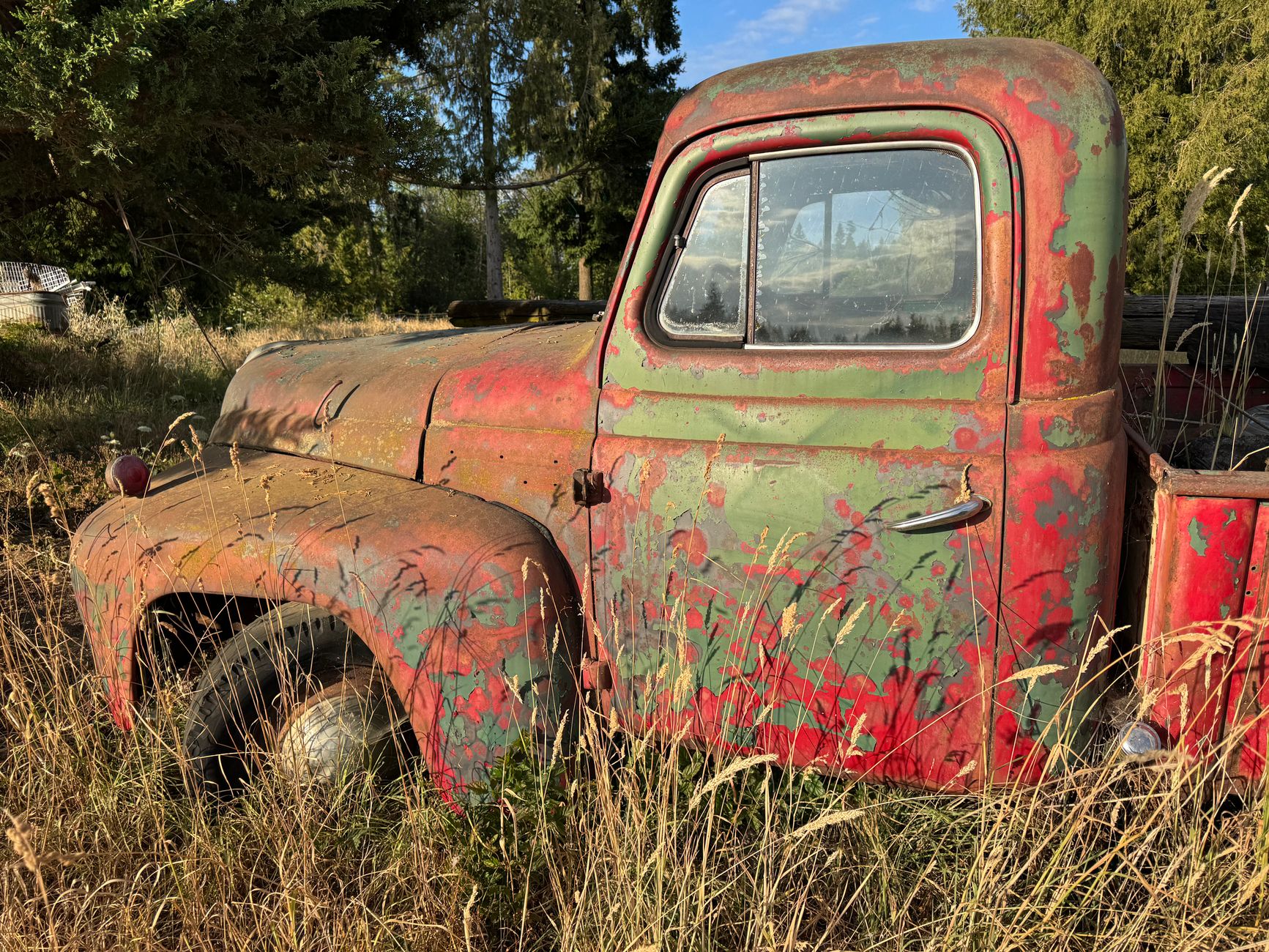
I knew two things about Tyler. He had mowed my yard every week since the funeral and would not take money for it, and he drove his granddad’s old grain truck to school some mornings when his own pickup was acting up. That grain truck is older than his mother. I had watched him back it up to the elevator like he was parking a bicycle.
At seven-thirty I walked across the road with a plate of cinnamon rolls.
Tyler came to the door in his sock feet.
“Morning, Mrs. Whitaker. Everything all right?”
“Tyler,” I said, “can you drive a three-speed on the column?”
“A three on the tree? Yes, ma’am. That’s what Granddad’s truck is.”
“Could you teach somebody?”
He looked past me, across the road, at the shed.
“Dale’s truck?”
“My truck,” I said, and it was the first time I had said it, and it came out smaller than I intended.
I waited for him to grin. A boy that age, an old woman on his porch asking for driving lessons. I had my chin up, ready for it.
He did not grin.
“Yes, ma’am,” he said. “I get off at four. Is after work okay?”
“After work is fine.”
“We ought to do it in your hay field, not the road. Till you’ve got the feel of it.”
“That’s what I thought, too.”
He took the cinnamon rolls. “I’d have done it without these,” he said. “But I’m keeping them.”
The hay field is eleven acres behind the shed. It was worn-out alfalfa, mostly cheatgrass by then. Dale had been meaning to tear it up and reseed it for three years. There was nothing out there I could hurt, and nothing to hit but one hedge post in the northeast corner.
Tyler backed the truck out of the shed for me that first afternoon, eased it through the gate, and shut it off in the middle of the field.
Then he got out, walked around, and opened the driver’s door like I was somebody.
“We’ve got to move the seat,” he said.
“I know it.”
Neither of us did anything for a second.
“I can mark where it was,” Tyler said. “I’ve got a paint pen in my truck. Put a little line on the track. Then it can always go back.”
I had not said one word about why I was standing there with my hand on the door. I do not know how a seventeen-year-old boy knew.
He marked it. A little white line on the seat track, no bigger than a grain of rice. Then we slid the bench forward five notches and I climbed up, and my feet found the pedals.
“All right,” Tyler said from the passenger side. “First thing. Before you ever touch the key, clutch all the way to the floor. Every time. This truck doesn’t care if it’s in gear. It’ll start anyway and jump out from under you.”
“Clutch to the floor.”
“Now the lever. Wiggle it up and down. Feel how it’s loose? That’s neutral.”
I wiggled it.
“First gear is toward you and down. Pull it at your chest, then down to your knee.”
I pulled it at my chest and down to my knee. Something deep in the truck went clunk, and it felt like setting a heavy pan on a stove.