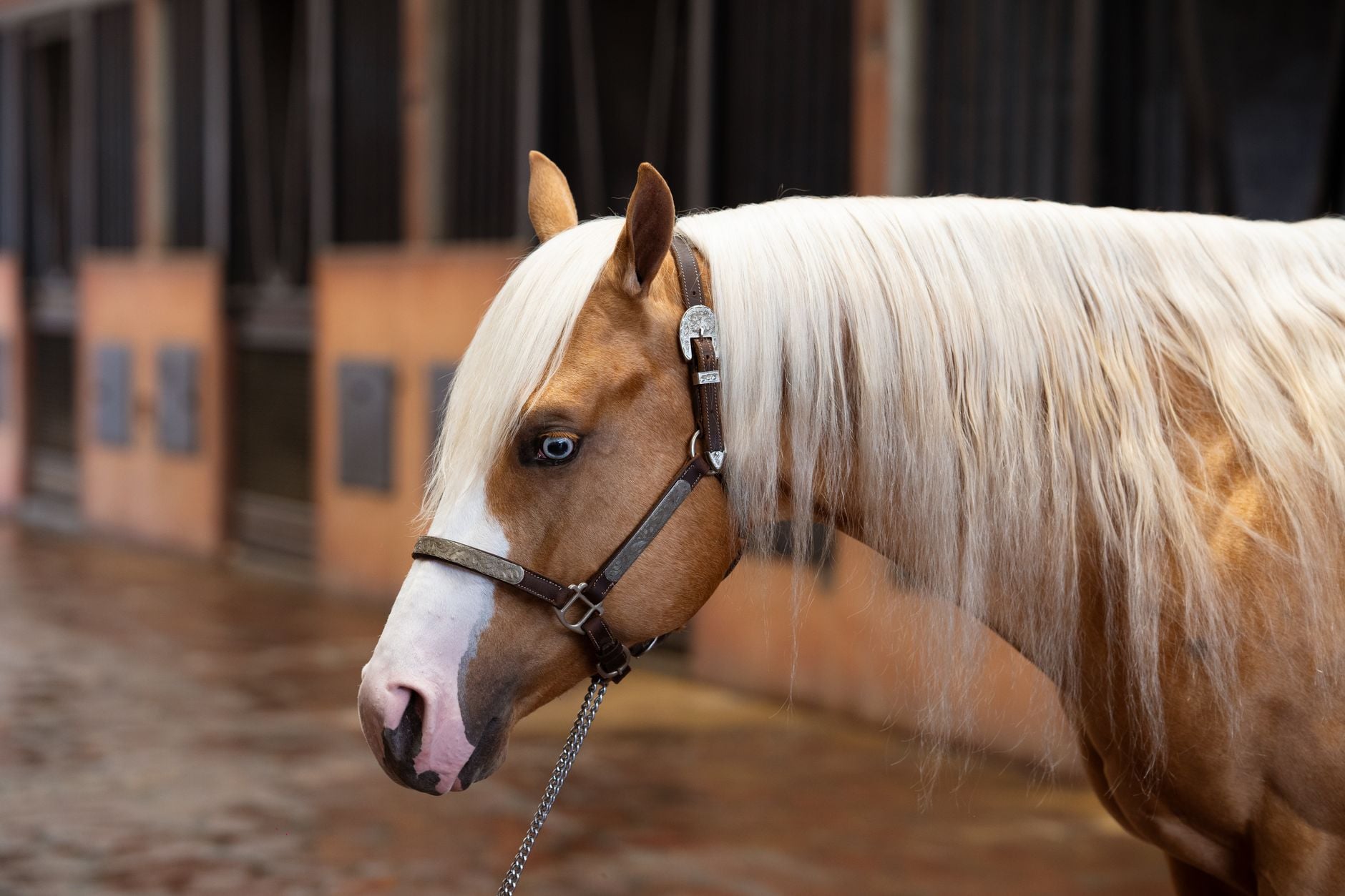
The Stall I Cleaned on Saturdays
“Paid in full,” she said. Then she handed me the paper.
The women had dinner laid out in the machine shed, roast beef and scalloped potatoes and about nine pies, and people began to drift that way. A good many of them stopped to shake my hand first. One old rancher I did not know laid his hand on Chief’s neck and said, “That’s the right owner,” and went on.
My father stayed where he was. When it was just the two of us and the horse, he reached out and ran his hand down Chief’s shoulder, and down the front leg to the knee, the way a man does who is looking a horse over.
“He looks good,” Dad said. “You’ve kept his feet up.”
“The Aldouses’ farrier does that.”
“You’ve kept him up,” he said again. He put his hat on. He looked at the hills behind me. “Your mother’s got a roast for tomorrow. If you wanted to come by on your way back.”
It was not what I needed him to say. I knew it then and he knew it too. But it was what he had, and he had driven seventy miles and stood up in front of twenty neighbors to bring it.
“I’ll come,” I said.
I did. I ate Sunday dinner at that table for the first time in a year, and my mother held on to me in the kitchen so long the gravy scorched.
Chief stayed at the Aldous place until I graduated. Mrs. Aldous said board was six stalls on a Saturday, same as always, and she would hear no more about it. So I kept driving the ninety miles, and the only thing that changed was whose horse I brushed when I was done.
I got a job teaching fourth grade in Valentine in the fall of 2010, and I rented a little place east of town with a corral and a three-sided shed. Dale hauled Chief over himself in his stock trailer and would not take gas money.
The first week of that October, a tan Chevrolet pulled into my yard with a flatbed trailer behind it. There were a hundred square bales of good grass hay on it. My father got out, pulled on his gloves, and started stacking them in my shed.
“What do I owe you?” I said.
“Nothing.” He did not look around. “A horse eats hay.”
He has brought that load every fall since. Sixteen falls. He has never sent a bill and I learned not to ask for one. He told me once, at a kitchen table, that he would not feed a horse nobody used, and I think he has spent sixteen years taking that sentence back the only way he knew how.
I am thirty-eight now. I married a good man named Jeff who runs the parts counter at the implement dealer, and we bought twelve acres out past the river. We have a daughter, Kim, who is ten.
Chief is twenty-six. His blaze has gone wide and gray and his back has dropped, and he does not have enough teeth left for hay, so I soak his feed into a mash twice a day and he eats my father’s bales mostly for something to do. Kim rides him bareback around the corral at a walk, and he carries her like she is made of eggs.