The Gate on the Cemetery Lane
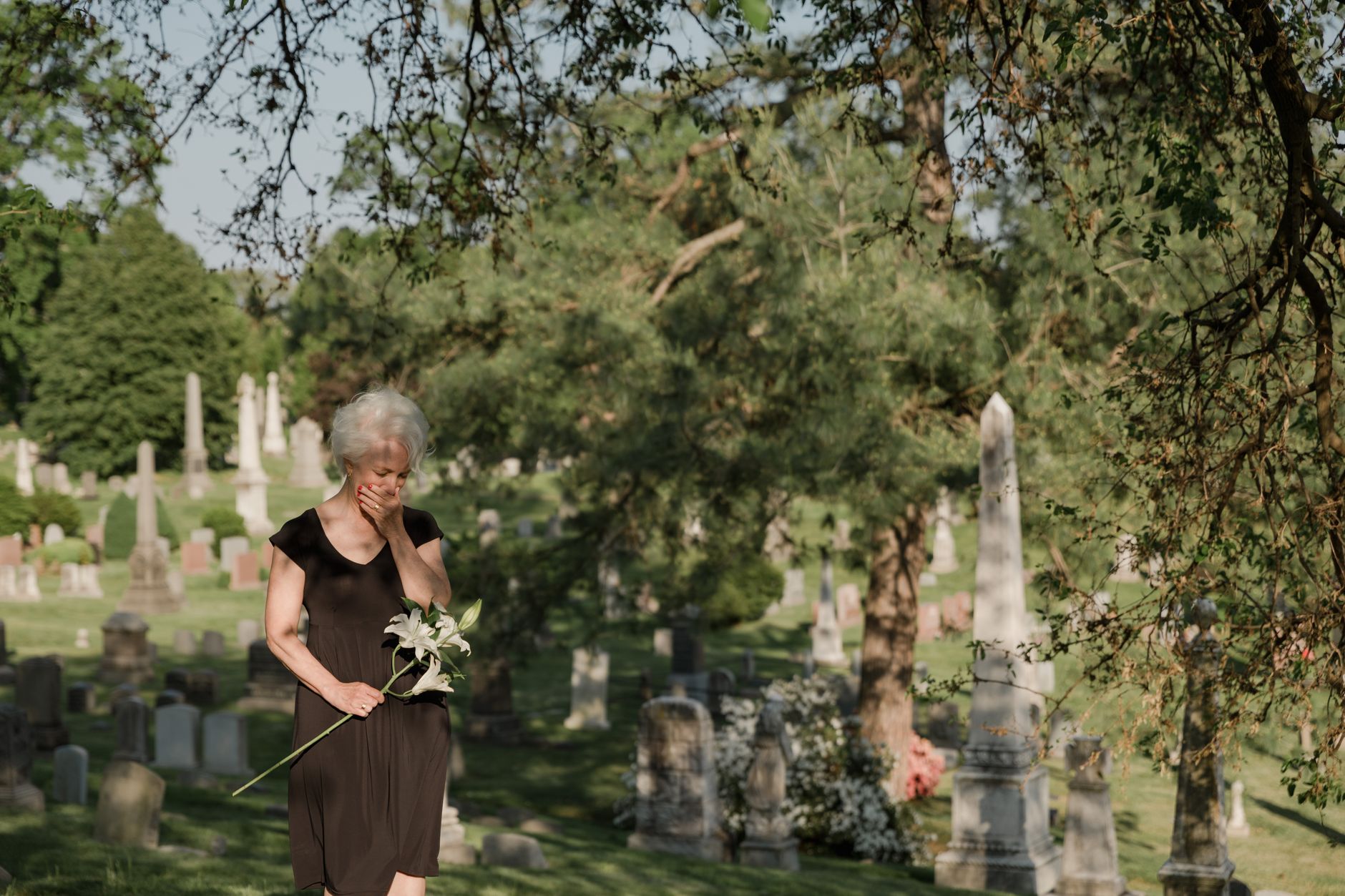
At the top we stood among the stones in the long grass, and Pastor Dan unfolded his paper. He did not preach. He said that on this day the church remembers those who have gone ahead, and then he read the names, all twenty-three, oldest first.
“Anna Petersen. Eighteen eighty-nine.”
He read slowly. He gave each one room. When he came to “Lois Ann,” I looked at Leland. He was standing at his mother’s stone with his cap held against his chest in both hands, looking down at those yellow mums, and his shoulders were shaking.
When Pastor Dan read “Dennis Walter,” Vera said, “Here,” out loud, as though answering roll for him.
After the amen nobody moved for a moment. Then Vera said, “Leland. Come here. I want to show you somebody.”
He came. She pointed with the toe of her shoe at the little gray marker, already half lost again in the grass.
“That’s your cousin,” she said. “You’d have been in the same grade at school.”
Leland read the stone. He read it twice. Then that big man got down on both knees in his good trousers, took out his pocketknife, and began cutting the sod back from the edges, carefully, as you would trim around something that might bruise. He cleaned the letters out with his thumbnail. He brushed the face of it with the flat of his hand.
“I never knew,” he said.
“There’s a good deal up here you never knew,” said Vera, not unkindly. “That’s what comes of people not driving up.”
He stayed on his knees. And then he said it, to the ground first, and then he lifted his head and said it to her.
“I’m sorry, Aunt Vera. I put a lock between you and your boy.”
“Yes, you did,” she said. “And now you’ll take it off.”
“Yes, ma’am.”
He got up. He looked around at all of us, eleven cousins and a preacher, and his ears were red.
“I had a reason,” he said. “I want that said. I lost a calf, and I’ve got thirty pair that are every bit of what I own, and I couldn’t have strangers leaving me open to the road. I still can’t.”
“Nobody’s asking you to,” I said.
That was when Jeff stepped forward. He had his hands shoved down in his jacket pockets like a schoolboy.
“It was me,” he said. “Fourth of July weekend. I brought the grandkids up to see Dad’s stone, and there was that wire across the cattle guard, and I unhooked it and figured I’d hook it on the way down, and the kids got to fussing and I just drove out. I never thought of it again until Marcia said calf. I’ve been sick about it for a week.” He took out his checkbook. I had not known anybody still carried one in his jacket. “You tell me what that calf would have brought and I’ll write it right here.”
Leland looked at him for a long moment.
“About fourteen hundred, this fall,” he said.
Jeff wrote it against the top of Uncle Roy’s headstone and tore it out and held it across.
Leland took it. He folded it once and put it in his shirt pocket, and I was glad he did. A man who has been done a wrong ought to be let to have it made right.
“Thank you,” he said. “That’s square.”
Then he turned to me.
“I thought about what you said, about Harold being ashamed. I never once thought of it from his side. I figured he just didn’t care to tell her.”