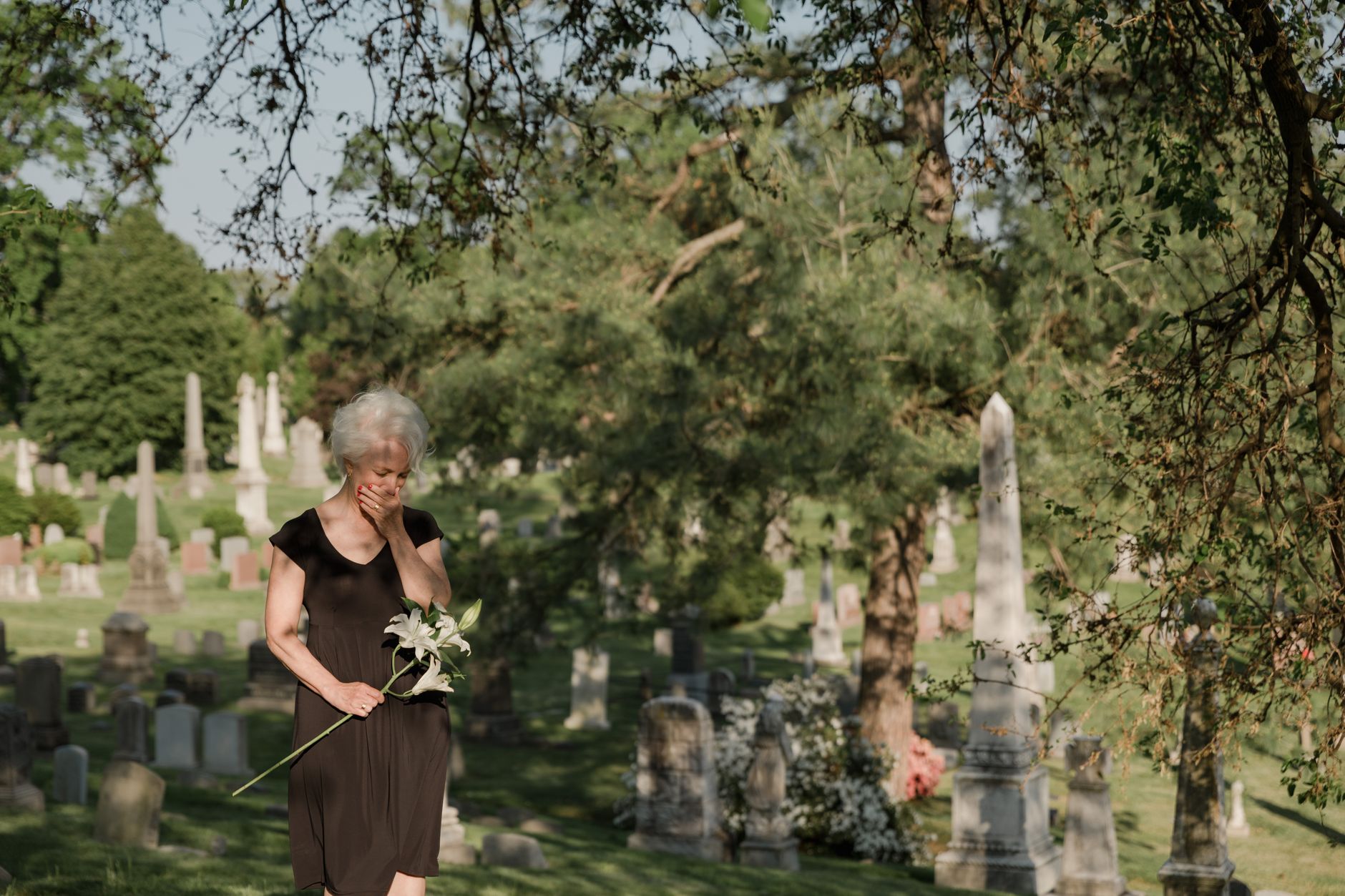
The Gate on the Cemetery Lane
“Then call first.”
He stood there another moment. Then he nodded at me, the way you nod at somebody across the feed store, and walked back to the shed.
I turned around in the road and drove home with the mums on the seat beside me.
I should say how things stood, because none of it makes sense otherwise.
That hill was Petersen ground for ninety-seven years. My great-great-grandfather homesteaded the quarter south of Minden, and the first thing the family put on top of the hill was not a house. It was a baby. Anna Petersen, eleven months old, the fall of 1889. They fenced an acre around her and deeded that acre to the family for a burying ground, separate from the farm, and it has been separate ever since.
Twenty-three of us are up there now. My grandparents. My father, Harold, and my mother, Jean. My Aunt Lois, who was Leland’s mother. Uncle Walt. Children whose names are on little flat stones you have to hunt for in the brome.
My father farmed the home quarter until 1986. Anybody who lived through those years out here knows what 1986 means without my saying it. The bank in Minden gave him until spring. He sold to the Hinrichs family in February, kept nothing but that acre on the hill, moved Mother into town, and drove a propane truck until he was seventy. He never once talked about it at the supper table.
The Hinrichses were good neighbors about the cemetery. They kept a few cows on the grass and never so much as hung a chain. Old Mr. Hinrichs died a year ago last winter, his children all live in Colorado, and in March the quarter went on the block at the sale barn.
Leland bought it.
He had worked thirty-eight years at the co-op elevator in Axtell. He and Kathy never had children. She passed two years ago, in the spring, and I think that land sale was the first thing he had looked forward to since. He paid a little over four hundred thousand dollars for a hundred and sixty acres of grass and a farmhouse with a picture window, and he moved in by himself with thirty cow-calf pairs he had been running on rented pasture.
All of us were glad. I told him so at the sale. I said, “It’s back in the family,” and he gave me a look I did not understand until later.
That night at the kitchen table I told Ron about the gate.
My husband is not a talker. He drove a truck for the propane company for thirty-one years, after my father did, and he has the patience of a man who has backed up a great many farm lanes. He listened to the whole thing. Then he got up, went out to the garage, and came back and set his bolt cutters on the table next to the butter dish.
“Say the word,” he said.
I looked at those long red handles for a while.
“No,” I said.
“It’s your mother, Marcia.”
“I know whose mother it is. And then he puts on a bigger lock, and you cut that one, and at Christmas the two of you aren’t speaking and there’s a deputy standing in his yard. No.”
He took the bolt cutters back out to the garage without arguing. He has always known when I meant it.