The Gate on the Cemetery Lane
Nobody locks a front yard gate in Kearney County. I lifted the horseshoe.
I walked up his front walk.
His lawn was mown as close as a ball field. I crossed it. I passed the picture window, and there he was in his recliner with a plate on his knee and the television going, a man eating Sunday dinner alone at two in the afternoon. He looked up. His fork stopped.
“Good afternoon, Leland,” I said through the glass, and I did not slow down.
Around the east side of the house, out through the lilacs, onto the lane. The cattle guard was just what he had said, eight steel rails with the pit beneath them packed nearly level with dirt and old thistle. I crossed it on the rails, slowly, minding my heels.
Then the hill.
It is a longer climb than it looks from the road. When I got through the cemetery fence my stockings were full of seeds and I was breathing like a woman who had not walked up there in twenty years, which was the truth. We had always driven.
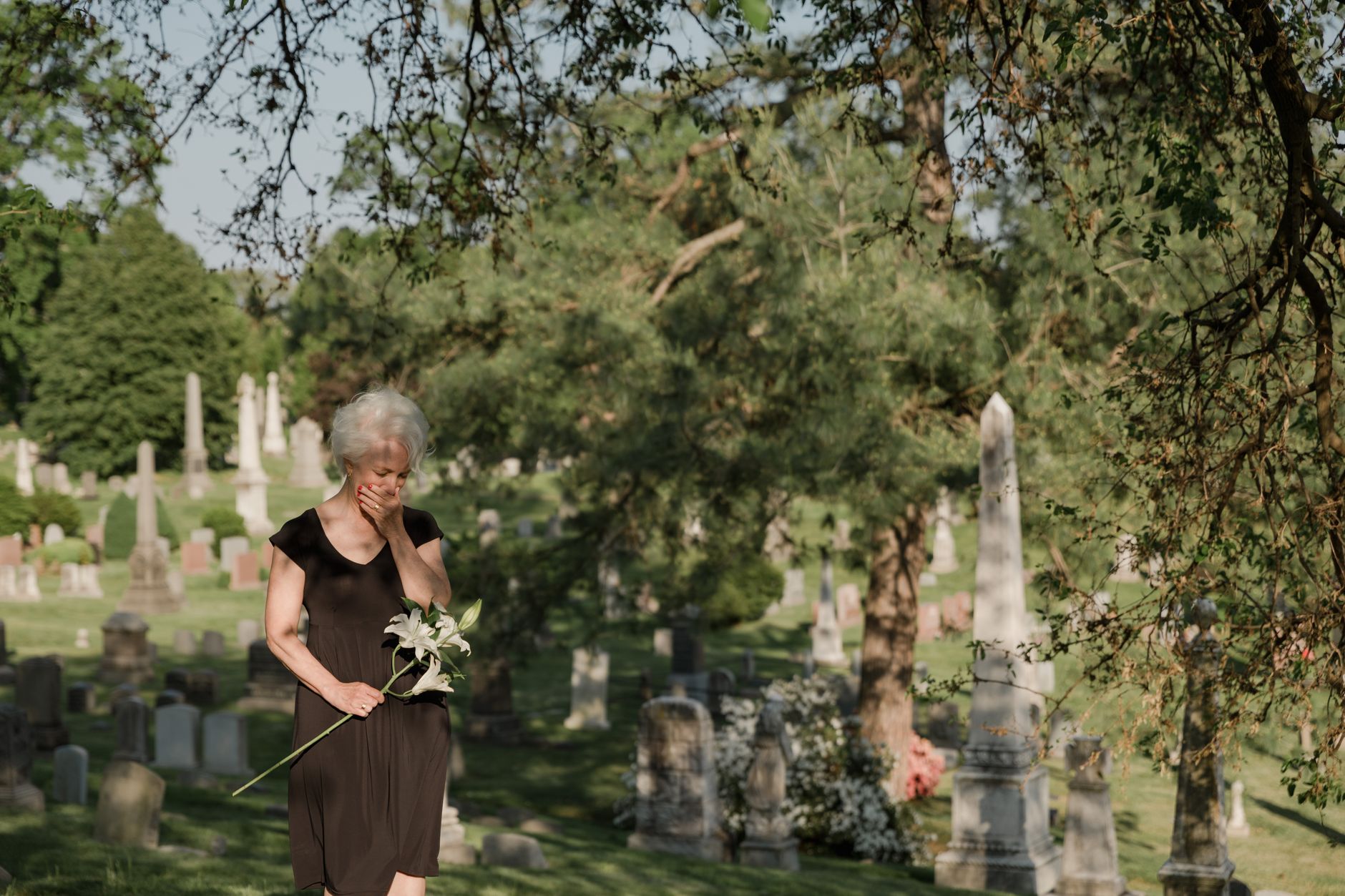
I knelt at my folks’ stone and cleared the grass back from it with my hands.
“Happy birthday, Mother,” I said. “I’m three days late. I had some trouble at the gate.”
I pulled the pot apart. Mums will divide if you are patient with them. I set half at Mother and Daddy’s stone. I carried the other half forty feet east, to the gray granite that says Lois Ann and under it, Beloved Mother, and I worked them into the ground there with my fingers.
Aunt Lois taught me to make pie crust. I did not have to think about whether she got flowers.
When I came back down, Leland was standing on his front porch with his hands in his pockets. I walked back across his lawn the same way I had come.
“Marcia.”
“I put some on your mother’s too,” I said. “They’ll want water Wednesday if it doesn’t rain.”
I let myself out the little gate and latched the horseshoe behind me.
The second Sunday he was waiting.
He was on the porch before I had my car door shut, in a clean shirt, with his arms crossed. I came through the yard gate with a bunch of zinnias out of my own garden wrapped in wet newspaper.
“This is my yard,” he said.
“It is,” I said. “Good afternoon.”
“You’re going to do this every week.”
“Every week I’m able.”
“You could call. You could pick up the telephone like a reasonable person and I’d have that gate open before you got your coat on.”
I stopped then, on his front walk, because he had come down off the porch and it would have been rude to walk around him.
“I know you would,” I said.
“Then what in the world is this for?”
“Leland, I’m not asking you whether I can see my mother. Not you, not anybody. I’d feel the same if it was the governor’s gate.”
His face worked. And then he said the thing he had been carrying, and I do not think he had planned to.
“Your dad sold this place in a week,” he said. “February of eighty-six. My mother grew up in this house. She was born in that back bedroom. She found out it was sold from a woman at the beauty shop. Nobody asked her. Nobody called her, since we’re talking about phone calls.”