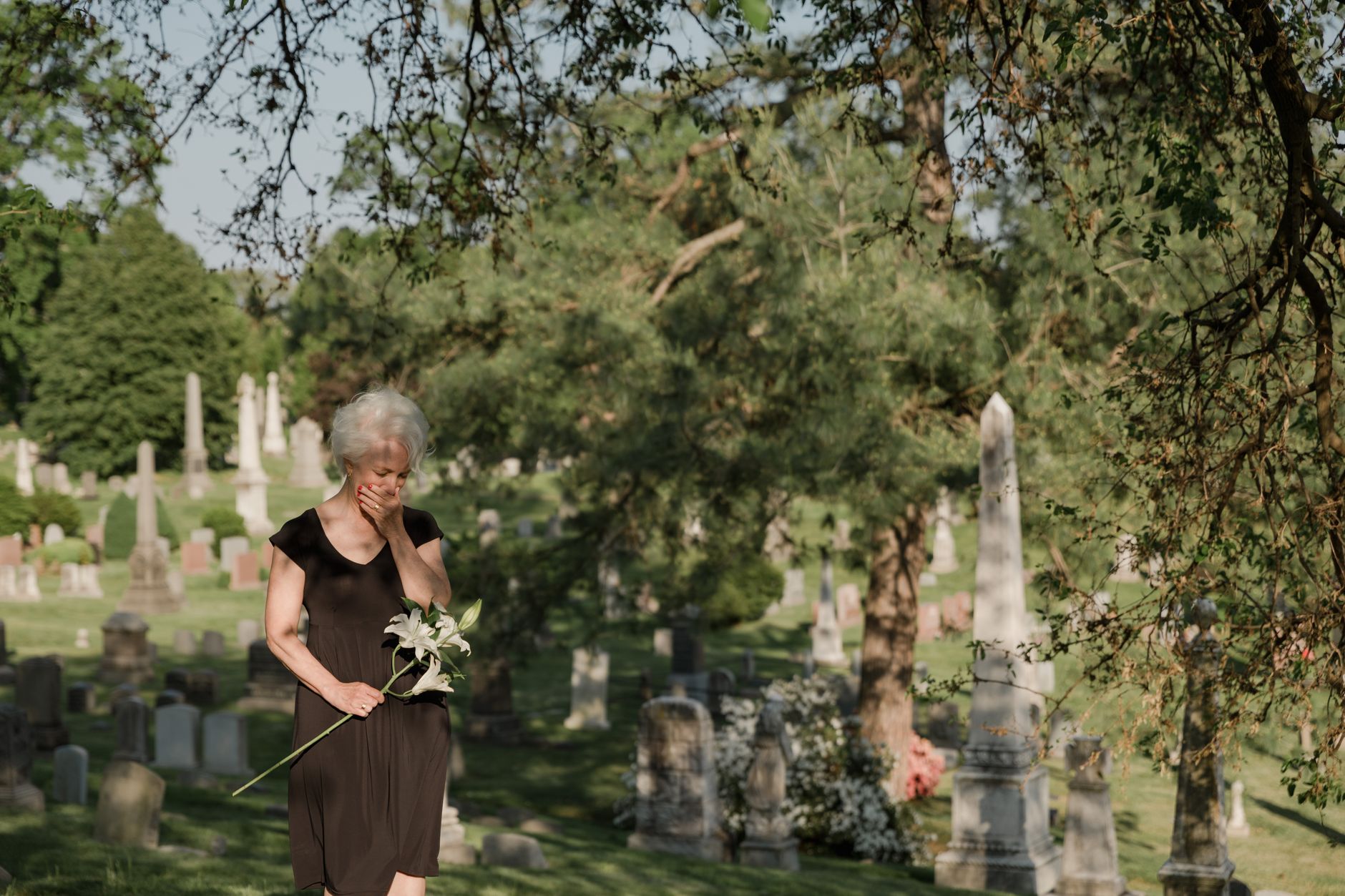
The Gate on the Cemetery Lane
I stood very still.
“She never got over it,” he said. “She never said one word against Harold, not one, but she drove out here every spring and parked on the road and looked. I was twenty-six. I told her I’d get it back. It took me forty years and every dollar Kathy and I ever put by, and Mother didn’t live to see it and neither did Kathy. And the day I close on it, here comes everybody named Petersen telling me it’s back in the family. In the family. Like you’d all been holding my place in line.”
The wind moved the zinnias in my hand.
“I didn’t know that about the beauty shop,” I said.
“No. I don’t suppose you did.”
“Daddy should have gone to her. He was ashamed, Leland. That isn’t an excuse. He should have gone to her and I’m sorry he didn’t. I’m sorry for my part in not knowing.”
He had not expected that. He looked at me the way he had looked at the mums.
“That doesn’t change the gate,” he said finally.
“I didn’t think it would. It doesn’t change the walking either.”
I went around him, across his lawn, and up the hill. When I came down he was not on the porch, but the curtain at the picture window was still swinging.
That Wednesday I took Aunt Vera to get her hair done, the way I do every week.
Vera is the last of my father’s generation. She was the baby of the family, born in that farmhouse in 1936, and she is ninety years old with a mind like a filing cabinet and two knees that quit on her around eighty-four. She lives in the assisted living place in Minden and goes everywhere on a walker with a seat and a basket, and she keeps a sack of butterscotch disks in the basket for other people’s grandchildren.
Her husband, my Uncle Walt, has been on the hill since 2003.
She already knew about the gate. I had not told her. In a town of three thousand people, you do not need to.
“I hear you’ve been calling on Leland,” she said, with the dryer hood tipped up off her head.
“I’ve been walking through his yard, if that’s calling.”
“What does he say?”
“He says call first.”
She pressed her lips together. “Lois would have called first,” she said. “Lois was the polite one. I was not the polite one.” She patted the arm of the chair. “What time Sunday?”
“Aunt Vera, it’s a quarter mile uphill through pasture grass.”
“I asked you what time.”
“Two o’clock.”
“Then you may pick me up at half past one.”
I went home and told Ron, and this time I did not tell him to stay home.
He thought about it through supper. Then he went out to the garage and I heard the saw going, and when I looked he had two ten foot planks, two by tens, cut and sanded on the edges, and he was screwing cleats to the undersides so they would catch on the rails of a cattle guard and not slide.
“Her wheels will go right down between those bars,” he said. “She’d break a hip before she ever got to the hill.”
That is my husband. He will not make a speech, but he will build you a bridge.