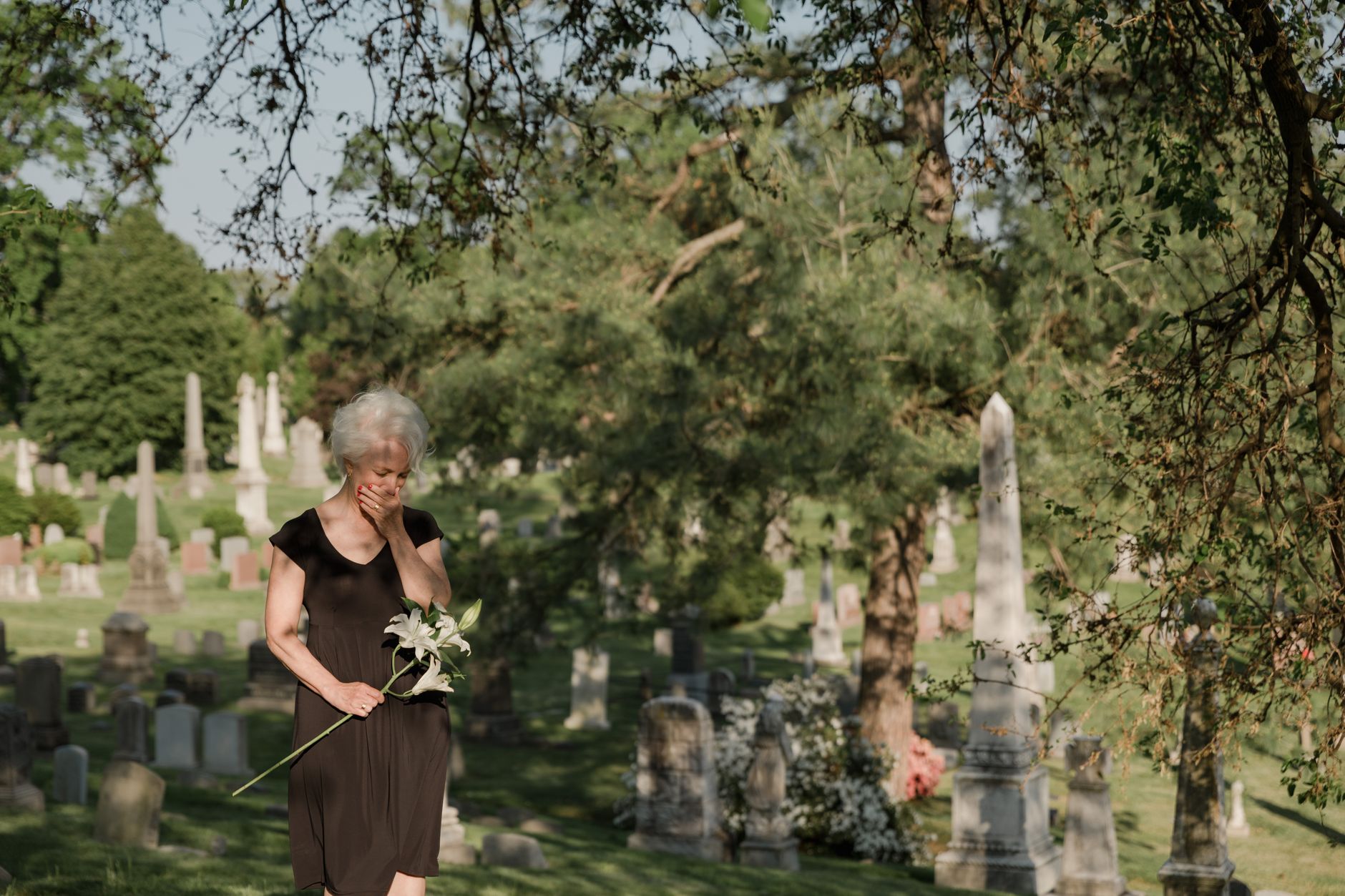
The Gate on the Cemetery Lane
I got down on my knees in the brome and felt for it. The grass had thatched right over. I found the edge with my fingers, and I tore the sod back, and there was a gray marker not much bigger than a hymnal.
Dennis Walter. April 9 to April 13, 1959.
“Four days,” Vera said. “He had the prettiest hands. Nobody remembers him but me, and I won’t be remembering much longer.” She did not cry. She looked at the little stone as you might look at a photograph. “That’s why I don’t call ahead, honey. He’s waited sixty-seven years for whoever’s coming. I’m not going to tell him I had to ask.”
I cried enough for both of us. Ron walked off to the fence and studied the cedars with his back to us for some time.
Going down, I saw that Leland had gone inside. But the planks, which Ron had left across the guard, had been moved. Somebody had shifted them a few inches wider and squared them up so the gaps matched a walker’s wheels exactly.
Neither of us said anything about it.
Word got around after that. I did not carry it. Vera did, from the dining room at the assisted living, where she holds court at the corner table, and by Tuesday I had four phone calls.
The fourth Sunday there were five of us. Ron and me, my cousin Kim from Hildreth and her husband, and my cousin Jeff from Kearney, who is Uncle Roy’s youngest and had not been up that hill since Memorial Day. Vera stayed home on doctor’s orders, and complained of it bitterly.
It was a gray day with a mean wind. We went through the yard quietly, single file, and I said good afternoon to the picture window. Leland was in his chair. He did not get up. But as we passed he lifted two fingers off the arm of the recliner, hardly a wave, the way a man greets a pickup he knows on a gravel road.
On the hill I found something I kept to myself. The mums at Aunt Lois’s stone had been cut back and watered. There was a ring of damp earth around them, and the dry heads had been pinched off and carried away. I had not done it.
Jeff was quiet all the way down. At the car he said, “Was it really a calf got hit? In July?”
“That’s what he told me.”
He nodded and got in his pickup and did not say anything more.
That same week, Pastor Dan caught me in the church kitchen while I was drying the coffee urn.
He has been at our church eleven years.
“I hear there’s a procession on Sundays,” he said.
“There’s a few of us walking up to the graves. I’m not asking you to take a side, Pastor. Leland’s got his reasons. Some of them are good ones.”
“I wasn’t planning to take a side.” He picked up a dish towel and started on the cups. “Next Sunday is All Saints. I read the names of the congregation’s dead from the pulpit every year. It occurred to me there are twenty-three people on that hill, most of them baptized at our font, and I’ve never once read their names where they are. I’d like to. If you’d have me.”
“He’ll think I put you up to it.”
“Then I’ll tell him you didn’t. I’m also going to knock on his door first, Marcia, and tell him what I’m there for. I won’t walk past a man’s window to pray behind his back.”