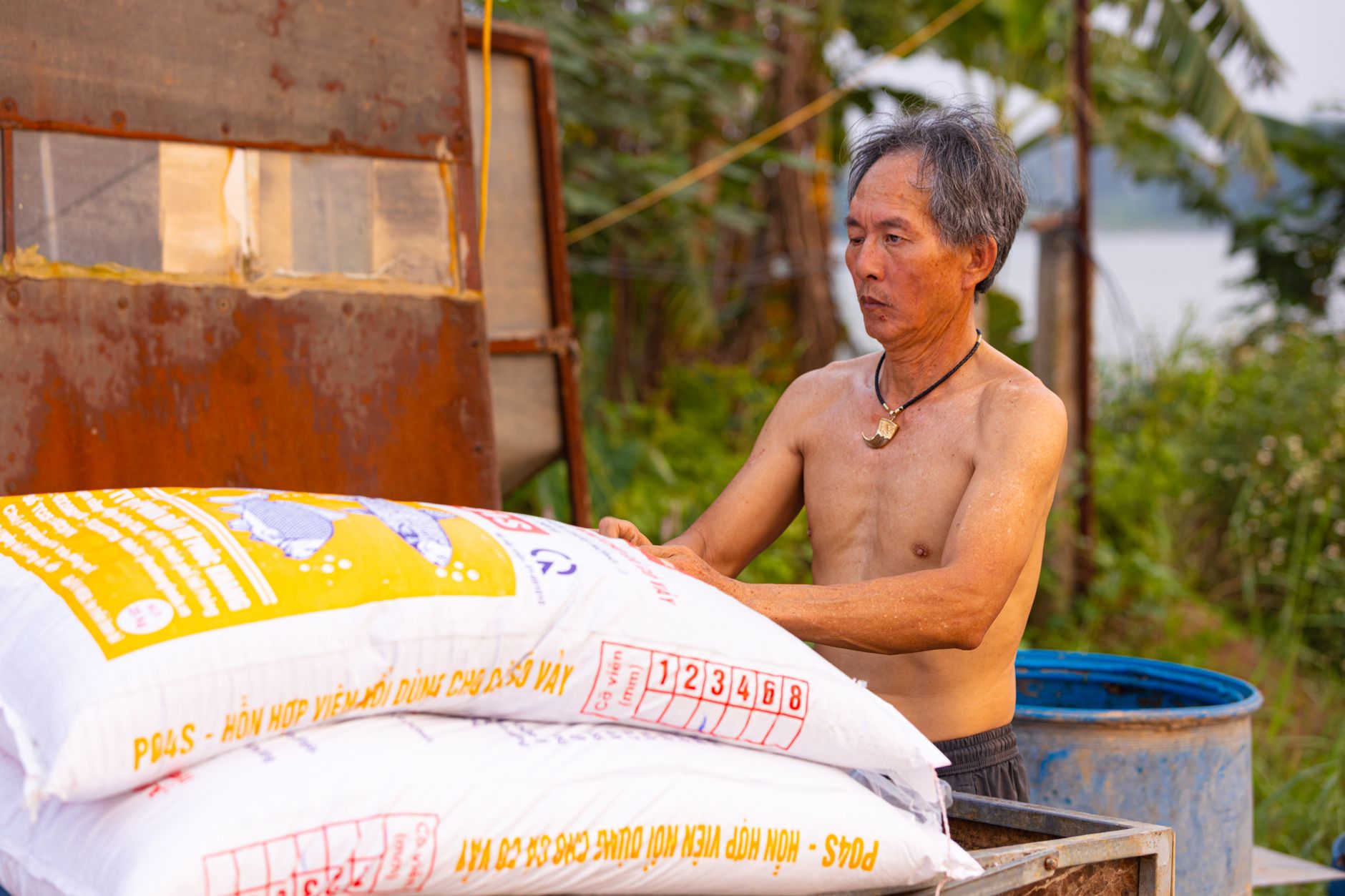
The Feed Truck I Drove Home
I hooked up the stock trailer and started hauling them home, eight at a time. It was the middle of calving. You do not move cows in the middle of calving unless you have to.
Phil drove out from Omaha on the Saturday and found me loading the fourth trip. He stood at the lot gate in a clean canvas coat.
“You don’t have to do this. Leave them where they are.”
“They’re not yours to feed, Phil.”
“I’m not asking you to pay.”
“I know you’re not. That’s the trouble with it.”
He put both hands on the top rail. He has our mother’s hands, long in the fingers.
“What are you going to do for grass?”
“Rent some.”
“Wade.”
“I’ll rent some.”
I latched the trailer gate and drove out past him. In the mirror he was still standing at the rail, and behind him was the house, and in the kitchen window was the yellow curtain our mother hung in 1988.
I rented a half section of hill pasture north of Elba from a widow named Mrs. Nielsen, whose husband I had helped work calves for years. Sixty-five dollars a pair, a month, for five months. Thirteen thousand dollars. I shook her hand at her kitchen table and she made me take a loaf of rye bread home, and she said, “Your dad was hard, but he was honest,” and I said yes ma’am, he was both.
Then I went to the co-op and asked Jeff, the manager, if he could use a man through spring.
Jeff has known me since Little League. He looked at me over the counter and did not ask one question, which I will remember him for.
“You’ve still got your commercial license?”
“From when I hauled cattle for the Larsens.”
“Twenty-three an hour. I need a tender driver for the dry spreaders and somebody who can run the feed mill when Kim’s out. You start Monday.”
So that is how a man who had farmed four hundred acres beside his father for twenty-two years came to be hauling other men’s fertilizer to other men’s fields. I fed my own forty cows morning and night out of the feed truck in the lot behind our barn, ground hay and a little distillers grain, far more truck than forty cows needed. Every morning at half past five I climbed up into that cab in the dark, and the gloves were there, and I said good morning to them like a fool.
Then I waited for planting.
I should explain that, because Theresa asked me about it more than once.
“Call him,” she said, about the tenth of April. We were at supper. “Tell him you’ll put the crop in. He’d pay you. He’d be glad to.”
“He knows my number.”
“That’s pride.”
“Some of it is.”
“What’s the rest?”
I set my fork down.
“If I call him and offer, then I’m the hired man asking for work on my own father’s place. I planted that pivot twenty-two springs. I’m not going to beg to plant it the twenty-third. If he wants me, all he has to do is ask. One sentence. I’d be in the field by dark.”
She did not say anything to that. She got up and cut me a second piece of pie, which was her way of saying she thought I was wrong and was going to let me find it out.
What a great story, many farms were paid by hogs and not many brothers made a good partnership. Excellent read.