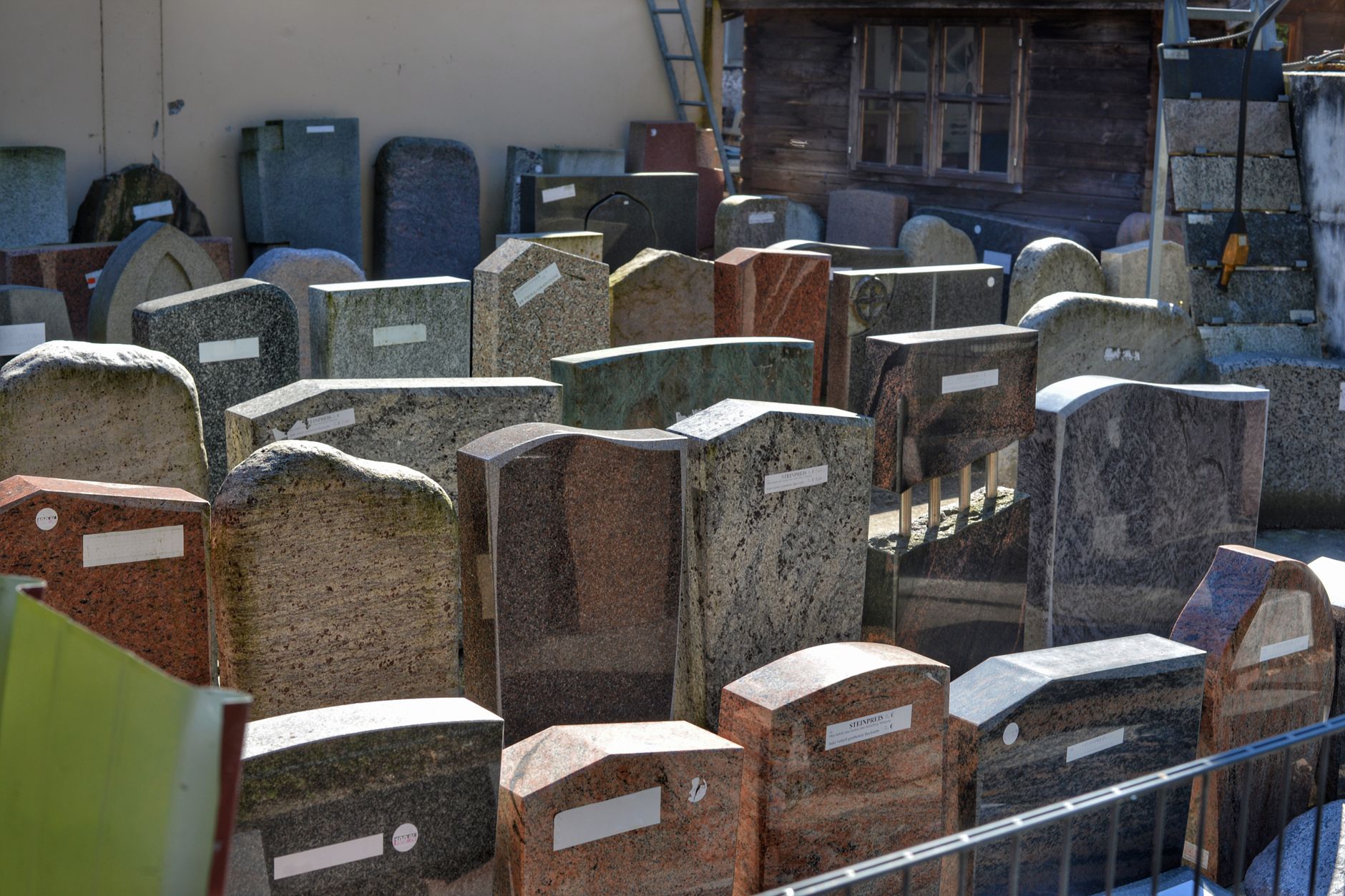
One More Line on Elmer’s Stone
Mr. Blaha turned the drawing around on the counter so it faced me, and then he took his hand away from it the way you take your hand off a hot pan.
It was a pencil drawing on graph paper, done to scale. A wide gray stone on a base. The family name across the top in block letters: Novak.
Under the name, on the left, Joan. 1955 to 1988.
Under the name, on the right, Elmer. 1952 to 2025.
Wheat stalks carved up both sides. A small cross in the middle, between the two of them.
I looked for a third place. I looked along the bottom, where sometimes there is a line. I turned the paper over, in case there was a drawing of the back.
The back of the paper was blank.
“That’s the whole of it?” I said.
“That’s what was ordered, Mrs. Novak.” He had a quiet voice for a big man. “Your stepdaughter came in the fourth of November. She picked the gray, she picked the wheat, and she put down eleven hundred dollars.”
Thirty-one years I had been married to Elmer Novak. I had been a widow for five weeks.
“She told me at the funeral she would see to the stone,” I said. “I thought she meant she would help me pick one.”
Mr. Blaha did not say anything to that. He was seventy if he was a day, with granite dust in the creases of his knuckles, and I suppose a man does not cut headstones for forty years in a town the size of Wilber without learning when to keep still.
“Why did you call me?” I asked him.
“Two reasons.” He held up a thick finger. “One, the cemetery board will not let me set a stone on a lot unless the lot holder signs the permit. I called Ardis for the lot book, and that lot is in your name now. Not Debra’s.”
Ardis was Elmer’s sister. She had kept the books for Zion Hill Cemetery since before I came into the family.
“And two?”
He looked at the drawing and then at me.
“Two, I don’t cut a married man’s stone without his widow seeing the paper first. I never have. I’ve had to grind a name off exactly once, and I told myself that day I’d never do it again.”
I put my glove back on. I don’t know why. I had taken it off to hold the paper, and now I didn’t want to hold the paper.
Outside the front window of Blaha Monument Works, the sky over Saline County was the color of the stone in the drawing.
I should say what Debra said at the funeral, because I had been turning it over for five weeks and had managed, every time, to make it mean something kind.
Elmer died on the ninth of October with the soybeans still in the field. He had come in for dinner at noon, eaten a plate of roast and said the gravy was good, and gone out to the machine shed to grease the combine. When he didn’t come in at dark I went out with the flashlight. He was sitting on an overturned bucket with his back against the tire and his cap in his lap, like a man resting.
The doctor in Crete said it was his heart and that it would have been quick.
Three neighbors brought their own combines over that week and took out his beans, and then his corn, and would not take a dime for the fuel. I mention that because I want it understood what kind of place this is, and what kind of man they thought he was.