The Dog Who Would Not Eat
Brad had Duke by the collar at my back door, and I was standing in my own kitchen in my funeral dress with a pan of somebody’s scalloped potatoes in my hands.
“Dad paid for him,” Brad said. “Six hundred dollars. I was there when he wrote the check.”
I set the pan down on the stove. I remember doing it carefully, the way you set something down when you are not sure of your hands.
“Brad,” I said. “He lives here.”
“He was Dad’s dog.”
His sister Tina stood behind him on the step with her purse held in front of her in both hands. She would not look at me. She looked at the dog instead.
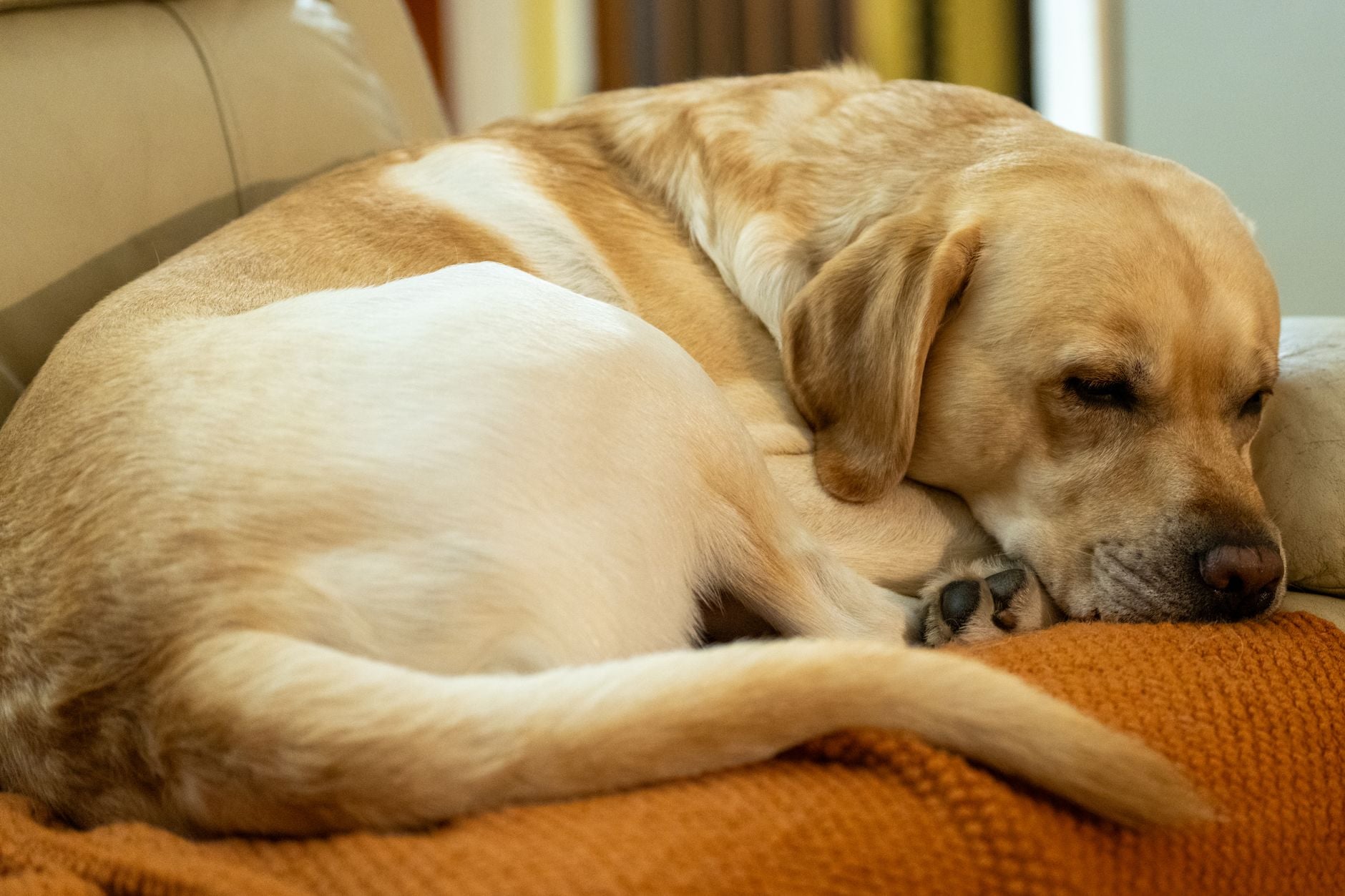
Duke was ten years old that fall, a yellow Lab gone white in the face, with hips that had started to trouble him. He stood where Brad held him, patient, the way he stood for anybody who had a hand on him. Then he turned his head and looked at me, and his tail went once, slowly, side to side.
We had buried my husband at eleven that morning.
The lunch in the parish hall at St. Patrick’s had run until nearly two. The altar society ladies had sent me home with more ham and funeral potatoes than one woman could eat in a month, and my brother Jeff had followed me in his pickup with the folding chairs we had borrowed for the visitation.
Brad and Tina had come back to the house behind us. I had thought, for the length of the drive, that they were coming to sit a while.
I had been married to their father for twelve years. In twelve years they had been inside that house four times that I could count, and never once for a meal.
“I’m not trying to start anything,” Brad said. He was thirty-eight, a big man built like Dennis, with Dennis’s way of looking at the floor when he said something hard. “You’ve got the house. You’ve got his truck. You’ve got everything that was his. I’m asking for the dog.”
He was not asking. He already had the collar.
“He’s on medicine,” I said.
“Then give me the medicine.”
Behind them, out in the driveway, Jeff had stopped with a stack of four folding chairs against his chest. He set them down on the gravel. My brother is sixty-two years old and has pulled calves and set fence posts his whole life, and he is not a man who raises his voice.
“Colleen,” he said. “Say the word.”
Everybody heard it. Brad’s shoulders came up.
I looked at my stepson’s hand on that collar. I looked at Tina’s face, which was swollen from crying, and at the black suit Brad had probably bought for this one day. I thought about what it would look like if I said the word. A ten-year-old dog with bad hips in the middle of it, pulled one way and then the other, on the day those two children put their father in the ground.
I shook my head at Jeff.
“No,” I said. “Not today.”
Then I went to the cupboard over the refrigerator and took down the two pill bottles. I put them in a grocery sack. I put in the measuring cup, and I filled a bread bag with dog food from the bin in the pantry and knotted it and put that in too.
I carried the sack of pills and food out to Brad’s pickup myself.