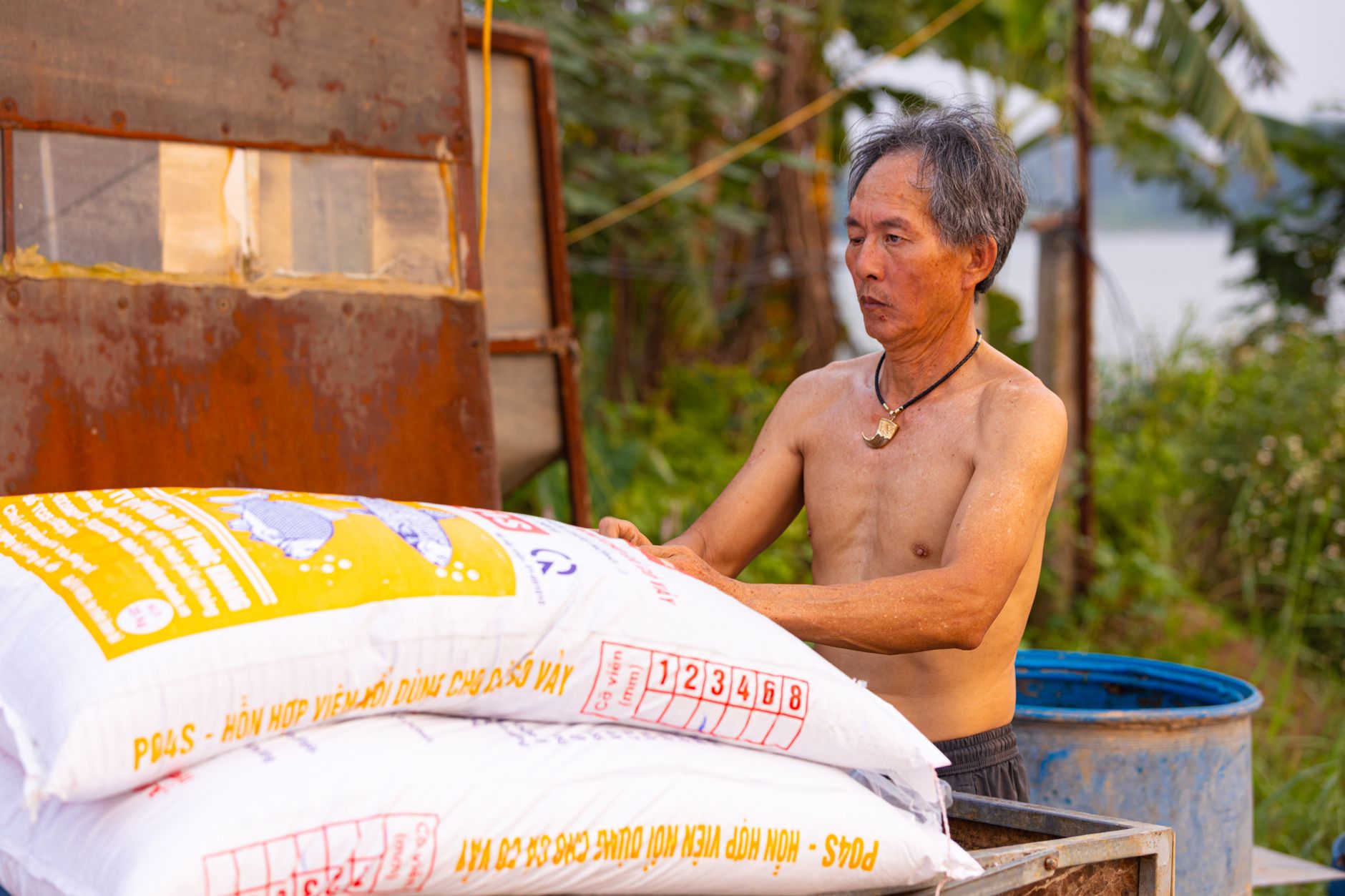
The Feed Truck I Drove Home
Corn planted right comes up like a church choir, all the same height. This came up like a school picture. Knee high in one spot and four inches in the next. Skips in the row as long as a man lying down, and then three plants crowded in a bunch. Yellow streaks where the roots could not break out of a seed trench that had baked hard as a clay pot. Nobody had put down a weed killer ahead of it, so the waterhemp was coming in a green haze between the rows.
And the pivot had not turned once. It sat at the same angle it had been parked at in September, with a flat tire on the fifth tower.
On the eighty they had planted dryland corn at an irrigated population, thirty-two thousand seeds to the acre on ground that will only carry twenty-four in a good year. If July came in hot, every stalk out there would be fighting its neighbor for a drink.
I was not there for what happened next. Butch told me his side of it later, and Phil told me his, and the two matched, which is how I know it is true.
It was a Thursday evening, the eleventh of June. Phil had driven out from Omaha after work, the way he had been doing every week, sleeping in his old room and walking fields he did not know how to read. He was standing at the end rows of the pivot quarter in a pair of work boots that still had the yellow in the laces.
Butch pulled his pickup onto the shoulder, got out, and leaned on the line fence. He did not say hello. He looked at the corn for the better part of a minute.
“Your dad,” he said, “would’ve said a blind mule plants straighter.”
Phil didn’t answer.
“He’d have said you could lose a hog in those skips. He’d have said whoever set that planter ought to be made to eat the seed tags.”
“I expect he would,” Phil said.
“What’d that outfit charge you?”
“Twenty-eight dollars an acre. Plus the seed.”
“Hm.” Butch let that sit. “You know what else Albert would’ve said?”
“What.”
“He’d have said it’s the eleventh of June and it isn’t lost. Corn’s forgiving if you get to it. That needs sprayed by Monday. It needs nitrogen put on beside the row. And that pivot needs to be walking before the Fourth of July or you can forget the whole business.”
Phil looked at the pivot. “I don’t know how to start it.”
“I know you don’t.”
“I had a man out to look. He said the panel was throwing a fault and he could come back in two weeks.”
“You don’t have two weeks.”
Butch told me Phil took his cap off then and ran his hand back over his head, the way our father did when he was whipped, and that it gave him a turn to see it.
“There’s a man eleven miles from here,” Butch said, “who knows which tower sticks on that machine and what to hit it with.”
“I know there is.”
“Then what in the world are you standing here talking to me for?”
Phil put his cap back on. “Because I got the farm and he got a truck, Butch. How do I drive into his yard and ask him for anything?”
Butch said he thought about that. He said it was the first time in thirty years he had thought Phil sounded like one of us.
“The same way he’d have to drive into yours,” he said. “Slow. With your hat in your hand.”
Then Butch said one more thing, and I will come back to it.
What a great story, many farms were paid by hogs and not many brothers made a good partnership. Excellent read.