One More Line on Elmer’s Stone
It came to me somewhere past midnight what was wrong with the drawing. It was not the thing I had been looking at.
I slept better than I had in five weeks.
I was back at the monument works at nine the next morning. It was overcast again and raw, with a north wind, and I had on my dark coat and my church scarf and my good gloves, because it seemed to me a thing you ought to dress for.
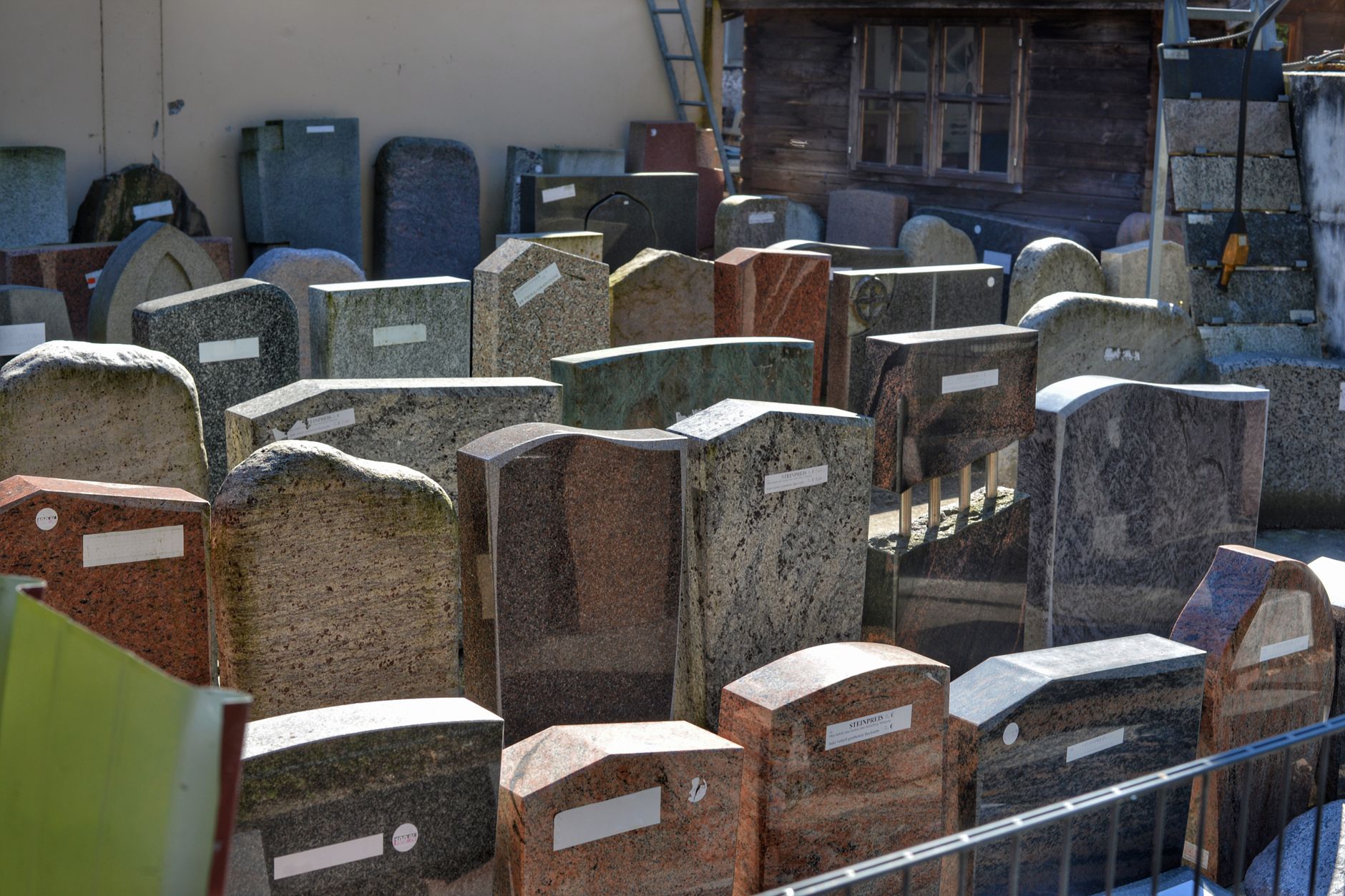
Mr. Blaha was out in the yard with a clipboard, among the blank stones. They sat in rows on wooden pallets, gray ones and red ones and black ones, dozens of them, every one waiting on a name.
“Morning, Mrs. Novak.”
“Good morning. Which one is his?”
He led me to a work table by the shop door. A gray stone lay flat on it, face up, wide as a kitchen table. Georgia granite, he told me. The face had not one mark on it.
I laid my hand on it. Even through the glove it was cold enough to feel.
“Have you decided?” he said.
“I have. I don’t want you to stop.”
He waited.
“I don’t want anything on that drawing changed. Not the wheat, not the cross, not where she’s put the names. Debra picked it, and she picked nicely.”
“All right.”
“I’ll sign your permit. And I’m going to pay the balance today. All of it.”
He looked at me over his glasses.
“You don’t want me to tell her to finish paying it?”
“He was my husband, Mr. Blaha. I’d have bought the whole stone if she’d let me. I’m not going to have Debra counting out fifty dollars a month till Easter to bury a man I was married to.”
I had the checkbook in my purse. Twenty-six hundred and forty dollars was most of what the calves had brought in September. I had meant it for propane and the taxes.
“There’s one thing more,” I said. “I want to add a line.”
He nodded slowly, like a man who had been expecting it and was a little sorry.
“I told you yesterday it would be crowded, three names, but I’ll draw it up and you can see…”
“Not a name. A line. Lettering. What do you charge for a line?”
“Depends how long. Ninety dollars, most of them.”
“Then put ninety on the bill.”
He took the pencil from behind his ear and turned the order form over on his clipboard.
“What’s it say?”
I told him. Three words.
He wrote the first one and his pencil stopped.
“Mrs. Novak,” he said. “That isn’t your name.”
“No.”
“Where does it go?”
“Under hers. Under Joan’s dates. Centered, if it will center.”
He looked down at what he had written. Then he wrote the other two words, slowly, and read all three back to me.
“Mother of Debra.”
“That’s right.”
The wind rattled the tin on the shop roof. Mr. Blaha did not say anything for a little while. He took his glasses off and wiped the dust from them with the hem of his apron, which only put more dust on them.
“You’ll want to tell me why,” he said. “You don’t have to. But I’ve got to cut it, and I cut better when I know.”
So I told him. Not all of it. I told him Joan had waited thirty-seven years under a marker with room for a name and two dates and nothing about who she was. I told him she had a daughter who was nine years old when she lost her and had been trying ever since to find some way to say whose girl she was.