One More Line on Elmer’s Stone
And Elmer, who could have settled the whole thing in one sentence at any time in thirty-one years, was in the ground at Zion Hill with the dirt still mounded over him.
I drove home the long way, past the cemetery. I did not stop.
I need to tell about Joan now. I never met her.
She was thirty-three when she died, in March of 1988, of a cancer they found too late. Debra was nine years old. Elmer was thirty-five, with a quarter section, forty cows, a note at the bank, and a little girl who stopped talking for most of a year.
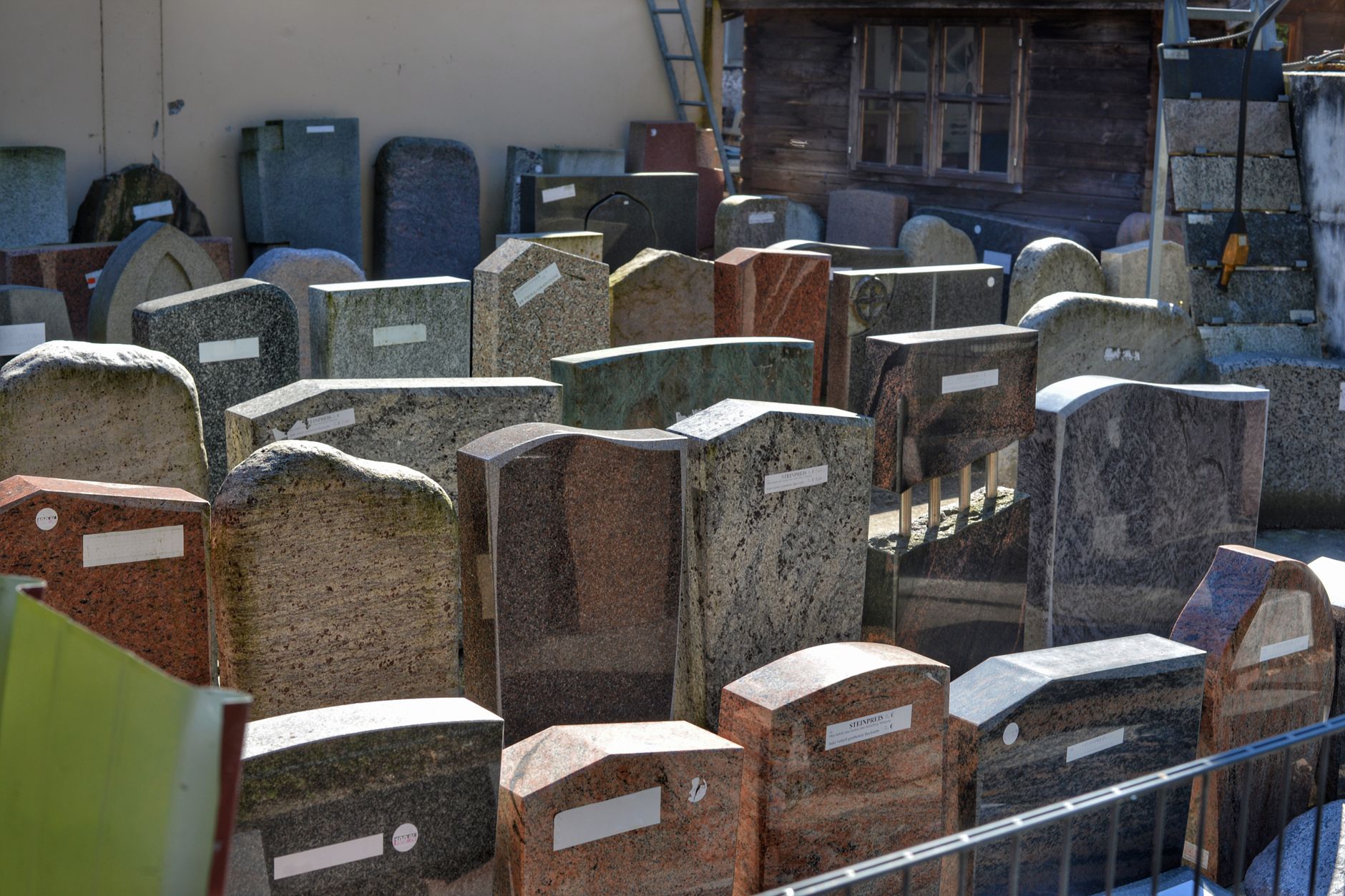
He bought a four-grave lot at Zion Hill because that was the smallest the board sold, and he put Joan in the second space and left the third for himself. He meant to put up a proper stone. But 1988 was the drought year, and then there was the note, and then there were braces for Debra, and what Joan got was a flat gray marker about the size of a cake pan, set flush in the grass. Her name and her two years. Nothing else would fit.
I married Elmer in June of 1994. I was thirty-seven and had never been married, and I had cooked at the Wilber school for eleven years, which is how I first knew Debra: a tall, silent girl who took her tray without looking up.
She was fifteen when I moved into her mother’s house.
I knew better than to change it. I left Joan’s photograph on the piano and Joan’s dishes in the cupboard. I used Joan’s bread pans until the bottoms wore through. I never asked Debra to call me anything, and she never called me anything but Nadine.
She was not a hateful girl. I want to be fair. She was polite to me every day of her life, and when she graduated she hugged me on the gym floor, quick, the way you hug an aunt.
It was only that there was a door in her that stayed shut, and behind it was a nine-year-old whose mother had a marker the size of a cake pan.
The first spring I lived there, the last week of May, I walked out to hang wash and found a peony bush by the clothesline pole so heavy with pink blooms it had fallen open on the grass.
“Whose is that?” I asked Elmer at dinner.
He put his fork down.
“Joan’s,” he said. “She brought the root from her mother’s place over by Dorchester. I’ve never had the heart to dig it out, and never had the sense to stake it.”
“Does anybody cut them?”
“No.”
“Then they ought to go to her,” I said. “Monday is Memorial Day.”
He looked at me across that table for a long time. Elmer was not a man who cried, and he didn’t then. He just nodded, twice, and went back out to the shed, and stayed out there until dark.
Monday morning I cut every bloom that was fit to cut and put them in a quart Mason jar with water from the pump. Elmer drove. Debra had stayed the weekend at Ardis’s, in town, so it was only the two of us.
When we got to Zion Hill he parked at the gate and sat with both hands on the wheel.
“I’ll carry it,” I said.
“I’ll come.”