The Wedding in Grandpa Vern’s Hayfield
So that night I sat down at the kitchen table and I wrote her an invitation myself. We had not had any printed; there was no time and no money. Everybody else just got told. But I took one of my mother’s good note cards with the bluebirds on it and I wrote it out by hand.
I wrote the date and the time, one o’clock, and I wrote out the directions, because her phone would lose its signal past Westby. County road, then the gravel, second place on the left, the one with the blue silo.
Then I wrote: There is a chair for you in the front row. There will be one whether you come or not. Wear whatever you like. Hannah.
I did not write that I forgave her. I had not been asked to yet, and I don’t think you ought to hand people things they haven’t asked for.
I mailed it on a Tuesday. She did not answer.
The Saturday came up clear and cool, forty-eight degrees at five in the morning, with the fog lying down in the coulees like milk in a saucer.
I milked. Of course I milked. My mother told me to stay in bed and I told her I would not sleep anyway, and we went down the barn alley together the way we have ten thousand times, her on the north side and me on the south, with Grandpa carrying the units. The cows did not know it was my wedding day. Pearl stepped on my foot, same as always.
By eight the yard was full of pickups.
I watched it from the upstairs window with my hair in curlers. I watched Mr. Bauer and four men walk that white tent up on its poles like raising a barn. I watched the church ladies come up the drive in a line of sedans with pies on their laps.
Nobody was in charge. There was no coordinator. Everybody just saw what needed doing and did it, and then looked around for the next thing.
They set the hay bales out in rows for the ceremony, small squares, two high, with quilts over them so nobody’s good clothes got scratched. My mother’s quilts, and Marge’s, and some I had never seen before. Up front, where a church would have its altar, Luke’s students had built an arch out of barn boards, and somebody had wound it with goldenrod and wild asters from the fence line.
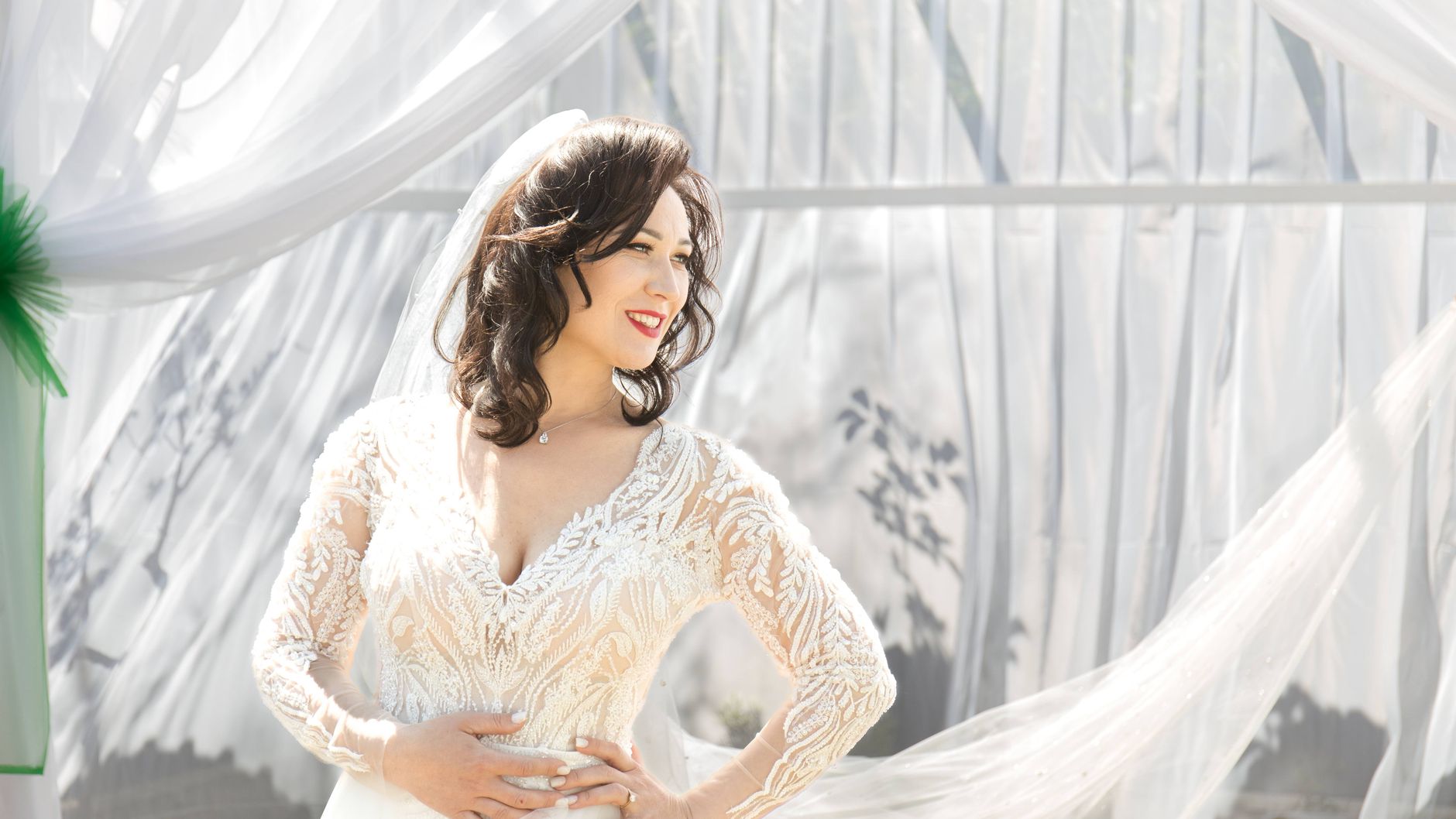
I put on my dress at noon. It is a plain white dress. I wore my brown boots under it, and I will tell you the truth: I had bought those boots for the ballroom too.
At twenty to one I was standing behind the tent with Grandpa Vern, waiting. He had on his best plaid shirt, pressed so hard the creases would cut you, and his suspenders, and a brand-new seed cap the co-op had given him, still stiff.
“You’re not wearing that cap down the aisle,” I said.
“I’m wearing it till I get there. Sun’s in my eyes.” He looked me over. “Your dad ought to be the one standing here.”
“I know.”
“I’m a poor second.”
“You are not a second anything,” I said, and I had to stop there or ruin my face.
About forty of Luke’s side had come. His aunts came, and his father’s old partners from the insurance office, and two ladies from Cynthia’s bridge club who stepped out of their car into that field looking a little alarmed. Within ten minutes somebody had put a cup of coffee in each of their hands and Marge was showing them the pies.