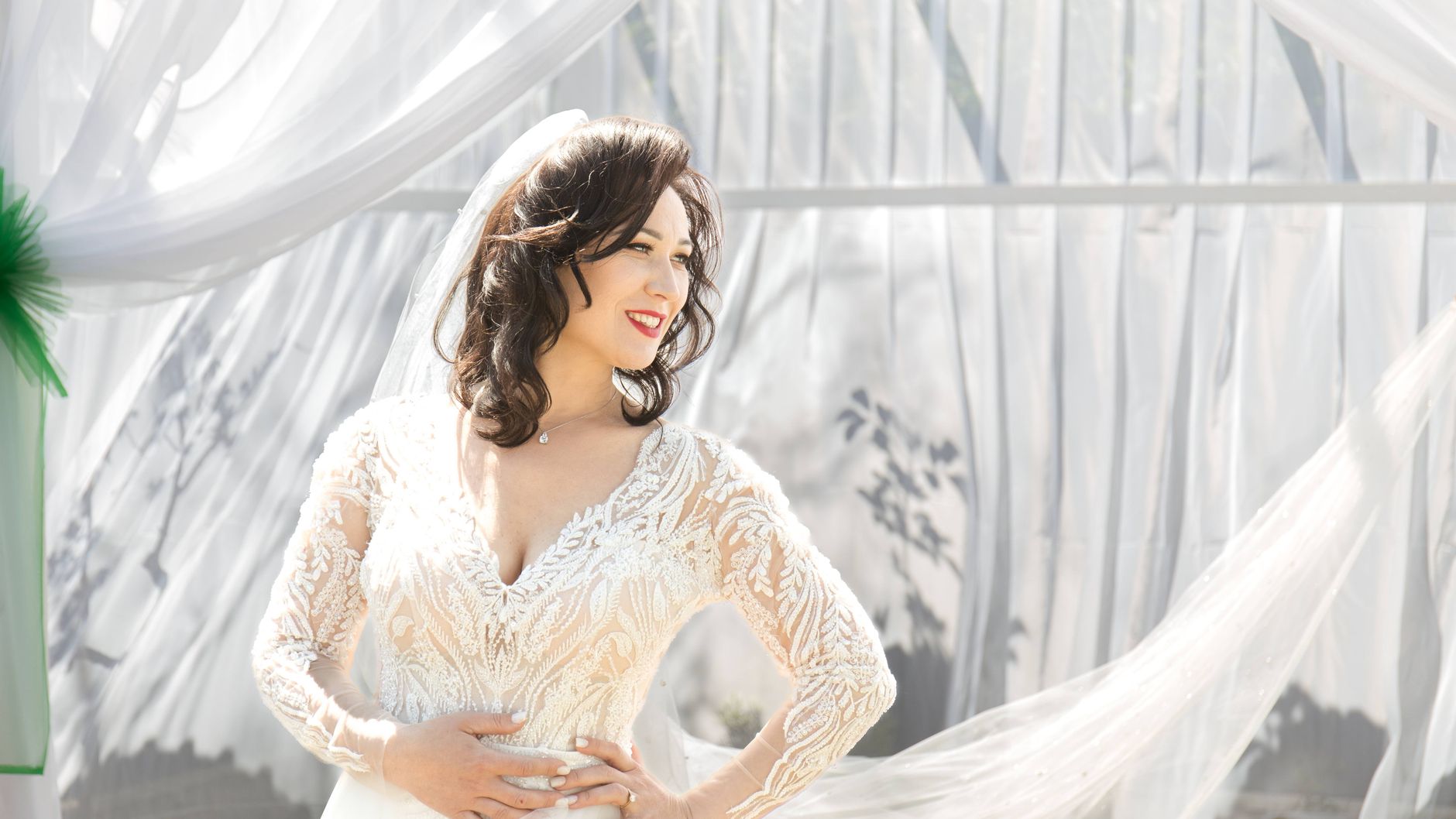
The Wedding in Grandpa Vern’s Hayfield
She found me at dusk, by the stock tank, when the Bauer boys were coming up from the barn in their good shirts with the sleeves rolled, done with our milking.
She had her shoes in her hand.
“Hannah.”
“Cynthia.”
“I owe you an apology, and I’d like to give it to you plain.” She stood very straight. “What I handed you at my table was cruel. I told myself it was arithmetic. It was not arithmetic. I was ashamed of where I came from, and I took it out on where you come from, and I am sorry.”
“Thank you,” I said.
“Your mother was sitting next to me all afternoon. She gave me her handkerchief.” Her mouth trembled. “Does she know? About the list?”
“She knows.”
“Do the rest of them?”
“No, ma’am. Grandpa wouldn’t have it. Nobody here knows but the four of us.”
She closed her eyes.
“Those people fed me,” she said. “That man said I raised a good boy.”
“You did raise a good boy.”
“I very nearly raised him out of this.” She looked across the field at Luke, who was unbolting a table leg with a tool out of his own pocket, at his own wedding. “He sent me a check. Two hundred dollars. I want you to tell him I tore it up, and I’ll tear up the next one. I paid thirty-five hundred dollars to find out what my father’s neighbors did for him. I got off cheap.”
“I think he’d rather hear that from you.”
She nodded. She walked across the stubble in her stocking feet, carrying her shoes, and I watched my husband set down his wrench.
I did not listen to that one. That one was theirs. But I saw him bend down so she could get her arms around his neck, and I saw them stay that way a good long while.
She came down the second Sunday in October, after church.
She had on blue jeans. I had not known she owned any. My mother lent her a pair of barn boots and a jacket, and we walked her down the alley at evening milking, with the pipeline humming and the cats lined up for their saucer.
Grandpa was waiting at the ninth stall on the south side.
“This is Pearl,” he said. “Pansy’s about eleven generations back of her. Same white blaze. Same bad manners.”
Cynthia stood a minute. Then she stepped up on the curb beside that cow, without anybody telling her how, and laid her hand flat on Pearl’s shoulder and scratched her in exactly the spot a cow likes, right at the top of the withers.
Forty years, and her hands had kept it.
“My father used to say you could tell a good farm by whether the cows would let a stranger touch them,” she said.
“He said that to me once too,” Grandpa told her.
The list is still on our refrigerator. My mother never took it down. It has the pen marks beside every name, tables and brats and thirty-one pies, and the top is still folded under where nobody can read it.
Last month Cynthia stood in that kitchen with a dish towel, drying plates after Sunday dinner, and I saw her look at it. She read all the way down. Then she took the pen on the string and found a blank spot at the very bottom of the second page.
She wrote her own name there. Cynthia. And beside it, in that pretty handwriting, she wrote: dishes.