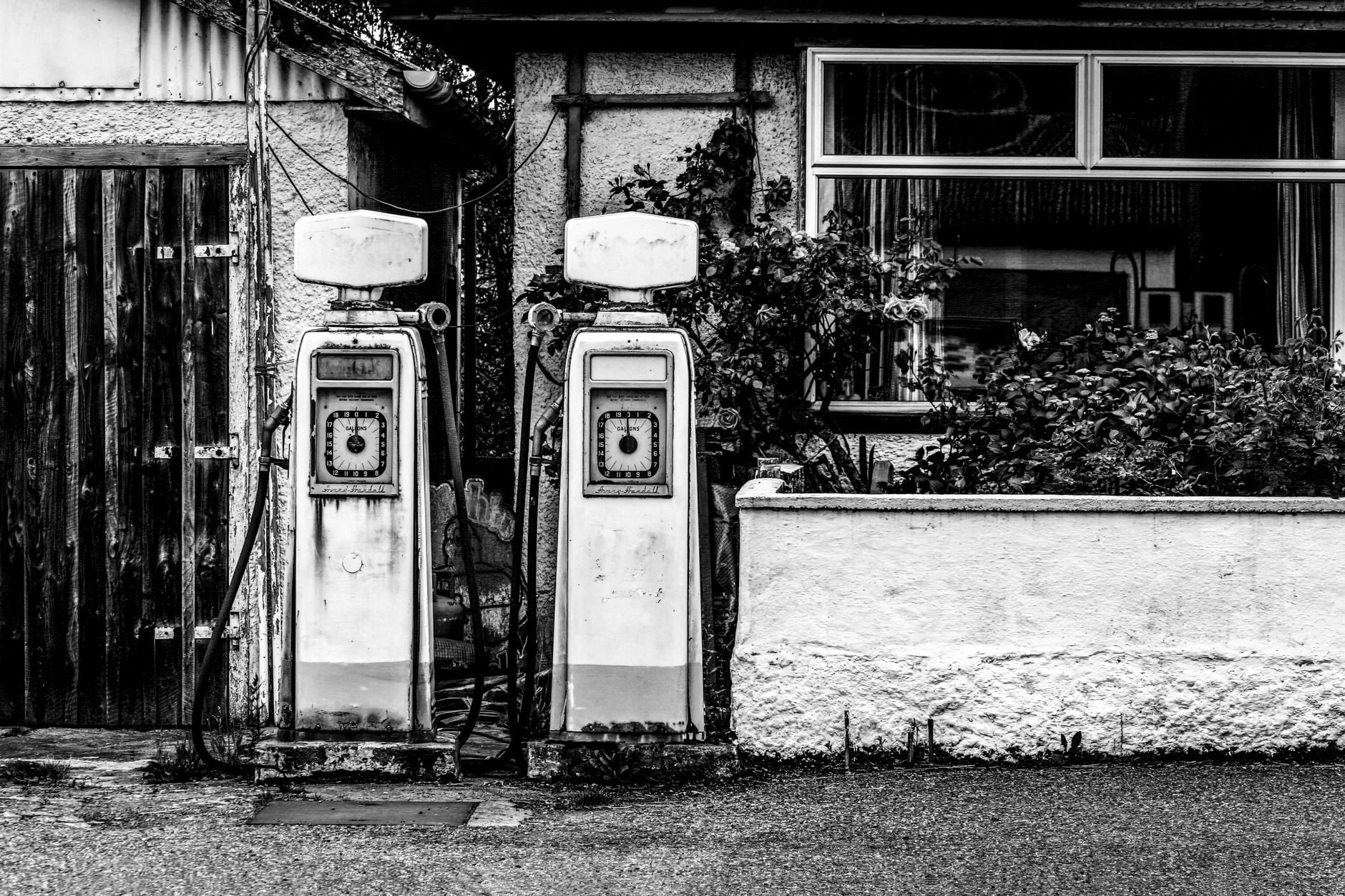
The Gas My Neighbor Kept Taking
Barry has an idea
I went back to the shop on Monday. Barry was under a Buick. I sat down on an overturned bucket and told him all of it, start to finish, and he slid out on his creeper with a wrench in his hand and listened without a word.
When I finished, he said, “Do not call the law.”
“I was not planning to.”
“Good. Because the law will take a statement and tell you to put a lock on your cap, and Clint will say it was a misunderstanding, and in six weeks he will be borrowing your mower again.” Barry sat up. “What he needs is for people to see him. Not hear about him. See him. A man like that does not mind being a thief as long as nobody is watching him do it. It is the audience that bothers him.”
“I am not going to hurt him, Barry.”
“Nobody said hurt.” He grinned, and he is not a man who grins easy. “I am talking about a joke so good he cannot be mad at anybody but himself.”
He told me then about a fellow he knew over in Salina, a collector of old gas station things, who had an antique glass-faced pump that had not pumped since 1979. It sat in the back of his barn, and he had been trying to sell it for a year. It was the kind with a tall body and a round lighted globe on top, and the numbers on the front rolled over on wheels like an old odometer, one tick at a time. Barry said the wheels could be set by hand.
“What does it need to say?” he asked.
I took the envelope out of my shirt pocket and showed him the number in the box.
He read it. Then he read it again, and he started laughing so hard he had to put his wrench down.
The plan comes together
Barry took over my garage for three nights. He rewired the little light on the globe so it would glow from a battery. He found an old rubber hose in his shop, the kind that used to lie across the driveway of a filling station and ring a bell inside whenever a car rolled over it, and he rigged it with a fresh bell from a school supply store. And he set the number wheels on the front of that pump, one click at a time, while I sat on a stool and read him the numbers off the envelope.
Two. One. Two. Point four.
“Point four?” I asked.
“You said about two hundred twelve. I split the difference.” He tapped the glass. “A man who sees two hundred twelve and four tenths is going to wonder if you counted it.”
I could not argue with that.
Then there was the nozzle. Barry looked at the old holster where it sat on the side of the pump and said, “Hold on,” and went to get a switch out of his truck. When he was done, whoever lifted that nozzle out of its holster would set off a second bell, a bigger one, mounted inside the body of the pump, and a roll of canvas banner would drop down the front of the glass like a window shade. I had painted the banner myself in the garage on Wednesday night, in white enamel on an old tarp, with a three-inch brush. I took my time with the letters. I have always been proud of my lettering.
THANK YOU FOR YOUR GAS, CLINT.
For the sign that went above the pump, I used a piece of plywood from the shed and the same white paint. It said, in capitals:
CLINT’S FUEL STOP. SELF SERVE. 14 WEEKS. 212.4 GALLONS. $722.16 OWED TO D. NORRIS. PAY HERE.
Below that, on the pump’s side, I hung a coffee can with a slot cut in the lid and the words PAY HERE on a strip of masking tape.