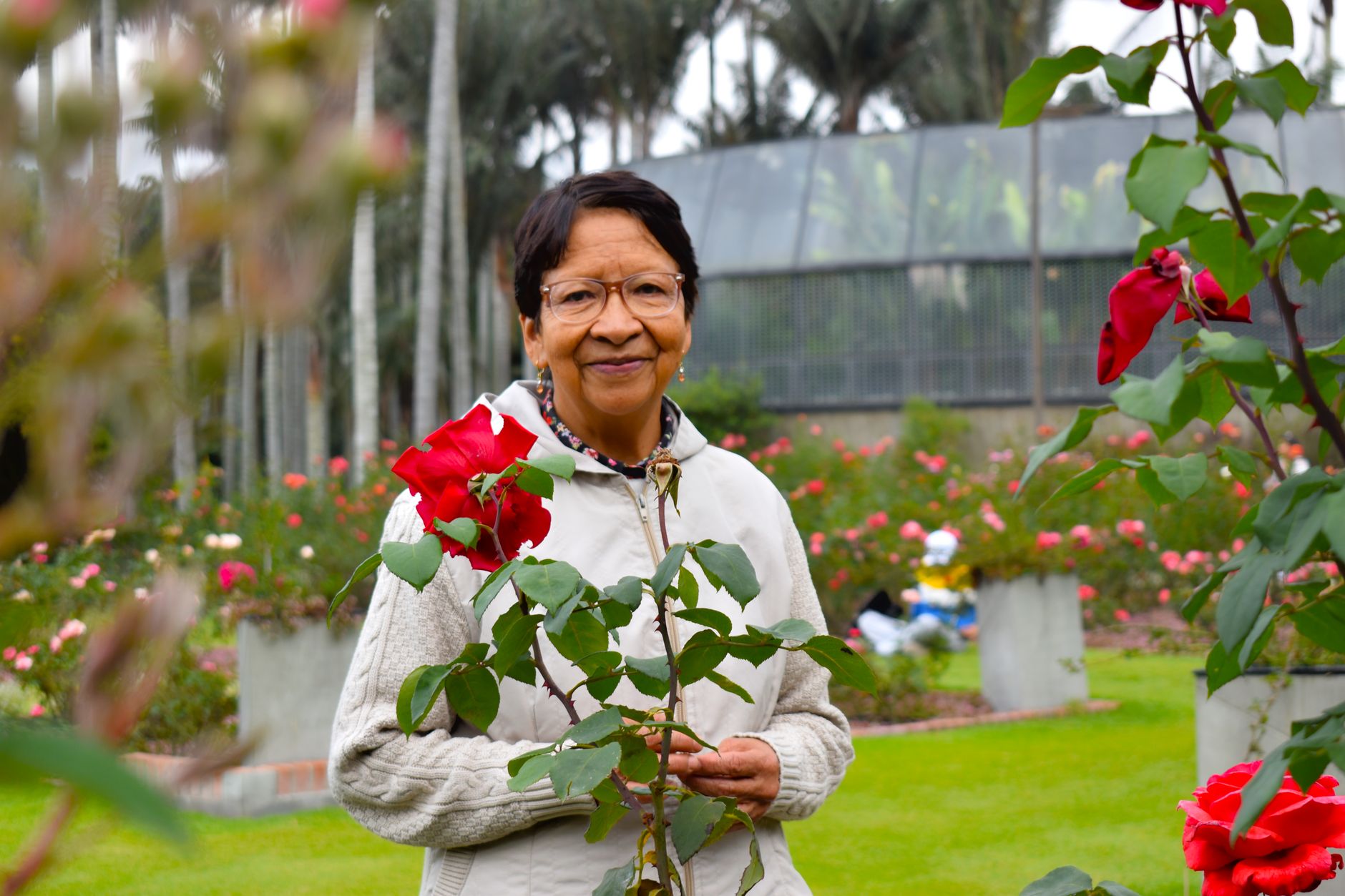
The Yard a Stranger Cleared
My name is Arlene Whitcroft. I am seventy-eight years old, and I know what my neighbors say about my yard. I’ve known for two years.
I’ve seen them slow down when they walk past. I’ve watched the curtains move across the street.
I got the letters from the city. The ones with the official stamp. The word violation in them.
I stopped opening them after the first. I already knew what they said. And there was nothing on God’s earth I could do about it.
They think I’m one of those old women who just stops caring. They look at the weeds standing chest-high where a lawn used to be, and they think: how could she let it get like that.
I’ll tell you how. But you have to let me start with my husband.
My George kept that yard like other men keep a religion.
He worked forty-one years at the plant and came home tired every single day of it. And the one thing that was purely his, the one thing no boss could touch, was that yard.
Evenings, you’d find him out there in his old canvas hat, edging the walk on his hands and knees.
Saturdays he mowed in straight proud lines you could’ve measured with a ruler.
And the roses. Lord, the roses.
George planted his first rose bush for me the year we married, right by the front step, because I’d mentioned once that red was my favorite. He never forgot a single thing I said.
And then he planted another. And another. It became the thing he did.
There were more of those rose bushes in our yard than you would believe. There was a reason for that. A reason I’ll come back to.
He was out there with his shears the morning his heart gave out. Kneeling in the dirt he loved. Sixty-eight years old.
The doctor said he likely never knew what happened. I tell myself he was happy, right at the end. I have to.
And here is the part my neighbors don’t know. The part I’ve never said out loud to a living soul.
After George died, I could not go into that yard.
It wasn’t that I stopped caring. It was that the yard was him.
Every blade of that grass had been under his hands. To take a mower to it felt like erasing him. Like wiping away the last warm place his fingerprints still were.
I’d stand at the kitchen window where I’d watched him a thousand evenings. And I could not make myself open that door and walk out into all that absence.
And the plain truth underneath the grief is that I couldn’t have done it anyway. I’m seventy-eight. My hip is bad and my hands shake. George did everything outside. I never had to learn.
My daughter lives three states away. She calls on Sundays. I tell her I’m fine.
So the grass grew. And the weeds came. And the brush came after the weeds.
Year by year, the yard George had loved disappeared under a wilderness. Until you couldn’t see the walk. Couldn’t see the fence. Couldn’t see the front step where it all began.
And somewhere under all of it, the roses vanished too. The weeds swallowed them whole.
I assumed they were dead. Every last one. Gone, like he was gone.
I couldn’t even look at where they’d been. I kept the curtains drawn on that side of the house.
I let it all go to ruin because facing it was the one thing I could not survive.
And I was so ashamed. You cannot imagine the shame. An old woman hiding behind her curtains from her own backyard.
Then, on a Tuesday, a young man knocked on my door.
His name was Cody. Sunburned, maybe thirty, twisting his work gloves in his hands. He said he’d seen my yard. He said he cleared land for a living. He said he wanted to help.
For free, he said. No charge.
I told him no, of course. My pride stood right up in my chest and said no. I had no money for it, I told him. It was fine, I told him.
He didn’t push. He just said, real gentle, “Ma’am, I just don’t think anybody should have to live like this and feel alone about it.”
And something about the way he said alone, like he could see straight through the weeds to the thing underneath, my no fell apart in my mouth.
I couldn’t watch him work at first. The sound of it was more than I could bear, so I sat inside with the radio up.
But after a while, something pulled me to the window. And then to the door. And then, for the first time in two years, out onto my own back step.
Cody was standing in the middle of the yard. And he had gone completely still.
He was looking down at something. Then he crouched, careful, and began pulling the cut weeds away by hand. Gentle as anything. Like he was uncovering something that might break.
And then I saw the red.
Roses. Choked and wild and leggy from reaching for light through all those weeds, but alive. Blooming. Stubborn, impossible, alive.
George’s roses had not died at all. They’d been down there in the dark the whole time. Holding on. Surviving everything I couldn’t.
I came down off that step on my bad hip. I crossed the dirt. I got down on my knees in front of them, and I put my shaking old hand against a bloom.
And I said the only thing in my heart. “He planted those for me.”
And I wept like I had not let myself weep since the morning they took George away.
But there is a reason there were so many of those roses. A reason George planted a new one every single year, without fail, for as long as we were married.
And there is what that young man did the very next Saturday, something I will never, as long as I live, be able to repay.
Cody worked until the light went out of the sky that Tuesday. When he finally stopped, he stood wiping his hands on a rag, looking at what he’d uncovered like a man who’d found something he hadn’t expected to find. He said he’d cleared brush off a hundred yards in three counties and never once found a garden alive underneath. He said he wanted to come back Saturday, bring a couple of the men he worked with, do it right instead of doing it fast. I asked him why he wouldn’t take a dime for it. He just looked down at his gloves and said, “Saturday, Miss Arlene,” like the answer to that question was too big to hand over standing in the dark. Then he loaded his tools into a truck with a magnetic sign on the door that read Reyes Land and Tree, and he drove off, and I stood on my own back step for a long time after his taillights were gone.
I did not sleep much that night. Somewhere around eleven I got my flashlight and my cane and I went back out there, because I could not wait until morning to see what I had seen.
In the flashlight beam, low along the fence line where the brush had been thickest, I found them. Little tin markers, no bigger than playing cards, bent by hand out of scrap metal and driven into the dirt at the foot of each bush. George had made every one himself with a pair of tin snips and a nail for a punch, out in the garage on winter evenings when there was nothing else to do with his hands. I had forgotten they existed. I had forgotten because I had spent two years refusing to look.
I knelt down in the dirt in my housecoat, seventy-eight years old with a flashlight in my teeth, and I read my husband’s whole life back to me one tag at a time.
The first one, right by the front step where it had all started, just said R. Red, for what I’d told him. That was the easy one. I had known that one my whole life.
The next tag over, a small rose that had always bloomed pale, almost blush white instead of red like the rest, said nothing but a year. 1969. I did not need the tag to remember what that year was. I had carried a baby girl to six months that year and lost her three days before she would have been born, and we never got to give her a name we said out loud to anyone, though between the two of us, in private, in the dark, we had called her Rosie. I came home from the hospital that week to find George in the yard with a shovel, and when I asked him what in God’s name he thought he was doing, he did not stop digging. He said, “Because something is supposed to grow there.” I did not go near that bush again for years. I understand now that it never once stopped blooming.
Three bushes down, a homely little rose that never opened as pretty as the others, that always came back no matter how hard the winter, was marked with a single word: Ornery. That was the year the creek came up over the property line twice in one summer and nearly took the house with it, the year George worked double shifts at the plant just to keep the bank off our backs, the year I told him more than once that we were both too stubborn to know when to quit. We were. We didn’t. The bush was his answer to that whole summer, and it was, I’ll admit, the ugliest rose in the yard, and also somehow my favorite.
Further along, a soft yellow rose was tagged simply M, for the year our daughter Melinda was born, the one good easy thing that happened in a decade full of hard ones.
And near the garage, a deep burgundy bush I had always loved without knowing why, was tagged Second Chance. That was the year George’s heart first tried to take him from me, at fifty-four, a warning shot the doctors caught in time. I remember him standing in that hospital gown telling me he wasn’t done yet, he had more roses to plant. I thought at the time he was joking.
I found one more that made me laugh out loud alone in my own dark yard, an unremarkable pink one near the mailbox that George, for thirty years, had never once passed without muttering the same two words under his breath. Pot roast. It marked an anniversary early in our marriage when I set out to cook him a proper dinner and instead filled the kitchen with smoke thick enough to see from the road, and we ended up eating cold cereal at the table by candlelight because the power company had picked that exact evening to do maintenance, laughing so hard I had to hold the counter to stand up. He planted that rose two days later and called it, forever after, the pot roast, and every single year when we walked past it he would say it under his breath just to watch me swat him.
Near the corner of the porch, I found one more before I ran out of easy ones. A hardy climbing rose, the kind that takes over a trellis if you let it, was tagged with a single word worn nearly smooth: Kept. That was the year a doctor listened to George’s chest after a cough that wouldn’t quit and told him, plain, that the plant floor dust and thirty years of cigarettes were going to take him early if he didn’t stop. George threw his last pack in the trash can in the parking lot that same afternoon and never touched another one, and every year on the anniversary of that appointment he’d walk me out to that climbing rose and say, without fail, “Still kept,” like he was reporting in. He got eleven more years out of that promise than the doctor gave him credit for. I have wondered since whether it was eleven years he gave to me, or eleven years the rose gave back to him. I have decided it doesn’t much matter which.
I counted forty as I went, on hands and knees in the dirt, reading a marriage back to myself by flashlight. And then, at the very end of the row, closest to the back fence, I found a fortieth, no, a forty-first bush I did not recognize at all. It was smaller than the rest. Its leaves were fresh and green in a way none of the others were, because the others had spent two years fighting weeds for light and this one had barely had the chance to try. Its tag was not rusted dull like the others. It was still bright tin, barely tarnished, and it was dated that same year, the year he died.
I sat down hard in the dirt when I understood what I was looking at.
George had planted that bush the week before he died. Five days, I worked out later, before what would have been our anniversary. I never saw him do it. I never knew it was there. He had gone out one evening while I thought he was just puttering, and he had put a forty-first rose in the ground for me, and then six days later his heart stopped in that same soil with the shears still in his hand, and I spent two years afterward too afraid to walk close enough to ever find it.
It was the last thing my husband ever gave me, and I had let the weeds bury it along with everything else.
I sat with that bush a long time that night. I did not cry the way I had cried on the step that afternoon. This was a quieter kind of crying, the kind that comes when grief and gratitude finally sit down at the same table.
Cody came back Thursday, two days before he’d promised, by himself, in the evening after his regular work was done. He said he’d been thinking about those roses and wanted to prune them properly before Saturday so the crew wouldn’t handle them rough. I watched him work the canes with more care than I’d have thought a stranger capable of, and when he was done I would not let him leave without eating something, and he was too polite, or maybe too hungry, to say no.
We sat at my kitchen table, the one George built with his own hands out of a barn door forty years ago, and I asked Cody straight out why a young man spends his Tuesdays and his Thursdays clearing dead women’s yards for free. He was quiet a minute, turning his fork over. Then he told me about his grandmother, Louise, who raised him from the time he was seven because his own parents couldn’t. He said when his grandfather died, Louise’s yard went the same way mine had, weed by weed, year by year, and Cody was fourteen then, and ashamed of it the way fourteen-year-olds are ashamed of things they don’t understand, and he stopped bringing his friends around, and eventually he mostly stopped coming around at all. By the time he was nineteen and had a trade and a truck and could have fixed the whole thing in a weekend, it was too late. A mail carrier noticed her box hadn’t been cleared in over a week and called it in. She had been gone four days by the time anyone found her. Nobody had checked because everyone on her street assumed somebody else already had.
“All it would’ve taken was somebody knocking,” he said, looking at his plate, not at me. “That’s the part I can’t put down. Not a truck, not a crew, not money. Just somebody knocking on the door.” He said that ever since, whenever he’s out clearing land in the three counties he works, and he passes a yard that looks like his grandmother’s did, he stops the truck. He doesn’t always get to help. Sometimes people slam the door, and he understands why, and he leaves a card and doesn’t push. But he said mine was the first time in a long while that somebody let him past the porch.
I did not have words for him that night. I just reached across George’s table and put my hand over his, the way I would have wanted somebody to put a hand over Louise’s, and he let me.
Saturday morning, Cody’s truck pulled up before seven with two other men in the bed, Beau and Shane, both of them still half asleep, both of them carrying more tools than I’d seen in one place since George retired. I expected the three of them and nothing more.
By eight o’clock my yard had eleven people in it.
Marjorie Dunlap, who lives across the street, the one whose curtains I’d watched move for two years, showed up with a folding table, a coffee urn, and a casserole dish, and she would not meet my eyes for the first hour she was there. Other neighbors I recognized only by their cars came with rakes and tarps and one battered chainsaw, and a couple of teenagers hauled water bucket after bucket without being asked twice. Somebody’s radio played low gospel from a truck bed all morning. I stood on my own back step in a housecoat I should have changed out of and watched my husband’s yard fill up with more people than had been in it since his funeral.
Around midmorning, Marjorie finally sat down next to me on the step, still not looking at me, and said the thing she’d clearly been working up to saying. She told me she’d put my name on the prayer chain at Cornerstone Baptist every single week for two years. Every Wednesday night, out loud, in a room full of people who prayed for me and never once knocked on my door. She said she’d started to walk over more times than she could count, and turned back at the mailbox every time, telling herself I probably wanted to be left alone, telling herself it wasn’t her place, telling herself somebody else would surely check on me. “I prayed for you instead of coming over,” she said. “I think I told myself that counted.” She was crying by the end of it, and so was I, and I told her the truth, which is that it did count, it just wasn’t the whole of what I needed, and that no bit of it was too late now that she was sitting on my step with a casserole in her lap.
That’s when she told me the rest. Cody hadn’t just shown up out of nowhere on his own. He’d knocked on Marjorie’s door the week before, going house to house on my street asking careful questions, trying to understand who I was and whether anyone was checking on me before he ever knocked on mine. Marjorie hadn’t known what to do with the question except cry in her own doorway. But it was her phone calls that Friday night, once she saw his truck in my driveway Tuesday and finally found her nerve, that turned three men into eleven by Saturday morning.
They worked until nearly four that afternoon. They cut back two years of brush and hauled it out by the truckload, load after load, until the burn pile at the curb was taller than Shane, who could not have been much past twenty-two himself and worked the whole day without once complaining, which I noticed, because I raised a daughter and I know what twenty-two usually sounds like. They found my fence under all of it, straightened three posts, and reset a gate that hadn’t swung right since before George died. They uncovered the flagstone walk stone by stone, on their knees, brushing two years of dirt off with their bare hands like they were uncovering something in a church basement instead of a walkway. Beau, who talked the least of the three but worked the hardest, found the old brass boot scraper George had bolted by the step forty years ago, buried under an inch of dirt, and cleaned it with a toothbrush from his own truck without anybody asking him to.
They reseeded the bare patches and cleared the gutters and swept the porch, and through it all, Cody would not let a mower or a weed trimmer within four feet of any rose bush. He pruned every single one himself, by hand, the way he had Thursday, while Beau and Shane cleared everything around them, and more than once I saw him stop mid-cut, turn a stem over in his fingers, and call one of the tags out to me across the yard just to be sure he had it right before he touched it. By early afternoon you could stand at my kitchen window, the one I had avoided for two years, and see clean down the whole length of that yard to the fence, roses and all, for the first time since George was alive to keep it that way.
Near the end of the day, when most of the others had gone to load tools into trucks, Cody called me over to the far end of the rose row, past the last bush I’d found in the dark two nights before. He’d dug a new hole and set a new bush in it, a small one, healthy, not yet in bloom. Beside it he’d driven a scrap of copper flashing into the ground, bent by hand the same way George used to bend tin, and on it, with a nail and a hammer, he had punched two characters: 42, and the date.
He didn’t make a speech about it. He just said it seemed wrong to him for the count to stop where the grief had stopped it, and that he hoped I didn’t mind him taking the liberty. I told him I didn’t mind. I told him that was the first thing anyone had planted in that yard in two years that wasn’t a weed, and that George would have shaken his hand for it, hard, the way he shook the hand of anybody who did right by his family without being asked.
Late that afternoon, a car I didn’t recognize pulled up, and a heavyset man in a city polo got out and stood at the end of my driveway looking at everything like he’d made a wrong turn. It was Mr. Farrow, from the code office, the man whose name had been stamped on every letter I’d stopped opening two years before. He said he’d driven by on his way home and had to stop the car. He stood there a while not saying much, and then he told me, quiet, that he was going to close out every open citation on my property that Monday morning, and that he was sorry it had taken him this long to do anything about my file besides mail me a fine. He told me, almost like a confession of his own, that his own mother had lived alone the last four years of her life two towns over, and that he thought about her every single time he had to type up a notice like the ones he’d sent me, and that he’d never once found the nerve to do anything about either one. I did not have it in me to be angry at him by then. I just thanked him for coming to say it in person instead of by mail.
We ate supper in that yard that evening, all of us, off paper plates at Marjorie’s folding table and two more somebody dragged over from a garage, casseroles and fried chicken and a sheet cake nobody could explain the origin of. I sat at the head of the table the way I used to sit across from George, and for the first time in two years I did not feel his absence out there. I felt the plain, simple fact of him, in the roses, in the fence he’d built, in the walk he’d laid stone by stone thirty years before some strangers laid it bare again for me.
That was three months ago now. Cody still comes by, most Saturdays he’s not booked solid, sometimes just to run the mower, sometimes to sit on the step and drink sweet tea and tell me about a job that went sideways or a girl named Priscilla he’s been seeing, careful and hopeful the way a young man is when he thinks he might finally have found the right one. He brought her by once in the spring to see the roses, and I watched her stop cold in front of the pot roast bush when he told her the story of it, the way I’d stopped cold at forty-one. Marjorie and I take coffee together twice a week now, on my porch, no curtains between us anymore on either side of the street. I finally told Melinda the whole truth on a Sunday call instead of telling her I was fine, and I heard her cry on the other end of that phone in a way I hadn’t heard since she was a girl, and she flew in the very next weekend and knelt down in front of bush forty-two and cried again, and she calls three times a week now instead of one.
I go to church again too, most Sundays, and I sit in the pew Marjorie saved for me without either of us ever discussing it, and when the pastor asks for praises during the announcements, I’ve stood up more than once now to say that I have one, and I never explain the whole of it, because some things are for kneeling with in your own dirt, not for saying out loud from a pew.
I used to believe there was nothing on God’s earth I could do about my yard, or about the two years I spent grieving inside a house with the curtains drawn. I still believe the first half of that. There was nothing I could do, not alone, not with my hip and my hands and the size of what I was carrying. But I have learned the second half was wrong. There was something to be done. I simply was not the one who was going to be able to do it. It took a sunburned young man who lost his own grandmother the same lonely way, a neighbor who finally let her guilt walk her across a street, a whole street full of people who apparently never stopped caring even when I was too proud and too broken to let them show it, and forty-two rose bushes that never once stopped growing in the dark, waiting for somebody to clear a path back to the light.
I sit out on that back step most evenings now, the way George used to, and I leave the curtains open on that whole side of the house. And if I ever pass a yard on my way to church that has gone quiet the way mine did, chest-high and forgotten and ashamed of itself, I don’t drive on by anymore. I have Cody’s number in my phone. I have my own two feet, slow as they are. And I have finally learned what it cost me two years to learn: that somebody has to be the one who knocks.
This story is a dramatization. Names, characters, and details are invented, and any resemblance to real people or events is coincidental.