
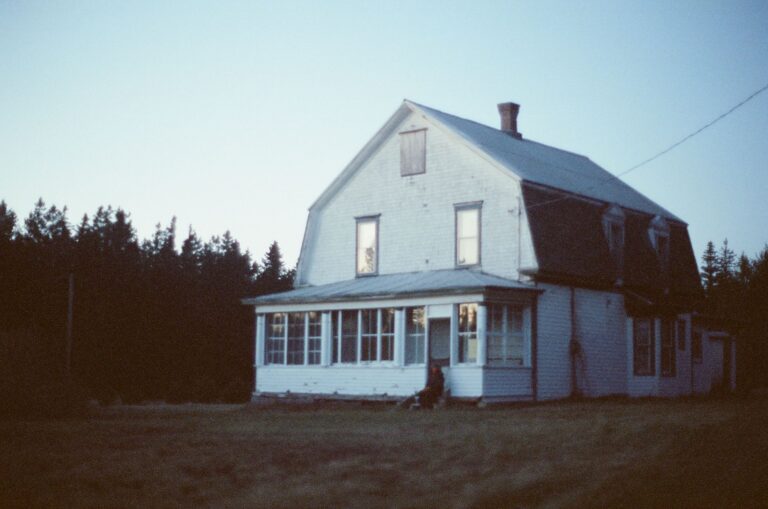
The moving truck idled at the curb at nine sharp, right on schedule, and I stood in the doorway of my grandparents’ farmhouse in my work boots with a cup of coffee going cold in my hand, watching my mother climb out of Rosaline’s SUV like she was arriving at a ribbon cutting.
She had her church coat on. The navy one with the gold buttons, the one she saves for Easter and funerals and, apparently, evictions.
“Good morning, Ashby,” Rosaline called from behind her, all bright teeth and triumph. “I hope you’re packed.”
I wasn’t packed. I hadn’t moved a single box in the two days since they’d told me I had until Friday to clear out of a house that had been legally mine since March. What I had done instead was call a man I’d been paying a retainer to for the better part of two years, and ask him one question: are we ready.
He’d said yes.
So when the man in the gray suit stepped out from behind the moving truck with a leather folder under his arm and told me that if I didn’t vacate immediately they’d have no choice but to call the Barlow County Sheriff’s Office to remove me, I didn’t argue with him.
I looked past all four of them, past the movers already unloading dollies onto my grandfather’s gravel drive, to the black sedan that had just turned off County Road 9 and was rolling up slow behind the truck.
“Please,” I said, and I meant every bit of the smile I gave them. “Come in. There’s someone I think you need to meet before anybody starts calling the sheriff.”
To understand why I wasn’t afraid of that Friday morning, you have to go back further than the will. You have to go back to a kitchen with a linoleum floor that never got replaced no matter how many times my mother told my grandmother it was dated, out on a gravel road eleven miles from Sorrel Creek, Missouri, a town so small it has one blinking light, one diner, one feed store, and a Baptist church that everybody’s grandparents got married in whether they stayed Baptist or not.
That farmhouse belonged to my father’s parents, Grandma and Grandpa Overholt, and it sat on eighty-one acres of hay ground and pasture that had been in the family since before the highway had a number. I spent every summer of my childhood there. While Rosaline was doing cheer camp and my mother was driving her from clinic to pageant to travel team like a chauffeur with a grudge, I was out in that kitchen shelling peas with my grandmother and out in the barn with my grandfather learning how to worm a calf and set a fence post so it would still be standing after I was gone.
Nobody fought me for that time. Nobody wanted it. My mother used to say the farm smelled like manure and my father’s failure to ever leave it, which was a strange thing to say about the place that put the roof over her own childhood, since she’d married into that family and never once let anyone forget she thought she’d married beneath herself doing it. Rosaline came out twice a summer, usually for a birthday, always in shoes that weren’t built for gravel, and left within the hour complaining about the flies.
I remember the summer I was nine, Grandpa Overholt set me up on the seat of the old Ford tractor with him standing behind me, his hands loose on the wheel over mine, teaching me to keep a straight line down the hay field by picking a fence post way off at the end and never taking my eyes off it. “Don’t watch the front of the tractor,” he told me. “Watch where you’re going, not where you are, or you’ll wander the whole field without knowing it.” I didn’t understand what he meant until years later, sitting in an attorney’s office listening to my mother’s chair scrape the floor. Grandma Overholt taught me to can tomatoes standing on a stool at her elbow, taught me the particular hiss a jar makes when it seals right, taught me that a woman who keeps her own pantry full never has to ask anybody for anything. Those two people built a whole life out of eighty-one acres and stubbornness, and somewhere along the way they built a version of me that could survive what came next, though none of us knew it yet.
My mother has told the story of her own childhood on that farm exactly one way for as long as I’ve been alive: hard, thankless, a place she couldn’t wait to leave. Maybe that was true for her. But it was never true for me, and I think that difference, more than the money, more than the will, was the real wound underneath everything that happened later. She watched me love a place she’d spent her whole life resenting, and she watched her own parents-in-law love me back the same open way, and some old, unhealed part of her decided that meant they’d chosen me over her, over Rosaline, over the family she’d built on her own terms in town. I don’t know if that’s fair to her. I only know it’s the truth as I lived it.
So it wasn’t a mystery to anybody, least of all me, that when my grandfather’s mind started slipping the year I turned thirty-two, I was the one who moved into the spare bedroom at the farmhouse instead of a facility forty-five minutes away. I was the one who drove Grandma Overholt to her cardiology appointments in Springfield. I was the one who sat up with Grandpa at two in the morning when he forgot where he was and thought I was his sister, gone since 1961, and needed somebody to talk him back down into the right decade. I did that for a year and a half while working full time as a vet tech at the Sorrel Creek Animal Clinic, because somebody had to, and because I loved them, and if I am honest, because some small stubborn part of me wanted my mother to see it and be ashamed. She never did. She called twice that whole year. Both times to ask if Grandpa had said anything about money.
There was a home health aide who came twice a week toward the end, a kind, tired woman who told me once, folding towels in the laundry room while Grandpa napped, that she’d worked in enough houses to know which families showed up and which ones sent flowers instead. She never said which one mine was. She didn’t have to. I remember one Sunday in September, a few weeks before Grandma passed, when my mother finally did drive out, not to help, but because a cousin was getting married in town and the church was two miles from the farm and it seemed silly to make the whole trip twice. She stayed forty minutes. She spent thirty of them on her phone in the driveway and ten of them telling my grandmother the house needed new curtains. Grandma waited until she’d left, then patted the seat beside her and told me, plain as anything, “Some people love a place. Some people just want to be seen loving it. You’re the first kind, Ashby. Don’t ever let anybody talk you out of that.” I’ve held onto that sentence the way some people hold onto scripture.
Get a new story in your inbox every morning.
Facebook doesn’t show you every story we post. Our free newsletter does. Join 2,500+ readers.
Grandma passed first, in her sleep, on a Tuesday in October. Grandpa followed her five months later, and everybody in town said it was because he didn’t know how to be anywhere without her, which I believe. I was the one who found him. I was the one who called the funeral home, and the pastor, and my mother, and Rosaline, and my father, who by then had been divorced from my mother for six years but still came around the farm on weekends because some part of him never really left it either.
The will had been drawn up eleven years earlier, notarized properly, filed with an actual estate attorney in Barlow County, updated once after Grandma died to reflect that she’d gone first. It left the farmhouse and all eighty-one acres, along with a modest savings account they’d built slow over forty years of not spending money on anything they didn’t need, to me. Thirty-four thousand dollars and change, sitting in a certificate of deposit at the Sorrel Creek Farmers Bank. No stocks. No hidden fortune. Just a paid-off house, paid-off land, and a lifetime of not wasting anything, left to the one grandchild who’d shown up.
I want to be clear about the money because my family was not, not then and not since. When the will was read in the attorney’s office on the second floor above the pharmacy, my mother’s face went the color of skim milk. Rosaline actually laughed, one short bark like she thought it was a joke that would resolve itself. My father just looked at the floor.
“That’s it?” my mother said. “The house goes to Ashby and the rest of us get nothing? After everything this family has done?”
I didn’t point out that “everything this family has done” for my grandparents amounted to two visits a summer and a phone call asking about money. I didn’t have to. The attorney read the line about no contest clauses, and my mother stood up so fast her chair scraped the floor, and that was the last civil conversation we had for four months.
Rosaline waited until we were out on the sidewalk to say what she really meant. “You planned this,” she told me, hugging her purse to her chest like it might protect her from the sun. “You spent all that time out there so you could work your way into their will. You always were the one who knew how to play things quiet.” I remember standing on that sidewalk above the pharmacy, in my work boots, still smelling faintly of the animal clinic, and understanding for the first time that in my sister’s mind, love and strategy were the same thing, because she’d never once done anything that wasn’t. It hadn’t occurred to her that I’d simply shown up, over and over, for two people who were dying, without doing the math on what it would earn me. She couldn’t imagine that kind of showing up, because she’d never tried it.
What came after that was a slow bleed of a family falling apart over land that had never once had a mortgage on it. Rosaline stopped answering my calls. My mother started telling people at church that I’d “gotten to” my grandfather while his mind was going, which was a lie so specific and so ugly that our pastor, Reverend Pemberton, actually pulled me aside one Sunday to ask if I was all right, because word travels fast on a party line even when nobody’s used one in forty years. My father tried to stay neutral the way he always did, which in our family has never meant fair. It’s meant absent.
Sorrel Creek is small enough that a story like that doesn’t stay contained. The woman who runs the register at the feed store started giving me a look I couldn’t place for a month, until I finally understood it was pity, because she’d heard I’d “taken advantage of a confused old man.” A regular at the animal clinic asked me, gently, if it was true I’d cut my own sister out of a fortune. I told her the fortune was a paid-off farmhouse and a CD account smaller than most people’s trucks, and she looked at me like she didn’t quite believe that either, because by then my mother’s version had gotten three towns’ worth of a head start on the truth. I learned that summer that a lie told by someone’s own mother travels faster and lands softer than the truth ever can, because nobody wants to believe a mother would do that, so they don’t examine it too closely. It cost me a few friendships I didn’t know were shallow until they were tested. It cost me, for a while, some of my own certainty, the kind that creeps in at night and asks whether you really did do something wrong just because enough people are saying so.
I probated that will the correct way and recorded the deed transfer within six weeks, faster than my attorney, a careful, unhurried woman named Prudence Halloway two counties over who’d handled my grandparents’ affairs for fifteen years, had ever seen a client push for. I told her I had a bad feeling. She asked why. I told her that my mother had said something to me at the funeral luncheon that I couldn’t shake.
“You’ll get what’s coming to you,” she’d whispered, hugging me in front of forty mourners with a smile stapled onto her face. “One way or another.”
I’d taken that as a threat because it was one. So instead of grieving the way I wanted to, in private, at my own pace, I spent the better part of two years building a wall around that farm out of paperwork. I had every document notarized twice. I kept dated notes of every conversation with my mother and Rosaline, every voicemail saved to a hard drive, every ugly comment screenshotted the same hour it landed. I paid a courthouse clerk friend of mine, a woman named Farrah I’d known since junior high, to flag the property for any suspicious filing activity, which is a real thing county recorders can do if you ask the right way and know somebody. I told exactly two people what I was doing. Prudence, and Farrah. I told my mother and my sister nothing, because by then I understood they weren’t people I could hand information to without it being used as a weapon.
I didn’t know exactly what they’d try. I just knew, the way you know a storm is coming from the color of the sky even before the radio says so, that they’d try something.
I want to be honest about what those two years actually looked like from the inside, because it wasn’t a montage, it was a lot of ordinary, unglamorous Tuesdays. It was driving into the county seat on my lunch break to file paperwork in person instead of trusting the mail. It was learning, slowly, the difference between a warranty deed and a quitclaim deed, words I’d never needed before, sitting at Prudence’s kitchen table because her office hours didn’t work around a vet tech’s schedule and she never once charged me for the extra time. It was Farrah calling me on a Tuesday morning in October, a full eight months before the ambush on my porch, her voice low like she was cupping the phone. “Somebody filed something on your grandparents’ property,” she said. “It didn’t clear because the notary date doesn’t match up with anything, but Ashby, I need you to see this.” That was the first forged document, the one with my grandfather’s signature dated three weeks after he was already in the ground. I sat in the animal clinic parking lot and cried for the first time since the funeral, not from grief this time, but from the particular, specific horror of understanding that somebody in my own family had traced my grandfather’s signature off an old hunting license to steal from a dead man. I didn’t know yet if it was my mother or Rosaline or somebody they’d hired. I only knew I had eight months, maybe less, to make sure it never worked, and I spent every one of them like it was the only thing standing between my grandparents’ memory and a stranger’s signature.
It came on a Wednesday in June, seven months after the funeral. I got home from the clinic a little past six to find my mother and Rosaline sitting on my porch swing like they’d been invited, wearing matching expressions I’d seen my whole life on women who think they’ve finally cornered something smaller than them.
“Hey, Ashby,” Rosaline said, sugar poured thick over something rotten. “We need to talk.”
I let them in, mostly because I wanted to see what they’d brought. Rosaline had a folder. Of course she had a folder. She set it on my grandmother’s kitchen table like she was laying down a winning hand at cards.
“We had the house signed over,” she said. “Into my name. You’ve got until Friday.”
I actually laughed, the way she had at the reading, one short bark before I caught myself. “Signed over by who.”
“There were debts on the property,” my mother said, arms crossed, chin up, enjoying herself in a way that made my stomach turn over. “Real debts. Your grandparents weren’t as tidy with money as you like to pretend. Since you weren’t managing the estate the way you should’ve, we stepped in. Had it looked at by real professionals. The transfer to Rosaline covers what was owed. It’s legal. It’s binding.”
“There were no debts,” I said. “I have every bank statement going back a decade. I have the mortgage payoff letter from nineteen ninety-eight. That house has been debt free longer than Rosaline’s been alive.”
“According to who,” my mother snapped. “You? A vet tech who watches Judge Judy for fun? We had a real attorney draw it up.”
That was the word she used. Real. Like I was a child playing dress-up in a house that was legally, unambiguously, notarized-three-times mine.
My father, Ballantine, let himself in without knocking a few minutes later, the way he always did, like the farm still owed him a door that opened without permission. He looked at the folder, looked at me, and nodded slow like he was agreeing to something he hadn’t been asked yet.
“This is the right thing, Ashby,” he said. “Rosaline’s business is in trouble. She’s got two kids and a mortgage of her own to worry about. You’re young. No kids. You can start over anywhere. She needs this more than you do.”
“She needs this more than you do,” my mother echoed, nodding along like my father had said something wise instead of something cruel. “You’ve always landed on your feet, Ashby. You don’t need us worrying about you.” It was such a strange thing to hear from a woman who hadn’t worried about me since I was old enough to drive myself to the doctor. I almost laughed again. I didn’t, because laughing would have told them I already knew something they didn’t, and I wasn’t ready to spend that yet.
I looked at the three of them standing in my grandmother’s kitchen, under the same clock that had hung there since before I was born, and I felt something in me go very cold and very still. Not panic. I want people to understand that, because panic was what they were counting on. What I felt instead was almost relief, the way you feel relief when a suspicious lump finally gets a name, even a bad one, because at least now you know what you’re dealing with.
“You really think I’d let that happen,” I said, “after everything I’ve learned about this family these past two years?”
Rosaline’s smirk flickered, just barely, like a bulb about to go. “What’s that supposed to mean?”
“It means you might want to double check whoever drew that paperwork up for you,” I said. “Because I don’t think he’s who you think he is.”
They left with the same line they’d opened with, forty-eight hours, be packed, don’t make this harder than it has to be. What they didn’t know, walking out to Rosaline’s SUV with their folder and their satisfaction, was that I wasn’t going to spend those forty-eight hours packing.
I spent them on the phone with Prudence and with a man from the Missouri Attorney General’s consumer fraud division that Farrah had connected me to eight months earlier, back when the flags on my property first started tripping. Because here’s what I hadn’t told my family, what I’d been sitting on since the previous October: somebody had already tried to file paperwork against that farm once before, quietly, and it had bounced. A “debt settlement” claim, supposedly signed by my grandfather, with a date on it three weeks after he’d already died. Whoever forged it hadn’t thought to check the obituary before they backdated the signature. Farrah caught it the same week it came across her desk, called me instead of processing it, and that’s when I understood exactly how far somebody in my family was willing to go, and started building the case that would make Friday morning the shortest confrontation of my life.
Friday came in soft and warm, the kind of June morning that smells like cut hay two farms over. The truck pulled up at nine exactly, my mother in her church coat, Rosaline glowing with the kind of triumph that only comes right before a fall nobody sees but you. The man in the gray suit introduced himself as their attorney and opened his folder like a magician about to pull a rabbit, except the rabbit was a threat to call the sheriff on me in my own doorway.
I let him get about halfway through his little speech before I looked past him at the black sedan turning off the county road.
“Come in,” I told them. “There’s someone you need to meet.”
The woman who stepped out of that sedan wasn’t my attorney, though Prudence had drafted every document she was carrying. She was an investigator from the Attorney General’s office, and her name was the last thing that mattered that morning, because she’d already been building a file on the man in the gray suit for the better part of a year under a different case entirely, a man who called himself a document preparer, took cash retainers from families in financial trouble, and had a habit of manufacturing debt instruments against property that didn’t have any.
She laid three things on my grandmother’s kitchen table, the same table where Rosaline had laid her folder six weeks earlier.
The first was the “debt settlement” document my mother and Rosaline had used to justify the transfer, the one claiming my grandparents owed back taxes and a private loan that had never existed. The second was a certified letter from the Barlow County Farmers Bank confirming that account had been paid in full and closed clean in 1998, with a zero balance every year since, verified and stamped. The third was the earlier forged filing Farrah had flagged the previous October, the one with my grandfather’s signature dated three weeks after his death certificate was issued, sitting right next to it for anyone in the room to compare.
“Mr. Delray,” the investigator said to the man in the gray suit, using a name that clearly wasn’t the one he’d given my family, “would you like to explain to everyone here why you backdated a dead man’s signature, or would you rather do that downtown.”
I have never in my life seen a grown man leave a porch that fast. He didn’t even take his folder. He left it right there on the table, which turned out to be the best evidence anybody could’ve asked for, because inside it was a template, the exact same debt document boilerplate he’d used on at least two other elderly families in three counties, with their names still faintly visible where he’d forgotten to fully delete the last file before saving over it.
The investigator laid out, plain and unhurried, exactly how the scheme worked, the way she must have explained it a dozen times before to a dozen other frightened families standing in a dozen other kitchens. Mr. Delray found families where an elderly relative had recently passed and an inheritance was being contested, usually by combing obituaries and courthouse filings for exactly the kind of resentment my mother and Rosaline had been broadcasting to half of Barlow County for months. He’d offer to “look into” old debts nobody remembered clearly, produce paperwork that felt official enough not to question, and take a cut, sometimes cash, sometimes a percentage once the property sold. He counted on grief making people careless and on family conflict making people eager to believe whatever confirmed what they already wanted to be true. My mother wanted to believe my grandparents had secretly been in debt because it meant the will’s fairness wasn’t really the point, that some hidden unfairness had been happening to her all along and this was just correcting it. Rosaline wanted to believe it because she needed a house. Neither of them had asked to see the original loan documents. Neither of them had called the bank. They’d wanted the story to be true badly enough that a stranger with a leather folder was all the proof they required.
My mother’s face did something I’d never seen it do before. It went from triumph to confusion to something close to fear, all inside about four seconds. Rosaline just stood there with her mouth open, looking at the folder like it might still rescue her if she stared hard enough.
“You knew,” Rosaline finally said to me, and there was real hatred in it, more than I think even she expected. “You knew and you let us walk right into this.”
“I told you to double check your paperwork,” I said. “Twice.”
My father didn’t say anything at all. He just sat down hard on my porch step, an old man in an ironed shirt who’d spent his whole life staying neutral and had just watched exactly what that neutrality had actually cost.
What happened after that took most of the summer to unwind, and none of it happened the way courtroom dramas make it look, fast and clean with a gavel at the end. The Attorney General’s office opened a formal fraud case against the man who’d called himself Delray, and it turned out my family wasn’t even his biggest target, just his most recent. Two other families in Barlow and Miller counties had lost real money to versions of the same scheme, and their cases moved forward alongside mine, more of them able to get restitution because of the paperwork he’d left behind on my kitchen table that morning.
Rosaline was never charged. The investigator explained to me, gently, over coffee at the diner on the square a week later, that proving Rosaline had known the document was forged, rather than simply desperate enough to believe a man who told her what she wanted to hear, was a harder case than the one against him, and the county attorney didn’t think it was worth pursuing given everything else on the docket that year. I won’t pretend that sat easy with me. Some nights it still doesn’t. But the deed transfer was voided the same week, quietly, cleanly, with Prudence’s help, and the farm has been unambiguously, permanently mine ever since, every filing triple checked, every flag still active on Farrah’s desk just in case.
Mr. Delray, whose real name turned out to be something entirely different and considerably less impressive, pleaded guilty that November to fraud charges tied to all three families, mine included, and got eighteen months, most of which he’ll likely serve at a minimum security facility two hours from here. I didn’t go to the sentencing. I sent Prudence in my place and asked her to read a short statement for me, about my grandparents, about the eighty-one acres, about what it costs a family to let a stranger’s greed walk in the front door because their own grief had made them careless with the truth. She told me afterward that my mother sat in the back row of that courtroom and cried through the entire hearing, though whether it was for the crime or for what it had cost her publicly, I couldn’t say, and I’ve stopped trying to guess.
The town, for its part, corrected itself the way small towns eventually do, slower than you’d like and never with a formal apology, but it corrected. The woman at the feed store started meeting my eyes again by August. Reverend Pemberton asked me, without me bringing it up, if I’d consider reading scripture at the harvest service that fall, which in Sorrel Creek is about as close to a public vindication as you’re going to get. I said yes. I stood up in that church my grandparents were married in, in front of half the county, and read the same passage Grandma used to underline in her Bible about a harvest reaped in due season if we do not grow weary in doing good, and I looked out at my mother’s empty pew, because she’d stopped coming by then, and I let myself feel exactly as sad about that as I actually was, instead of pretending I didn’t care.
My mother and I haven’t spoken since that Friday morning. I used to think that would break something in me permanently, and some days it still aches in a specific, old-bruise way. But I’ve come to understand that the version of my mother who could have stood in my grandparents’ kitchen and told the truth simply doesn’t exist, and grieving a person who’s still alive is its own strange, quiet kind of work. I do it in the barn some mornings, mucking stalls before the clinic opens, where nobody can see my face.
Rosaline sent one email, months later, not an apology, just three lines asking if I’d consider “letting bygones be bygones” now that her business had gone under for reasons that had nothing to do with me. I didn’t answer. I’ve learned the difference between forgiveness and access, and I only owe her one of those, and it isn’t the one that gets you back onto my grandmother’s porch.
My father comes out to the farm sometimes now, on Sunday afternoons, and doesn’t say much, and helps me mend fence the way his own father taught him, back before any of this. I don’t know if that’s forgiveness either. I think it might just be two people who loved the same two dead people, working quietly in the same dirt, which turns out to be its own kind of honest.
The farmhouse still smells like my grandmother’s kitchen if you catch it right after rain, cedar and coffee and something underneath that I’ve never been able to name. I planted her peas again this spring, out past the barn where the soil warms first. I sit on that porch swing most evenings now, the same one my mother and Rosaline perched on with their folder and their certainty, and I watch the light go gold over eighty-one acres that are legally, permanently, unshakeably mine, and I think about how the people who taught me to set a fence post deep enough to survive a hard winter never once imagined they were also teaching me how to survive their own family. But they were. And I did. And some evenings, with the swing creaking under me and the cattle settling in for the night, that feels like the truest inheritance they ever left me, worth more than the deed, worth more than the thirty-four thousand dollars still sitting untouched in that CD at the Farmers Bank. Not the land. The steadiness. The part of them that never once needed anybody else’s permission to do the right thing, slow and quiet, until it was already done.
This story is a dramatization. Names, characters, and details are invented, and any resemblance to real people or events is coincidental.