
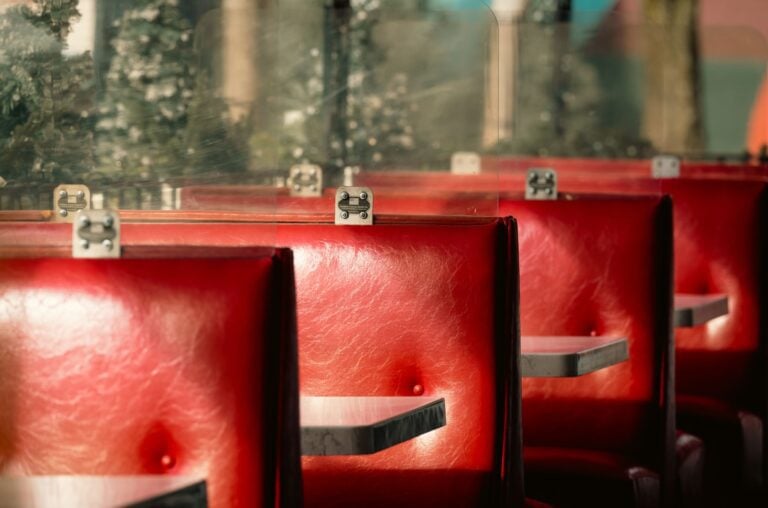
The booth in the front corner of my diner faced east, and that was the only reason I ever rented this building. Maribeth Aldous told me that on the very first morning I opened, before I had so much as figured out how the grill thermostat lied to me. She came in at six exactly, walked past every empty seat in the place, and slid into that corner booth like it had been waiting for her since before I was born.
“You can have any table in here,” I told her. I was twenty-nine and proud of my brand-new sign out front and I thought I was being generous.
She looked at me the way my grandmother used to, kind and certain at the same time. “I know,” she said. “But the sun comes up over the Dollars’ barn out that window, and I like to thank Him while I can still see it happen.”
That was eleven years ago. This is the town of Quarry Bend, population a little under nine hundred when the cousins come home for Christmas, set down in the flat green middle of nowhere where the county road runs straight for so long you can watch a grain truck for a full ten minutes before it reaches you. We have one stoplight, two churches, a feed store, a volunteer fire hall, and my diner, which I named the Skillet and Spoon because my late husband thought it was funny and I never had the heart to change it after we lost him.
And for eleven years, every single morning that God sent, Maribeth Aldous prayed in my corner booth.
I want to tell you about the morning she didn’t come. But I have to tell you about the eleven years first, or you won’t understand why an entire town dropped what it was doing and went out looking for one quiet old woman. You won’t understand why the man who runs the propane company left a full truck idling in the lot. You won’t understand why Pastor Oyelaran cut his own Tuesday study short, or why the high school let two dozen kids walk out the front doors at ten in the morning, or why I am still, all these months later, not entirely able to talk about it without my voice going to pieces.
So let me start at the booth.
The woman in the corner
Maribeth was seventy-three when I met her and eighty-four the morning everything changed. She had been a widow for nineteen years by then. Her husband, Tobiah, had farmed two hundred and forty acres of corn and soybeans out past the grain elevator until his heart quit on him one October while he was greasing the combine, and she had buried him at Pleasant Rise Cemetery and then, the way she told it, she had not known what to do with all the morning quiet.
“A farm wife wakes before the sun her whole life,” she said to me once, stirring a coffee she let go cold more often than not. “After Tobiah passed, the sun kept coming up and there was nobody to feed and nothing pressing to do, and I found I could not just lie in the bed and let the best part of the day go by. So I started coming here. To meet it on purpose.”
Every morning was the same, and the sameness was the whole point. She drove in from the old farmhouse in a brown Buick older than some of my waitresses, parked it crooked across two spaces because her depth perception had gotten honest with her about its limits, and came in at six. She ordered the same thing she ordered every day of those eleven years: two eggs over medium, one piece of wheat toast dry, and coffee with room for cream she rarely added. She unwrapped a soft leather Bible so worn the gold had gone off the edges of the pages, and she set it open on the table beside the plate. And then, before she ate a bite, she bowed her head in that corner booth with the sun coming up gold over the Dollar family’s barn, and she prayed.
She did not pray loud. She was not one of those people who make their faith into a performance for the room. Most mornings, if you were two booths away, you would only have known by the stillness of her, by the way her lips moved without sound and her thumb rested on the open page. She prayed for maybe ten minutes. Then she said amen out loud, just that one word, soft, and she picked up her fork and ate her breakfast and read her chapter and watched the town wake up through the window.
I used to think she was praying for herself. An old widow alone on a dead man’s farm, I figured, has plenty to ask God for. I was wrong about that, and it took me years and a search party to find out how wrong.
What she was actually doing
Here is the thing about a corner booth in a small-town diner. You hear everything from it, and you become a fixture nobody notices, and people will say things in front of you that they would never say to your face. Maribeth, sitting there with her coffee and her open Bible for eleven years, had become the most natural-feeling piece of furniture in Quarry Bend. And she had been listening the whole time.
I started to catch on slowly. A young mother named Adaeze, who waited my afternoon tables for a while, mentioned offhand one day that the old lady in the corner had asked her son’s name. “She said she’d been putting him on her list,” Adaeze told me, confused and a little touched. “He’s got the asthma. She said she’d been asking after his lungs every morning for a month. How’d she even know?”
She knew because she listened. Adaeze had been on the phone by the coffee station the week before, worried sick, and Maribeth had heard, and Maribeth had written the boy down.
Get a new story in your inbox every morning.
Facebook doesn’t show you every story we post. Our free newsletter does. Join 2,500+ readers.
That was the secret of the booth. She kept a list. A real one, a small spiral notebook she tucked inside the back cover of her Bible, and every name she ever overheard a worry attached to went onto it. The Renquist boy shipping out to Fort Campbell. The Dollar family’s second mortgage. My own dishwasher, Caleb, who had a sister fighting cancer two counties over. Pastor Oyelaran’s wife, who had lost three pregnancies before their daughter finally came and stayed. My short-order cook Florentino’s mother, still in Michoacan, whom he had not seen in fourteen years.
She prayed for all of them. By name. Every morning. In my corner booth, with the sun coming up over a barn, for eleven years.
Nobody asked her to. Nobody paid her. Most people never even knew their name was on her list. She was, I came to understand, holding the whole town up in her two old hands every single morning before any of us had finished our first cup of coffee, and she had been doing it so quietly and so faithfully and for so long that we had all simply come to take the sunrise for granted.
I want to be honest about the kind of woman she was, because it matters for what came after. She was not soft. She was a farm widow who had pulled calves in February and run a combine after her husband died because nobody else would. She had a dry mouth on her and would tell you exactly what she thought of your driving or your politics or your decision to put ketchup on a fried egg. She was nobody’s sweet little harmless granny. She was iron with a soft middle, and the soft middle she kept for God and for the names in her notebook, and she did not advertise either one.
The small kindnesses I only added up later
I run a diner, so I notice money, and over the years I noticed strange things about Maribeth’s that did not add up until later.
She always paid for her two eggs and toast, always left a good tip on a small check. But every so often, a stranger’s meal would already be covered when they went to the register, and the waitress would say it was the lady in the corner, and by then Maribeth would be gone. The young soldier home on leave who came in still in his fatigues. The family passing through with three kids and a U-Haul, clearly moving toward something hard. A man I did not recognize who sat alone and cried into his coffee one February morning and never knew an eighty-year-old woman three booths over had quietly told my waitress to put his breakfast on her tab and to please not point her out.
She did it the way she prayed. Without sound. Without credit. She would not let you thank her. The one time I tried, she waved her hand at me like she was shooing a fly and said, “Hush, it’s not yours to thank me for. I’m just passing it along. It was given to me first.” And she would not explain what she meant, and she went back to her toast.
There was a winter, maybe six years in, when the Renquists nearly lost their place. Everyone knew it. Bad year, sick cattle, a barn fire that the insurance fought them on. And then, the way these things happen in a small town, an envelope of cash with no name on it showed up in their mailbox, enough to make the back payment, and they never did find out who. The whole town guessed. I had my own guess. I never said it out loud, and neither did she, and I am only saying it now because she is past minding.
The morning I learned what the notebook held
There was one morning, the winter before she fell, that I have to tell you about, because it is the only time in eleven years she let me see inside the notebook.
It was a hard January. We had a stretch where the wind came across those open fields with nothing to stop it for forty miles, and the snow drifted the county road shut twice in one week, and the diner was empty most mornings except for Maribeth, who came anyway, crawling that brown Buick down the cleared center of the road at fifteen miles an hour because the idea of missing a sunrise frightened her more than the idea of a ditch.
I had lost somebody that month. My husband had been gone four years by then, and grief is a thing that does not run out, it just comes back around the way the seasons do, and that particular January it had come back around hard. There was a morning I was standing at the grill with my back to the room and the snow coming down sideways out the window and I was crying into the eggs, quietly, the way you learn to cry when you run a business and cannot afford to fall apart in front of the register.
I heard the walker, or in those days it was just her cane, tap across the floor behind me. I had not heard her get up. She came around the end of the counter where she was not supposed to be, into my kitchen, and she did not say a soft thing to me, because that was not her way. She set her worn Bible down on my prep table, opened the back cover, and took out the spiral notebook, and she opened it to a page and turned it around so I could see, and she put one crooked finger on a line.
There was my name. My full name, the one nobody uses, written in her careful old-fashioned hand. And beside it, a date from four years back, the month I lost him. And under it, in a column that ran down the page, a mark for every morning since. Hundreds of marks. Eleven hundred mornings, maybe more, a small pencil tick for each one.
“You thought I came for the eggs,” she said. “I came for you, child. I have asked Him to sit with you every morning since the day they buried your husband, and I will keep asking until one of us runs out of mornings, and the way my hip’s been talking to me lately, it might be me first.”
I could not say anything. I stood there in my own kitchen with a spatula in my hand and snow coming down outside and I wept, and an eighty-three-year-old woman put her arms around me, smelling of cold air and lavender soap, and held me up the way she had been holding me up in secret for four years and I had never once known it.
That is when I understood the notebook was not a list of the town’s troubles. It was a love letter she was writing one name at a time, every morning, to people who would never read it. And she had been writing mine the whole time.
I tell you all this so you understand. By the spring she turned eighty-four, Maribeth Aldous had spent eleven years being the quiet engine of a town that mostly did not know she was running. She prayed for us, she fed strangers, she paid debts that were not hers, and she asked for nothing back except a corner booth facing east and a sunrise over the Dollar barn.
And then one Tuesday morning in April, the booth was empty.
The morning the booth was empty
I knew something was wrong before I was fully awake, the way you know a sound is missing from a house.
At six o’clock the bell over my door did not ring. I was at the grill with my back to the room and I felt the wrongness of it before I turned around. The brown Buick was not crooked across two spaces in my lot. The corner booth sat there in the gray early light with the chairs squared and the table clean, and the sun came up gold over the Dollar barn through that east window and there was nobody sitting in it to thank Him for it.
I told myself a dozen ordinary things. She overslept. She had a doctor’s appointment in the city. She caught a cold. People miss a morning. But I had watched this woman come through that door at six o’clock for eleven years, through ice storms and the flu and the morning of her own brother’s funeral, and a feeling sat in my chest that would not be talked down.
I called the farmhouse at seven. It rang and rang. No machine, because Maribeth did not believe in them. I called at seven-thirty and at eight. By nine I had burned two orders of hash browns because I could not stop looking at that empty booth, and Florentino finally took the spatula out of my hand and said, “Go. We’ve got it. Go check on her.”
I should tell you what happened next, because it is the part I will carry for the rest of my life.
I did not have to organize anything. I did not have to make a single phone call past the first one. Because by the time I had untied my apron, half the town already knew the booth was empty, and half the town had already had the same feeling I did.
The whole town goes looking
It started, I think, with Caleb my dishwasher, who texted his mother, who called the prayer chain at the Methodist church, which is faster than any emergency service this county owns. It moved through the feed store, where the Dollar boys heard and shut off the loader and climbed into their truck. It reached Pastor Oyelaran, who had Maribeth on his own visiting list and who closed his Tuesday study mid-sentence and said, “We’ll finish later. Mrs. Aldous didn’t pray this morning.”
That sentence went through Quarry Bend like a current. Mrs. Aldous didn’t pray this morning. People who had never spoken a word to her in their lives understood it instantly. The woman who held the town up did not show, and so the town stood up.
The propane man, a big quiet fellow named Thaddeus, was halfway through a delivery when he heard. He left the full truck idling in the church lot, climbed into his own pickup, and drove out the county road toward the Aldous place. Adaeze, my old waitress, loaded both her kids into the minivan. The high school, when word reached it, did a thing I have never seen a school do before or since: the principal, a no-nonsense woman named Oluwaseun Bright who had moved here from the city ten years back and never quite seemed to fit until that day, got on the intercom and said any student who wanted to help look for Mrs. Aldous could sign out with a parent’s say-so, and two dozen teenagers walked out the front doors into the April morning. They fanned out along the ditches of the county road on foot in case the Buick had gone off somewhere between the farm and the diner.
I drove the straight flat road out to her place with my heart in my throat. I have driven that road a thousand times. It has never been so long.
I want you to understand who these people were, because in a town this size you do not get strangers in a search party. You get your whole life.
The Dollar boys, Ransell and Obadiah, were third-generation farmers whose grandfather had sold Tobiah Aldous the very barn the sun came up over. Thaddeus the propane man had buried a wife two years back and had himself been on Maribeth’s list, though he did not know it yet. Pastor Oyelaran had come to Quarry Bend from Lagos by way of a seminary in Indiana and had spent his first lonely year here being quietly fed by an old white farm widow who decided, on no authority but her own, that the new pastor looked too thin and needed someone praying for him whether he liked it or not. Adaeze had waited my tables when she was nineteen and scared and pregnant and unmarried in a town she was sure would shun her, and it had been Maribeth, of all people, the iron old churchwoman everyone expected to judge her hardest, who slid out of that corner booth one morning and told her, “A baby is never bad news to God, and don’t you let anybody in this town tell you different, least of all the ones in the front pew.” Adaeze named that baby’s middle name after her.
These were the people driving the county road that morning. Not a search party of strangers. A search party of debts being repaid, most of them owed to a woman who had never once sent a bill.
When I came over the little rise by the grain elevator I could already see I was not the first. There were trucks in the yard. The Dollar boys, Thaddeus the propane man, Pastor Oyelaran’s sedan parked sideways the way Maribeth herself always parked, and more coming behind me, a line of dust kicking up off the gravel for half a mile, the whole town pouring out toward one farmhouse the way water finds the low place in a field.
The brown Buick was in the yard. She had not gone off the road. The house was quiet. And the front door, when the Dollar boys reached it, was unlocked, the way every door in Quarry Bend stays unlocked, and they went in calling her name.
What we found
I was coming up the porch steps when I heard one of the Dollar boys shout for the pastor, and the sound of it, not panic exactly but something close, made my legs go to water.
They found her in the back bedroom. She had fallen, sometime in the night, on her way from the bed. She had gone down on the hard pine floor of a farmhouse two hundred yards from her nearest neighbor, and she had broken her hip, and she had lain there on that cold floor through the whole long dark night, eighty-four years old and alone, unable to get up and unable to reach the phone.
And here is the part. Here is the part I have to get exactly right, because it is the truest thing I know about faith and I would not believe it if I had not stood in that doorway and seen her face.
She was not afraid. She was not crying. When the Dollar boys came through that bedroom door, Maribeth Aldous was lying on her broken hip on a cold floor where she had been for nine hours, and she was praying. We heard it before we saw her. That same soft murmur, that same moving of the lips, the same way she did it in my booth every morning of the world. She had been on that floor all night, and she had done the only thing she had ever known to do with the dark hours. She had gone through her list.
Pastor Oyelaran knelt down by her on that hard floor and took her hand, and she opened her eyes and looked at all of us crowding into that little room, the propane man and the feed-store boys and the waitress and me and, behind us, through the window, the teenagers coming up the road on foot, and she said, in that dry voice of hers, perfectly calm:
“Well. I missed my sunrise.”
And then she said the thing I will hear in my head until the day I die. She looked at the crowd of us, the whole frightened, breathless town jammed into her bedroom doorway, and she said, “You all came. I was praying you’d come. I had a feeling this might be the morning I needed the list to pray back.”
That was when I understood what eleven years in a corner booth had really built. She had not just been keeping a list of us. She had been knitting us. Name by name, morning by morning, sunrise by sunrise, that quiet old woman had been stitching nine hundred strangers into something that would, on the one morning she could not stand up, stand up for her without being asked.
The drive she should not have had to make alone
The volunteer fire hall has the only ambulance for fifteen miles, and it was already coming, because of course it was, half its crew were people whose names were in her notebook. Thaddeus and the older Dollar boy lifted the bedroom door off its hinges, gently, to use as a board, because that is the kind of thing you learn growing up on a farm. They carried her out into the April morning she had nearly missed, and as they brought her through the front door, the sun was full up over the eastern fields now, gold across the new green corn, and Maribeth turned her head on that makeshift stretcher to see it.
“There it is,” she said. “There it is. Thank You.”
I have gone to church my whole life. I have heard a thousand sermons about faith. I never understood a single one of them the way I understood it watching an eighty-four-year-old woman with a shattered hip thank God for a sunrise from the back of a fire-hall ambulance, surrounded by the town she had been quietly praying over for eleven years and had never once told.
The teenagers lined the gravel drive as the ambulance pulled out, and they did not cheer, because somehow they knew not to. They just stood there, two dozen kids who had walked out of school, and they took off their caps, and they were quiet, and they let her pass.
What came after
She came home from the rehab hospital nine weeks later with a new hip and a walker she despised and a fury at being fussed over that told all of us she would be fine.
But Quarry Bend had changed, and it changed because of those nine hours on a cold floor. We had nearly lost her without ever once telling her what she was. So we told her. Not with a speech. She would have walked out of a speech. We told her the way she had always told us: quietly, without credit, by doing.
Thaddeus the propane man, without saying a word to anybody, started topping off her tank for free and would not hear otherwise. The Dollar boys took over her lawn and her gutters and the loose porch step she had been meaning to fix for three years. Pastor Oyelaran set up a thing where somebody from one of the two churches checked on her every single night, by phone or in person, so she would never again lie on a floor in the dark alone. Oluwaseun Bright, the principal, started a program at the high school she called Sunrise, where the kids took turns visiting the old and the alone of Quarry Bend, the shut-ins and the widowers, the people whose names had been on Maribeth’s list and nobody else’s. Two dozen teenagers learning to do for a town what one old woman had been doing single-handed for eleven years.
And me. I did the only thing I knew how to do. I had a little brass plate made, the kind you screw onto a church pew, and I fixed it to the wall above the corner booth that faces east toward the Dollar barn. It does not say her name. She made me promise it would not say her name. It says only this: RESERVED FOR THE ONE WHO PRAYS HERE.
She came back to the booth, of course. The morning after she got home, six o’clock sharp, the bell over my door rang and there she was, slower now, leaning on the walker she hated, lowering herself into that corner seat with the sun coming up gold over the barn. Two eggs over medium, wheat toast dry, coffee with room. The worn Bible open on the table. The little spiral notebook tucked in the back cover.
She bowed her head. Her lips moved. And this time, for the first time in eleven years, she was not alone in it. Caleb my dishwasher had asked, shy, if he could sit a minute. Then Adaeze brought her boy. Then the Dollar boys would stop in. Some mornings now there are eight or ten of us crowded into the booths around that corner before the day starts, heads down, while Maribeth Aldous goes through her list out loud so the rest of us can learn the names.
She is eighty-five now and the list is longer than it has ever been, because the town keeps handing her its worries on purpose now instead of by accident. And every morning that God sends, in a flat green nowhere town you have never heard of, the sun comes up over the Dollar family’s barn, and an old woman in a corner booth thanks Him while she can still see it happen, and for the first time in her long life she does not have to do it quietly, because the whole town finally knows what she is, and the whole town is sitting right there beside her, learning how.
I have thought a lot, since that April morning, about what would have happened if I had let her take any table she wanted on my first day. If that booth had not faced east. If she had not needed a sunrise to thank God for, and a window to see it through, and a quiet corner where a whole town could one day learn that the most powerful thing in any small town is one faithful person nobody is paying attention to.
She told me on the first morning that the sun came up over the Dollars’ barn out that window and she liked to thank Him while she could still see it happen.
It took me eleven years and one empty booth to understand she was never only thanking Him for the sunrise.
She was thanking Him for us.
This story is a dramatization. Names, characters, and details are invented, and any resemblance to real people or events is coincidental.